What should you check before buying?
Start with the ingredient format specified by the recipe, then compare flavour, quantity and the current pack information.
| Priority |
What to check |
Your needs |
| Recipe format |
Check whether the recipe calls for solid chocolate, cocoa powder or drinking chocolate. For solid chocolate, look for a bar or block suitable for the intended use. |
I'm melting chocolate into dough or using it for a filling or drizzle, so I need a solid product rather than drinking-chocolate powder. |
| Flavour |
Compare dark and milk chocolate, including stated cocoa and milk solids. Sainsbury's lists at least 55% cocoa solids for its dark 200 g cooking block and at least 35% cocoa solids and 18% milk solids for its milk 200 g block. |
For a recipe designed around dark chocolate, I want its cocoa-forward flavour. If a sweeter milk-chocolate result is the aim, I'll choose that deliberately rather than substituting by bar size. |
| Quantity |
Match the recipe's required weight to the pack. Compare 100 g baking bars, 200 g cooking blocks and 360 g milk-chocolate bars without assuming they have the same recipe role. |
One batch may need only part of a block; for several batches, I want to know how many bars to buy and how much will remain. |
| Melting method |
Read the product's instructions for heating and stirring. Sainsbury's dark cooking-chocolate directions specify an initial 30 seconds in the microwave, followed by stirring and 10-second bursts. |
I'll be melting the chocolate for biscuit dough or decoration, so instructions for that method matter to me. |
| Ingredients and allergens |
Check the current ingredients and precautionary allergen wording, including milk and soya. Do not treat a dark-chocolate name or vegan-recipe description as an allergy assurance. |
If I'm baking for someone with an allergy, the actual pack information needs to suit that person before I use the chocolate. |
Relevant chocolate brands and ranges
These references describe particular products or ranges, not every chocolate made by each brand.
Sainsbury's
Its Belgian cooking-chocolate range includes 200 g dark and milk blocks.
- Both blocks provide melting directions; the dark block lists at least 55% cocoa solids, while the milk block lists at least 35% cocoa solids and 18% milk solids.
- Both list soya lecithins. Check the current pack for ingredients and allergen warnings, particularly when baking for others.
Dr. Oetker
Its 100 g dark cooking-chocolate bar is presented for baking, covering and decoration.
- The bar lists 54% cocoa solids and is explicitly positioned as a baking ingredient.
- A 100 g bar may require multiple packs for a larger recipe. It may contain milk and is not suitable for people with a milk allergy.
Cadbury
Cadbury describes its Dairy Milk 360 g product as a large milk-chocolate bar.
- The 360 g format offers more chocolate in one bar than the 100 g and 200 g products described here.
- Cadbury does not present this particular bar as cooking chocolate; check its fit with the recipe before substituting it.
Galaxy
Its 360 g gift bar is another large-format milk-chocolate option.
- Galaxy lists at least 25% cocoa solids and 14% milk solids for this bar.
- Galaxy states that it contains vegetable fats in addition to cocoa butter. It is a milk-chocolate gift bar, so check the recipe and current ingredient label before using it for baking.
M&S
Its cooking-chocolate and cocoa range provides options across chocolate types and powdered cocoa.
- M&S distinguishes the more intense, bitter flavour of high-cocoa dark baking chocolate from the sweeter profile of milk and white chocolate.
- Choose the ingredient format the recipe specifies; cocoa powder is not a direct replacement for a solid block.
A Joybuy dark cooking-chocolate option
This option is a dark cooking-chocolate bar for biscuit recipes calling for solid dark chocolate. Check the recipe quantity: it is a 100 g bar rather than a larger block.
 No image available
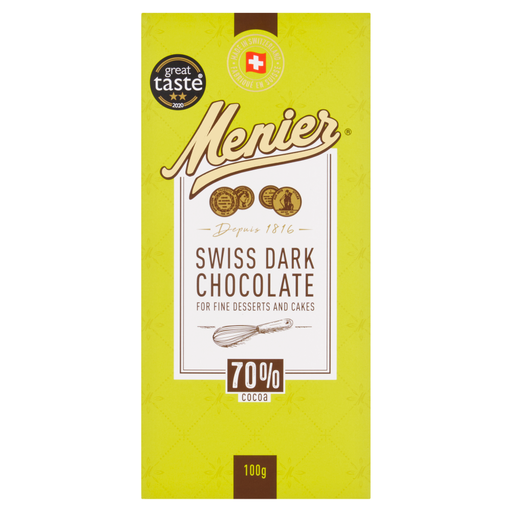
Menier Dark Cooking Chocolate 70% Cocoa 100g
For a biscuit recipe calling for solid dark chocolate, compare this 100 g bar with the amount required. Its name specifies 70% cocoa; the listing identifies milk and says it may contain eggs, gluten and tree nuts, so check the current pack before serving anyone with an allergy.
View on Joybuy
Questions about chocolate for biscuits
Can I replace a solid chocolate block with drinking-chocolate powder?
Do not assume a direct substitution. Solid cooking chocolate, cocoa powder and drinking-chocolate products have different formats and uses; follow a biscuit recipe that specifies the powder or provides a tested substitution.
How do I melt cooking chocolate for biscuit dough or drizzle?
Follow the directions on the product you buy. Sainsbury's dark cooking block instructs you to break it into pieces, heat it in the microwave for 30 seconds, stir, then continue in 10-second bursts until melted; Dr. Oetker's guidance warns against overheating or getting water into melting chocolate.
Is dark cooking chocolate automatically suitable for a milk allergy?
No. Sainsbury's dark cooking block carries a milk cross-contact warning, and Dr. Oetker's dark cooking bar may contain milk. Check the current pack's allergen and precautionary wording before using either for someone with a milk allergy.
Do I need a 360 g sharing bar to bake biscuits?
Not necessarily: weigh the chocolate the recipe requires first. Sainsbury's lists 200 g cooking blocks, whereas the Cadbury and Galaxy 360 g products described here are milk-chocolate sharing or gift bars rather than purpose-made cooking blocks.
What should I check when baking biscuits to share?
Read the current chocolate pack's ingredients and allergen information, including precautionary statements, against the needs of the people eating the biscuits. Do not rely on a dark-chocolate name or a vegan-recipe description alone.


