Small-batch dessert makers
If you make occasional cheesecake bases, pie crusts or toppings, a small chopper may cover the crumb-making task without taking up as much shared cupboard space. Check that its bowl holds a useful amount for your recipes.


For occasional small batches of biscuit crumbs, start with a mini chopper that has pulse control and a bowl suited to your recipe. Choose a compact or larger food processor if you regularly need other preparation functions or bigger batches, accepting more parts to store and wash. In a shared kitchen, check how thoroughly every food-contact part can be cleaned between users, especially when allergens matter.
If you make occasional cheesecake bases, pie crusts or toppings, a small chopper may cover the crumb-making task without taking up as much shared cupboard space. Check that its bowl holds a useful amount for your recipes.
If other users need to avoid particular ingredients, look closely at how the bowl, blade, lid and any seals come apart for cleaning. Food Standards Scotland identifies effective cleaning as important for preventing allergen cross-contact.
If you also chop, grate, slice, blend or knead regularly, the extra tools and capacity of a food processor may be worth the cupboard space and washing-up. Check the included attachments rather than assuming every processor performs each task.
For consumers choosing an electric appliance to make biscuit crumbs in a shared kitchen, begin with the usual batch size and the cleaning routine, then consider which extra functions merit the space they take.
Choose it when: Crumbs are an occasional, small-batch task and you want fewer parts to put away.
Trade-off: A small bowl may mean processing a larger recipe in several batches, without the broader tools of a food processor.
Choose it when: You regularly prepare other foods as well as biscuit crumbs and will use its included attachments.
Trade-off: Those attachments add assembly, storage and cleaning work for a quick crumb batch.
Choose it when: Larger batches and a wider range of regular food preparation justify a bigger machine.
Trade-off: Check its weight and storage space before committing shared kitchen space to it.
| Concern | What to check | Who this matters to |
|---|---|---|
| Small batches and space | Look for pulse control and a bowl capacity that fits your usual batch; check the appliance dimensions for shared storage. | If I make one cheesecake base now and then, I want to stop and inspect the crumbs without giving up much cupboard space. Around 33% of consumers put small-batch control and space first. |
| Cleaning between users | Check which food-contact parts detach, their cleaning instructions and whether any are dishwasher-safe. | When someone sharing the kitchen needs to avoid an allergen, I need to clean the bowl, blade and lid thoroughly between uses. Around 33% of consumers prioritise cleanability and allergen cross-contact control. |
| Capacity and extra functions | Compare bowl capacities and the attachments actually included for the other preparation tasks you do. | If crumbs are only one part of regular baking or meal preparation, I want capacity and tools I will use beyond chopping biscuits. Around 20% of consumers place broader preparation needs first. |
| Storage and ongoing use | Check how attachments are stored, the appliance weight and the published guarantee terms. | With several people using the kitchen regularly, I want the parts to stay together and the machine to be practical to put away. Around 14% of consumers make organised storage and long-term ownership their primary concern. |
A motor rating does not tell you whether the bowl suits a small biscuit batch or whether you can stop processing at the texture you want.
Check bowl capacity and pulse control first; consider additional power alongside preparation functions you expect to use.
Crumbs or residue can remain on food-contact parts that have not been cleaned thoroughly. Food Standards Scotland identifies effective cleaning as an important way to prevent allergen cross-contact.
Check which parts can be removed, then clean and dry every food-contact component between uses. Follow the applicable allergen-management requirements if food is supplied as part of a food business.
A multifunction processor adds attachments to store and wash, even when the immediate job needs only a chopping blade.
Choose the larger format when its capacity or other included functions address tasks you do regularly, not simply because it offers more accessories.
Whether food-business duties apply depends on the activity, not simply on several people sharing a kitchen. The relevant guidance also depends on which UK nation the activity takes place in.
If you sell, cater or otherwise supply food to consumers, check the status of your activity with the relevant local authority and follow the applicable national food-safety guidance.
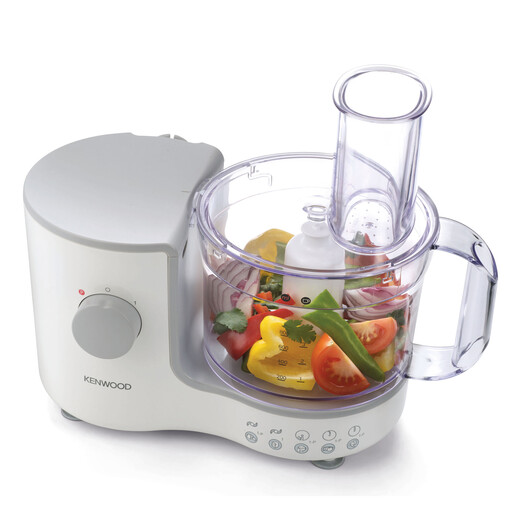
Kenwood has examples of both a small chopper and a compact multifunction processor, giving you two different approaches to biscuit crumbs.
The 3160 is a larger multifunction option for cooks who regularly need more than biscuit crumbs.
The MultiTalent 3 MCM3201BGB illustrates a multifunction route for people who will use more than a chopping blade.
These choices range from small choppers to food processors with larger bowls and extra tools. Match the bowl and cleaning requirements to your biscuit batches before deciding whether the additional functions are useful in your shared kitchen.
 No image available
Consider this small-bowl chopper for occasional crumb batches; a larger recipe may need several batches.
The product name specifies two speeds and a dishwasher-safe bowl. Check the cleaning instructions for the other food-contact parts used in a shared kitchen.
 No image available
Consider this format if crumbs are one of several preparation tasks and you will use more than the chopping function.
The product name lists blending and emulsifying functions and a shredder disc. Those extra components also need storage and cleaning between users.
 No image available
Consider its larger bowl if biscuit crumbs sit alongside regular, varied food preparation; it is more equipment to store and clean for a small batch.
The product name specifies 1000 W, eight accessories and an integrated digital scale. Check the appliance dimensions against the space available in your shared kitchen.
 No image available
Consider a processor-and-blender combination if you will use both functions, rather than buying the larger processor bowl solely for occasional crumbs.
The product name also lists a 1.8 L capacity. If dishwasher cleaning is important, check the instructions for each food-contact part before buying.
 No image available
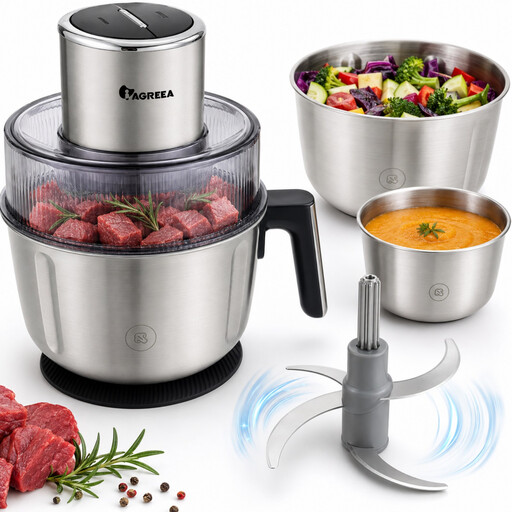
The choice of bowls may suit varied chopping batches, but even the smallest stated bowl may be more than you need for occasional biscuit crumbs.
The product name specifies 1.8 L, 2.2 L and 2.5 L 304 stainless steel bowls, two speeds and triple-curved blades. Check the cleaning instructions for the bowls and blade assembly if dishwasher use matters.
Yes: pulse control lets you process in short bursts and stop to inspect the texture, rather than relying only on continuous operation. Kenwood GB lists pulse control for both the Easy Chop CHP61.100WH and MultiPro Compact FDP31.170GY; the control does not guarantee a particular crumb texture.
A mini chopper is a reasonable starting point for occasional, small cheesecake bases if its bowl holds a useful amount for your recipe. Consider a food processor when you also regularly need its larger bowl or included tools, and account for the extra parts to wash and store.
No: a dishwasher-safe label does not replace cleaning every food-contact part thoroughly between uses. Food Standards Scotland identifies effective cleaning as important for preventing allergen cross-contact, so check access to blades, lids and any seals as well as the washing instructions.
If the activity is a food business, allergen-information and management duties may apply; sharing a kitchen alone does not establish that status. The Food Standards Agency provides food-business guidance for England, Northern Ireland and Wales, while Food Standards Scotland provides guidance for Scotland. Check your activity and the applicable requirements with the relevant local authority.