
24/7 Customer Support

Free returns

Same-day & Next-day Delivery

Quality Guaranteed

Unlock Your Welcome Offers: FREE Delivery | Up to 80% OFF | Free 30-day JoyPlus trial
Download the APP
Finding the right biscuits and snacks online is not simply a matter of choosing the most attractive packet. UK shoppers are often comparing chocolate biscuits, wafer biscuits, cookies, French biscuits and imported Korean snacks across different pack sizes, ingredients and serving formats.
The main challenge is separating useful product information from persuasive packaging. A large box may contain individually wrapped portions, while a smaller-looking pack may offer more suitable quantities for a lunchbox or occasional treat. Dietary claims can also be misunderstood if the full allergen statement is not checked.
This guide explains the details worth reviewing before you buy, followed by practical recommendations for different shopping needs.
A larger pack is not automatically better value if the contents are difficult to store or likely to go stale before they are eaten. Compare the net weight, number of individual portions and intended use.
For example, a 12-pack of chocolate wafer bars may suit a family or office cupboard, while a 40g wafer roll pack may be more practical for one person. Twin packs, snack packs and individually wrapped biscuits can also help with portion planning, lunchboxes and sharing.
Words such as “light”, “classic”, “natural” or “simple” describe taste or marketing style rather than nutritional suitability. Chocolate biscuits, butter cookies and filled biscuits can contain significant levels of sugar and fat, so check the nutrition panel per 100g and, where available, per serving.
A product described as gluten-free must still be checked for its stated allergen information and labelling format. Do not rely only on the front of the packet.
Imported Korean snacks, French biscuits and other international products may use different packaging conventions. Before ordering, check that the online listing provides the ingredients, allergens, country of origin, net quantity, storage guidance and responsible business details applicable to the UK market.
For products containing shrimp, fish, milk, soya, nuts or wheat, read the allergen declaration carefully. Cross-contamination statements such as “may contain” are important when buying for someone with an allergy.
UK food allergen information should be easy to identify, often through bold or otherwise emphasised text in the ingredients list. Common allergens across biscuits and snacks include:
If you are buying gluten-free biscuits for medical reasons, check the product’s current packaging and certification details rather than relying solely on a retailer title.
The per-100g panel allows a fair comparison between products. Portion information is useful for individually wrapped biscuits, snack packs and chocolate wafer bars.
For instance, the listed Cadbury Timeout Chocolate Wafer Bars provide 94 kcal per 18g bar, while the Maryland Minis listing states 99 kcal per mini bag. These figures can help with practical portion planning, but they do not indicate that either product is suitable for every diet.
Also compare:
Crisp products need protection from moisture, heat and direct sunlight. Once opened, reseal the packet or transfer biscuits to an airtight container where the label recommends it.
Consider the format as carefully as the flavour:
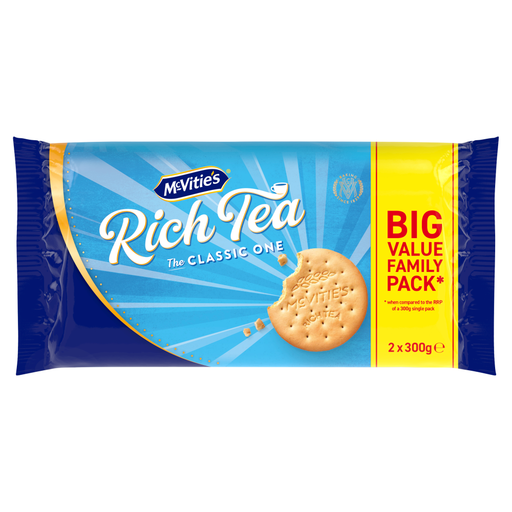
Why This Fits Their Persona: The 600g twin pack provides a familiar everyday option for tea breaks, family cupboards and regular biscuit shoppers who want a straightforward format.
The twin-pack structure is clearer than judging value from the outer box alone, and the ingredient and nutrition information is provided for comparison.
Two 300g packs; wheat-and-barley biscuit with 460 kcal per 100g as listed.

Why This Fits Their Persona: The 375g tin suits shoppers looking for butter cookies to serve with tea or coffee, share with guests or include in a food gift.
The product listing gives a defined weight, storage guidance and allergen information, helping you assess the tin beyond its presentation.
Contains butter and egg yolk; suitable for halal diets according to the listing.

Why This Fits Their Persona: This option is aimed at shoppers specifically comparing gluten-free biscuits and looking for vanilla wafer layers rather than standard wheat-based cookies.
The listing identifies it as wheat-free and provides a separate milk, soya and possible tree-nut warning for closer dietary checking.
125g pack; vanilla-filled wafers with milk and soya listed as allergens.

Why This Fits Their Persona: A suitable choice for shoppers exploring imported Korean snacks and savoury alternatives to conventional sweet treats.
The listing clearly states its hot seasoning profile, 75g weight, Korean origin and multiple allergens, including shrimp, fish, wheat and soya.
Baked snack with a crisp texture; contains 8.3% shrimp according to the supplied ingredients information.
We have compiled a complete, real-time list of products that fully satisfy these strict selection criteria and UK safety regulations.
For chocolate-focused shoppers, options include chocolate wafer bars, chocolate-coated biscuits and filled biscuits such as Orion Choco Pie, Ferrero Nutella Biscuit, Bahlsen Choco Leibniz and Lu Le Petit Chocolate Biscuits. French biscuits and soft bakes can offer a different texture, while Danisa butter cookies are suited to sharing and gifting.
Families may prefer individually wrapped products such as Kinder Happy Hippo or Maryland Minis. For variety, Sweet Dreams Broken Biscuits Misfits provides a 1.3kg assorted format, although the listing states that the exact mix cannot be guaranteed and may include crumbs.
Individually wrapped biscuits and smaller snack packs are generally easier to portion and carry. Check the allergen declaration, pack condition and any school-specific rules before adding a product to a child’s lunchbox.
Keep them in a cool, dry place away from sunlight and heat. Reseal the original packaging or use an airtight container to help protect crispness. Follow the storage instructions on the specific product label.
Imported products can be purchased in the UK when supplied with appropriate product information. Always review the current packaging for ingredients, allergens, net quantity, country of origin, best-before details and UK responsible-person information where applicable.