
24/7 Customer Support

Free returns

Same-day & Next-day Delivery

Quality Guaranteed

Unlock Your Welcome Offers: FREE Delivery | Up to 80% OFF | Free 30-day JoyPlus trial
Download the APP
A reliable black gel pen is an indispensable tool, whether you are taking notes in a lecture, signing documents in the office or organising your thoughts in a journal. Yet, the search for the right one can be surprisingly frustrating. We have all experienced the disappointment of a pen that promises a smooth, clean line only to deliver smudges and inconsistent performance.
As the Joybuy Product Recommendation Officer, my role is to help you navigate the crowded market of stationery and make informed choices. This guide will highlight the common traps to avoid when buying black gel pens and break down the key features that truly matter, ensuring your next purchase is a satisfying one.
Before you add another pack of pens to your basket, be aware of these frequent issues that lead to buyer's remorse.
To avoid these traps, focus on the technical specifications that define a high-performing pen. Understanding these will help you select a tool that meets your specific needs.
The single most important factor in a gel pen is its ink. The goal is to find a pen that offers a smooth writing experience without compromising on drying speed.
The pen's tip, or nib, determines the width and character of your line. The right choice depends entirely on your writing style and primary use.
The physical design of the pen impacts both its usability and longevity.
To help you find a pen that aligns with your needs, we have matched a few standout options to different user profiles.
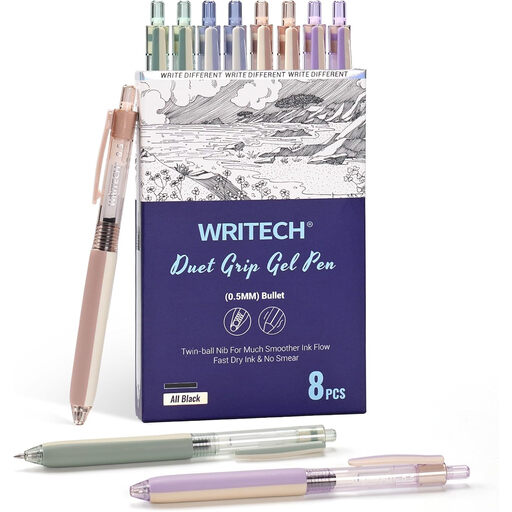
Why This Fits Their Persona: This multipack is ideal for students who need precision for diagrams and dense notes. The 0.5mm fine point ensures clarity, while the triangular barrel encourages a proper grip during long study sessions. The silent clicker is a thoughtful feature for quiet lecture halls or libraries.
It directly counters the inconsistent flow pitfall with a twin-ball nib designed for skip-free writing. The quick-dry ink also addresses smudging, keeping notes clean.
0.5mm fine point for precise writing and an ergonomic triangular barrel for comfort. The 8-pack offers excellent value.
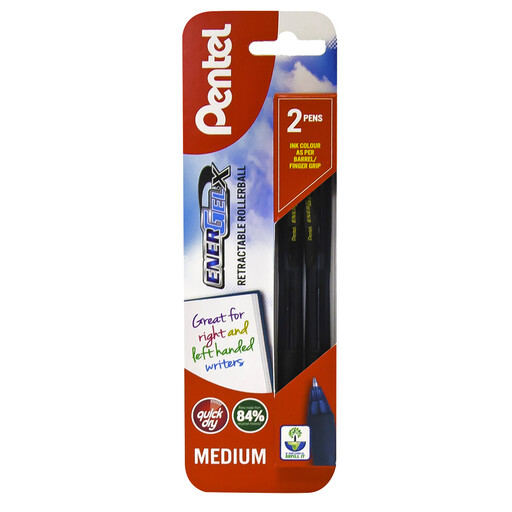
Why This Fits Their Persona: For left-handed writers, the primary concern is smudging. The EnerGel ink is specifically formulated for extremely fast drying, making it a reliable choice to keep both hands and paper clean. The soft grip adds comfort for a smooth writing experience.
It directly solves the "quick-dry myth" by using an ink technology that genuinely reduces smudging, a critical feature for left-handers.
Features high-performance, quick-drying EnerGel ink suitable for both left and right-handed writers. The transparent barrel lets you see ink levels.
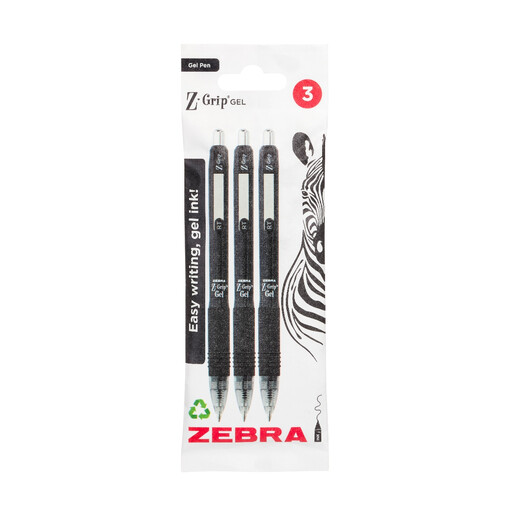
Why This Fits Their Persona: Professionals need a reliable, comfortable and smooth-writing pen for meetings, reports and daily tasks. The Z-Grip Gel's low-viscosity ink provides an effortless glide, while the ergonomic grip reduces fatigue. Its archival-quality ink is a bonus for important documents.
This pen avoids the discomfort pitfall with its soft, textured grip. The advanced low-viscosity ink also ensures a consistent, skip-free flow, preventing writing interruptions.
Features acid-free, archival quality ink that will not fade. The ergonomic comfort grip and smooth-flowing ink make it ideal for prolonged use.
We have compiled a complete, real-time list of products that fully satisfy these strict selection criteria and UK safety regulations.
To maximise the life of your gel pens, always retract the tip or replace the cap immediately after use to prevent the ink from drying out. It is also advisable to store them horizontally, which helps prevent air bubbles from forming in the ink cartridge and disrupting the flow. Avoid leaving them in direct sunlight or cars on hot days, as extreme temperatures can affect ink consistency.
Skipping is usually caused by one of three things: a dried-out tip, an air bubble in the ink tube or writing on paper with a glossy or waxy coating. To fix a dry tip, try scribbling in tight circles on a piece of scrap paper to get the ink flowing again. If an air bubble is the culprit, gently tapping the pen on a hard surface might dislodge it.
This often comes down to personal preference and the quality of the exam paper. A 0.7mm tip provides a bolder, more legible line that can be easier for examiners to read and often feels smoother to write with. However, a 0.5mm tip allows for greater precision, which is useful for complex equations, diagrams or if the answer boxes are small. A practical approach is to have one of each available.