
24/7 全天候客户支持

免费退货

当日/次日达

品质保障

开启新人专享福利: 全场免邮 | 低至 2 折 | 免费试用 30 天 JoyPlus 会员
下载 Joybuy
Whether you're in a dental clinic, a busy kitchen, a tattoo studio or simply tackling a deep clean at home, the right pair of disposable gloves is a non-negotiable tool. The market is flooded with options, but not all black nitrile gloves are created equal. Choosing incorrectly can lead to torn gloves, skin irritation or worse, a false sense of protection.
As a Joybuy Product Recommendation Officer, my role is to help you navigate the options and identify the key features that matter. Before you add a box to your basket, let's look at the common traps that UK buyers fall into and how to sidestep them.
To ensure you get a product that is fit for purpose, focus on these core parameters. They are the true indicators of a glove's performance and safety.
The first major decision is the material. While latex and vinyl gloves are available, nitrile has become the preferred choice for many professionals and home users in the UK for several key reasons.
This is where you separate the reliable products from the marketing hype. Look for clear indications of compliance with UK and EU standards.
Beyond the material and certifications, small design features can make a big difference in day-to-day use.
Based on these essential criteria, we've matched a reliable product to different professional and domestic needs.
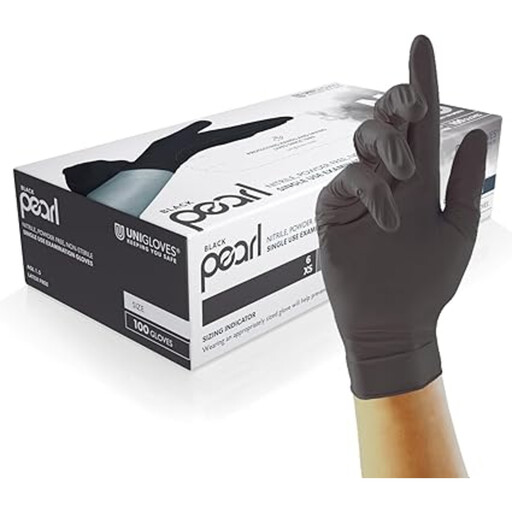
Why This Fits Their Persona: For dentists, healthcare workers and lab technicians in the UK, barrier integrity is paramount. These gloves are designed for environments where protection against pathogens and contaminants is a daily requirement.
It sidesteps the "professional grade" mirage by explicitly meeting medical standards, including an AQL of 1.5, providing a verifiable level of quality and safety.
Latex-free and powder-free to minimise skin irritation and contamination. The chlorinated finish makes them easy to don during fast-paced situations.
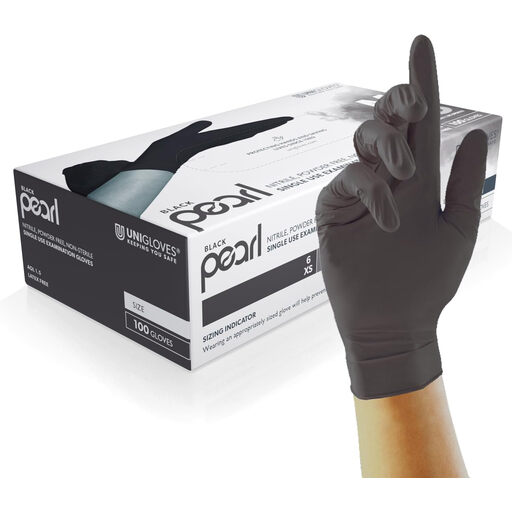
Why This Fits Their Persona: Ideal for a tattoo artist, aesthetician or mechanic. The black colour masks inks and oils, maintaining a professional appearance, while the high-tactility design allows for intricate work without compromise.
It solves the poor fit problem. The nitrile formulation conforms to the hand, reducing bagginess and fatigue, while textured fingertips prevent the slipping that plagues cheaper, smoother gloves.
Excellent chemical resistance provides protection against common inks and solvents. Touchscreen compatibility allows for operating tablets and phones without removal.
Why This Fits Their Persona: For chefs, caterers and food prep staff, hygiene is non-negotiable. These gloves are suitable for contact with all food types, preventing cross-contamination and ensuring compliance with UK food safety standards.
It directly counters the powder problem. Being completely powder-free ensures no residue is left on food, which is a critical failure of cheaper, powdered alternatives.
Certified for contact with all food types, including oily and fatty foods. The beaded cuff adds strength and prevents liquid rollback during food preparation.
We have compiled a complete, real-time list of products that fully satisfy these strict selection criteria and UK safety regulations.
AQL stands for Acceptable Quality Limit. It's a statistical sampling method used to determine the quality of a batch of gloves by testing for pinhole defects. An AQL of 1.5 means that a glove manufacturer's batch will be accepted if 1.5% or fewer of the sampled gloves fail the pinhole test. This is the recognised standard for medical examination gloves, ensuring a high level of barrier protection.
Not automatically. You must check that the specific gloves are certified for food contact. High-quality nitrile gloves, like the ones recommended, are tested and approved for contact with all categories of food, including aqueous, acidic, alcoholic and fatty foods. Always check the product description or packaging for this confirmation.
A proper fit is crucial for comfort and function. If the glove is too tight, it will be prone to tearing; if too loose, you will lose dexterity. Most manufacturers provide a sizing guide based on the width of your palm. Measure your hand across the palm just below the knuckles to find your size (e.g., Small, Medium, Large). When in doubt, it's often better to choose a snug fit, as nitrile will conform slightly to your hand.