
24/7 Customer Support

Free returns

Same-day & Next-day Delivery

Quality Guaranteed

Unlock Your Welcome Offers: FREE Delivery | Up to 80% OFF | Free 30-day JoyPlus trial
Download the APP
Whether you are preparing documents in a busy UK office, marking timber on a building site or stocking a classroom, the right black pens and markers need to match the surface, writing style and workload. A low-cost pack can become wasteful if the ink dries quickly, the tip is unsuitable or the pens are uncomfortable during long sessions.
This guide explains the practical specifications to check before buying, common marketing pitfalls and suitable options for different types of users.
A marker that produces highly visible writing may not be suitable for small labels or technical notes. Fine tip pens are more appropriate for forms, diagrams and compact handwriting, while chisel tip markers can produce either broad strokes or narrower lines depending on how they are held.
Check the tip style rather than relying on phrases such as “high visibility” or “professional marking”. For detailed work, look for a stated tip size or fine-point design.
Black ink pens are available in ballpoint, gel, rollerball, fineliner and permanent marker formats. These are not interchangeable. A water-based rollerball may write smoothly on paper but is not intended for metal, plastic or timber. Conversely, permanent black markers may bleed through thin paper or be unsuitable for documents that need clean corrections.
Look for the actual ink type and intended surfaces. If a product is described as waterproof or fade-resistant, treat this as a product feature, but still follow the manufacturer’s instructions and test it on an inconspicuous area first.
A large pack may reduce the cost per item, but only if the pens remain usable. Uncapped tips, direct sunlight and high temperatures can affect ink performance. Retractable ballpoint pens can be more convenient in shared offices because there is no loose cap to misplace, while capped fineliners and markers need to be closed securely after use.
For workplace or classroom purchasing, also check age warnings, packaging information and any ventilation guidance for solvent or paint-based markers.
For everyday paperwork, prioritise smooth flow, quick drying and resistance to smearing. Left-handed users may particularly prefer fast-drying ballpoint or gel ink, although performance depends on paper and writing pressure.
For construction, DIY and trade work, consider permanent black markers with ink designed for materials such as wood, metal or plastic. A deep-hole marker may be more useful than a standard barrel when marking through drilled holes or narrow gaps.
Erasable pens are suitable for drafts, revision notes and planning, but marks should not be used where permanent records are required. Heat-sensitive erasable ink can behave differently when exposed to heat or friction, so test it before using it on important paperwork.
A two-pack may suit occasional use or a toolbox. Packs of six to twelve are more practical for home offices, students and teachers, while bulk stationery packs can help businesses, schools and workshops maintain a shared supply.
For extended writing, consider a rubberised or soft grip, balanced barrel and retractable mechanism. These details can make a noticeable difference during long note-taking sessions without relying on vague comfort claims.
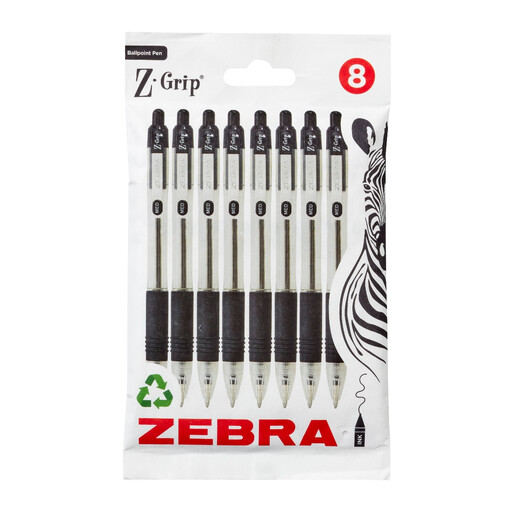
Why This Fits Their Persona: An eight-pack suits students, home offices and shared desks that need dependable everyday writing without buying specialist markers.
The retractable design avoids loose caps, while the stated 1.0mm medium point is clearer than an unspecified “bold” tip.
Eight retractable black ballpoint pens, 1.0mm medium points and rubberised grips.
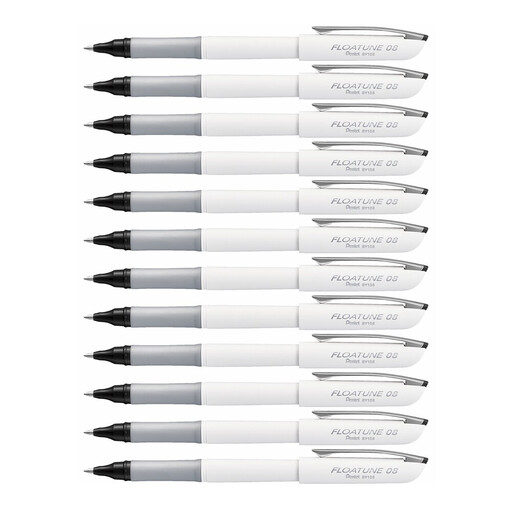
Why This Fits Their Persona: Suitable for users who prioritise fluid handwriting for correspondence, meeting notes and longer writing sessions.
The product specifies a 0.8mm nib and an approximate 0.4mm line width, giving buyers clearer expectations than broad smoothness claims.
Dual-ball tip design, water-based ink with oil-based lubricant and a 12-pen pack.
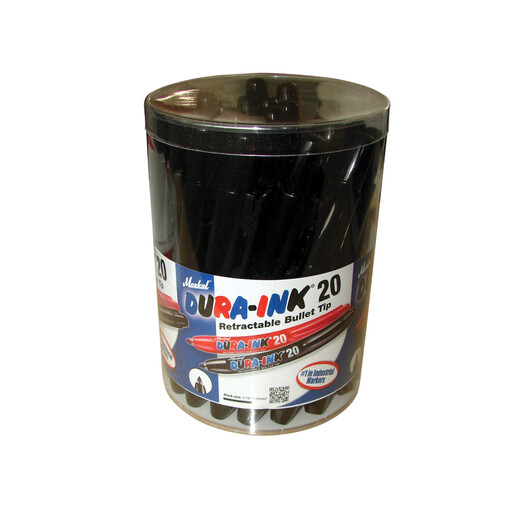
Why This Fits Their Persona: A practical choice for workshops, tradespeople, construction teams and DIY users who mark wood, metal or plastic regularly.
The retractable format removes the separate cap, and the listed permanent ink and multi-surface use clarify its intended role.
24-pack, retractable tip and permanent black ink for metal, wood and plastic marking.
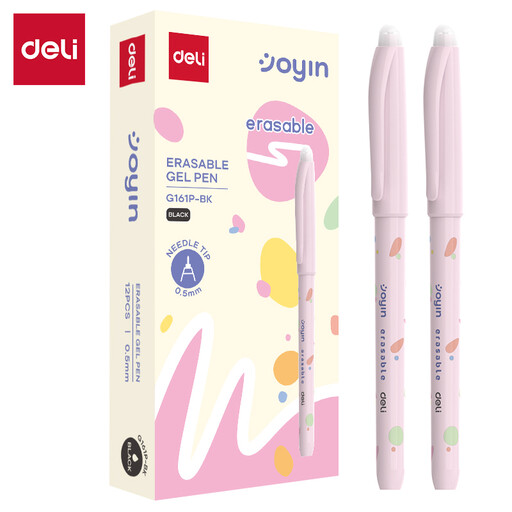
Why This Fits Their Persona: Useful for students, planners and office users who frequently revise notes, draft layouts or correct handwriting.
The product clearly identifies a 0.5mm needle tip and erasable gel ink, while its guidance recommends testing before use on important documents.
0.5mm precision tip, erasable black gel ink and 12 pens per pack.
We have compiled a complete, real-time list of products that fully satisfy these strict selection criteria and UK safety regulations.
Ballpoint pens are generally practical for forms, signatures and quick notes because they use relatively controlled ink flow and often have retractable bodies. Gel pens can provide a darker, smoother line, but drying time and bleed-through depend on the paper. Choose based on writing speed, paper quality and whether you need a fine or medium line.
Replace caps firmly after use and keep capped markers in a cool, dry place away from direct sunlight. Follow the product’s storage guidance; some markers are best stored horizontally. Retractable markers should be fully closed when not in use.
No. Product suitability varies by ink formulation and surface. Permanent black markers may be designed for materials such as wood, metal and plastic, but porous surfaces can absorb ink and smooth surfaces may require preparation. Test first, use adequate ventilation where advised and follow the packaging warnings.