
24/7 Customer Support

Free returns

Same-day & Next-day Delivery

Quality Guaranteed

Unlock Your Welcome Offers: FREE Delivery | Up to 80% OFF | Free 30-day JoyPlus trial
Download the APP
Whether you are preparing for a new term, restocking an office drawer or choosing journaling pens, the right black pens should match how and where you write. A fine point may suit detailed notes, while a broad ballpoint can be easier to read on forms and paperwork.
However, product descriptions often focus on phrases such as “smooth writing” or “long-lasting” without explaining the specifications behind them. Understanding ink type, tip size, closure design and pack quantity can help you avoid buying pens that smear, dry out or feel uncomfortable after regular use.
A pen described as “fine” may still produce a different line from another fine point. For example, a 0.5mm tip is generally suited to compact handwriting, annotation and detailed work, while a 1.0mm or 1.2mm tip creates a broader line that can be easier to read.
Check both the stated tip size and the intended use. Fine point pens are practical for planners and crowded notebook pages, whereas medium and bold points may be more suitable for signing documents, classroom marking or writing on forms.
Black gel pens, black ballpoint pens and black rollerball pens do not write in exactly the same way.
A “smooth writing pen” is not automatically suitable for left-handed writing. If you write with your left hand, look for quick-drying pens and check whether the product description specifically mentions smudge resistance.
Bulk pen packs can reduce the need for frequent reordering, but a 24-pack of markers is not a sensible substitute for everyday pens. Consider whether you need pens for school and office work, journaling pens, drawing tools or permanent surface marking.
Also check the closure. Retractable pens are convenient for desks, bags and shared stationery cupboards because there is no loose cap to misplace. Capped pens may be preferable for some rollerballs and fineliners, provided they are recapped after use.
For notebooks, printer paper and planners, look for descriptions that identify the ink as quick-drying, smear-resistant or designed for smooth flow. If you are using thin paper, test whether the pen may show through before filling an entire journal page.
Erasable gel pens can be useful for drafts, homework and planning, but they should not be treated as permanent records. The product information should explain whether the ink is heat-sensitive or erased through friction. For official documents, choose a conventional black ink pen unless the recipient specifically accepts erasable writing.
A 0.5mm needle or twin-ball tip can offer precise control for small handwriting, diagrams and annotations. A 0.8mm nib may produce an approximately medium-width line, while 1.0mm and 1.2mm ballpoints create more visible strokes.
Artists and note-makers may also want a fineliner with a robust tip. The Pentel Pointliner range, for example, is described as having ISO 14145-2 certified water- and fade-resistant pigment ink, with a choice of tip sizes for detailed drawing and writing.
For extended writing, compare the barrel shape and grip material rather than relying only on the word “ergonomic”. A rubberised or silicone grip may provide a more secure hold, while a wider barrel can feel more comfortable for users who prefer a larger writing instrument.
Store capped pens with the cap secured. Retractable pens should be clicked closed after use. Markers should be recapped promptly and stored according to the product instructions. Keep all pens away from young children because caps and other small components can present a choking hazard.
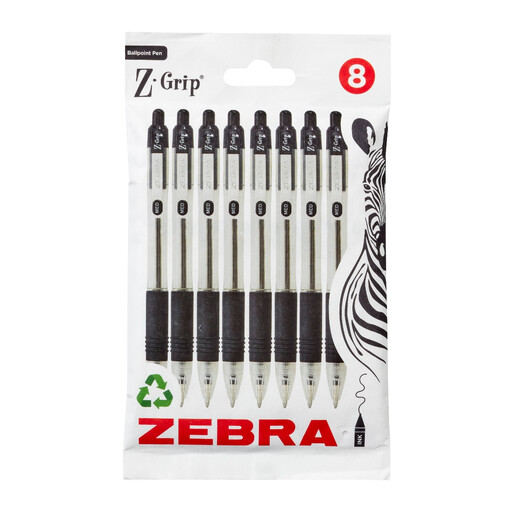
Why This Fits Their Persona: Eight retractable black ballpoint pens provide a practical supply for home study, shared desks, school bags and everyday paperwork.
The 1.0mm medium point and push-button closure are clearly specified, avoiding vague tip descriptions and loose caps.
Retractable design, rubberised grip, stainless steel clip and a pack of eight.
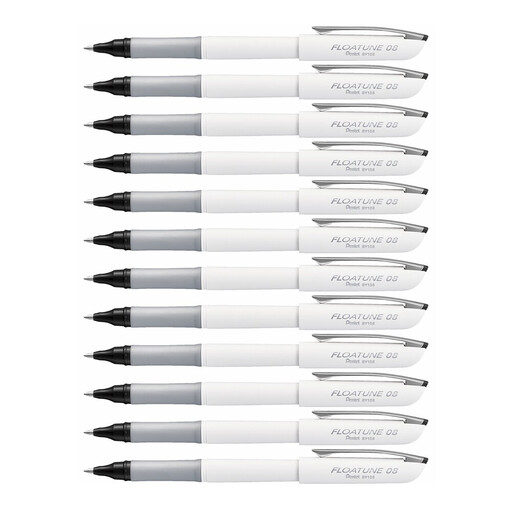
Why This Fits Their Persona: A 12-pack of capped rollerball pens suits frequent writers who value fluid movement for letters, meeting notes and longer handwritten work.
The 0.8mm nib and approximately 0.4mm line width are stated, giving a clearer expectation than relying on “ultra-smooth” wording alone.
Dual-ball tip and water-based ink with an oil-based lubricant; capped format helps protect the tip between uses.
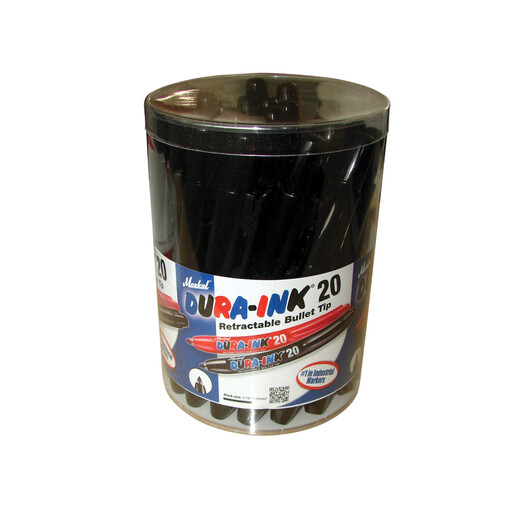
Why This Fits Their Persona: This is aimed at workshops, warehouses, construction tasks and DIY users who need black permanent markers for more than paper.
Its product description identifies the retractable format and intended surfaces, helping prevent the mistake of using ordinary pens for industrial marking.
Permanent black ink is listed for metal, wood and plastic; the 24-pack suits high-volume marking.
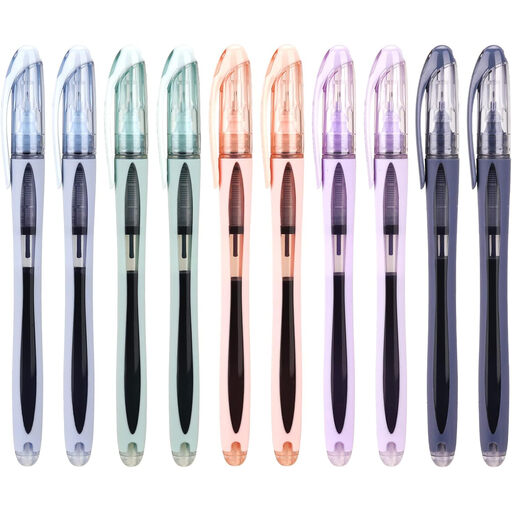
Why This Fits Their Persona: The extra-fine tip is suited to compact journaling, study notes, marking and detailed sketches where line control matters.
The stated 0.5mm needle tip and quick-drying liquid ink make the intended writing style clear. The snap cap also signals the need for proper storage.
Ten pens, ergonomic grip and a listed ink capacity of up to 1,500m of writing per pen.
We have compiled a complete, real-time list of products that fully satisfy these strict selection criteria and UK safety regulations.
They can be suitable for ordinary paperwork, but requirements vary between organisations. For forms, signatures or records, check whether black gel ink is accepted. Avoid erasable gel pens where a permanent record is required.
Not necessarily. Lifespan depends on ink volume, frequency of use, storage and whether the tip is protected. Retractable pens reduce the risk of losing a cap, while capped rollerballs and fineliners need to be closed securely after use to help prevent drying.
Quick-drying black pens may help reduce smearing, particularly when writing at speed. Low-viscosity ballpoints and products described as smear-resistant are options to compare, but paper type, writing pressure and hand position also affect the result.