
24/7 Customer Support

Free returns

Same-day & Next-day Delivery

Quality Guaranteed

Unlock Your Welcome Offers: FREE Delivery | Up to 80% OFF | Free 30-day JoyPlus trial
Download the APP
As a Joybuy Product Recommendation Officer, my role is to help you navigate the crowded market of home goods. When it comes to blackout curtains, the promises are big: perfect darkness for better sleep, lower energy bills and a quieter room. Yet, many UK shoppers find their new curtains don't quite live up to the hype.
Before you make a purchase, it's worth knowing about a few common pitfalls. Many products fall short due to misleading marketing or design flaws that only become apparent after you've hung them.
To ensure you get the performance you're paying for, focus on these core parameters. They are the true indicators of a curtain's quality and suitability for your home.
The effectiveness of blackout curtains comes down to how they are made. You will generally encounter two main types:
The top of the curtain, or the "header," determines how it hangs. The two most common styles in the UK are:
To maximise light-blocking and thermal insulation, your curtains must provide ample coverage. Before buying ready made blackout curtains, measure your window carefully.
Based on these practical considerations, here are a few options matched to different household needs.
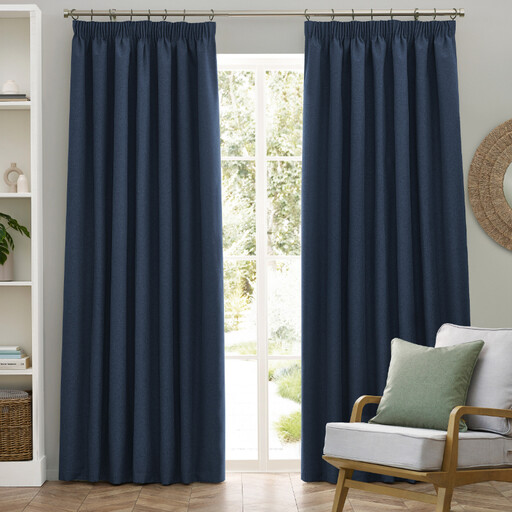
Why This Fits Their Persona: For shift workers, parents of young children or anyone whose sleep is disturbed by the slightest light, achieving total darkness is non-negotiable. This curtain is designed specifically for that purpose.
It sidesteps the "room darkening" trap by using a 100% thermal blackout lining. This separate layer provides a physical barrier to light that is more effective than a woven fabric alone.
The laminated lining offers superior light blocking and thermal insulation. The pencil pleat header makes it suitable for traditional track systems often found in UK homes.
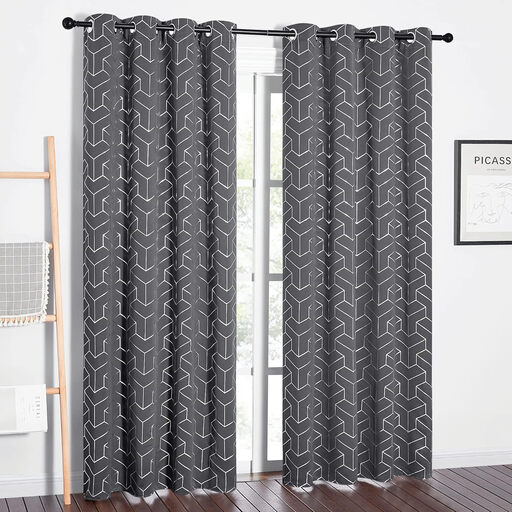
Why This Fits Their Persona: For those who see window treatments as a key part of their interior design, a plain curtain won't do. This option combines strong performance with a decorative flair that elevates a room's aesthetic.
It provides a clear performance expectation, stating it blocks 85-95% of light. This avoids the misleading "100% blackout" claim while still offering significant room darkening and a stylish finish.
The silver foil geometric pattern on a modern grey blackout curtain adds a sophisticated visual element. The eyelet curtain header ensures a simple, contemporary installation on a standard pole.
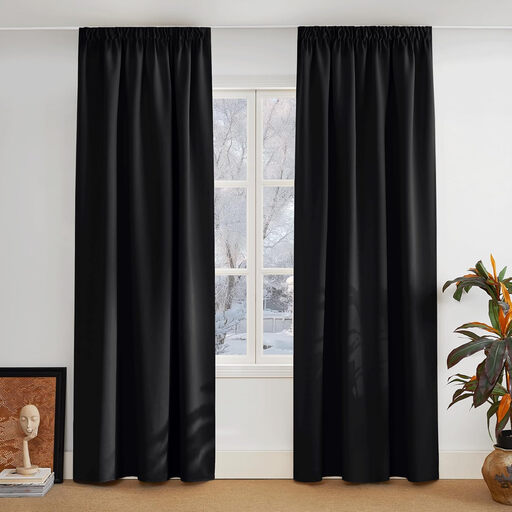
Why This Fits Their Persona: Many UK homes, particularly older properties, are fitted with curtain tracks rather than poles. This user needs a high-performance blackout solution that is compatible with their existing setup.
It directly solves the "wrong header" problem by featuring a classic pencil pleat design. This makes it instantly compatible with curtain tracks (using hooks) and poles (using rings), offering maximum versatility.
The triple-weave fabric provides significant light blocking (75-85%) and thermal insulation. Its dense construction also offers noticeable noise reducing properties, ideal for homes on busier streets.
We have compiled a complete, real-time list of products that fully satisfy these strict selection criteria and UK safety regulations.
The terms are often used interchangeably, but there is a key difference. Room darkening curtains are made from tightly woven, opaque fabric that significantly reduces incoming light but doesn't block it completely. Blackout curtains are specifically constructed with a lining or a dense inner weave to block 95-100% of light, creating near-total darkness. If you need a completely dark room for sleep, always look for products that specify a percentage of light blockage or mention a dedicated blackout lining.
Yes, they can contribute to energy savings. Thermal curtains act as an insulator for your windows, which are a major source of heat loss in homes. In winter, they help trap heat inside, reducing the workload on your heating system. In summer, they reflect solar heat, keeping rooms cooler and lessening the need for fans or air conditioning. While they won't eliminate your energy bills, they are a practical way to improve your home's energy efficiency.
For optimal light blockage, your curtains need to cover more than just the glass. A good rule of thumb is to ensure the combined width of your curtain panels is 1.5 to 2.5 times the width of your window or curtain pole. This fullness ensures there are no gaps at the sides where light can leak in and creates an attractive, draped look when the curtains are closed.