Solo user freezing small portions
If you blanch modest amounts of green beans, accessible space for labelled, meal-sized bags or tubs matters more than capacity you will not use.


If your existing freezer compartment has stable room for labelled, meal-sized portions, you may not need a separate appliance for one person’s blanched green beans. When batches repeatedly outgrow that space, an under-counter upright can make small portions easier to separate and retrieve; consider a chest freezer for bulk storage if you have floor space and can accommodate its deeper layout. Check the exact model’s fit, freezing capacity, defrost system and energy information before choosing.
If you blanch modest amounts of green beans, accessible space for labelled, meal-sized bags or tubs matters more than capacity you will not use.
A concentrated harvest may call for more freezing room. The available floor or under-counter space, opening clearance and intended location will help determine which format is practical.
If upkeep could affect your choice, compare the exact model’s Frost Free, Low Frost or manual-defrost design rather than assuming a brand uses one system throughout its range.
Start with the space your portions need now, then decide whether occasional large batches justify another appliance and its ongoing upkeep.
Consider it when: A few labelled portions fit without crowding the food already stored.
Trade-off: It avoids another appliance, but a large harvest may exceed the available space.
Consider it when: You regularly need separate, easy-to-reach storage for small portions and have a suitable installation space.
Trade-off: Its compartments can help with access, but their size may limit how you arrange a larger batch.
Consider it when: Seasonal batches or other frozen food make bulk storage more important than drawer access.
Trade-off: Small portions need deliberate organisation in deeper storage, and the lid needs room to open.
| Concern | What to check | Who this matters to |
|---|---|---|
| Portion space and access | Compare usable frozen volume and the drawer, shelf or basket layout. Measure the appliance and its opening clearance. | If I freeze a few meal-sized bags at a time, I want to find older portions without unpacking everything. Around 40% of consumers would put portion access first. |
| Batch freezing and storage | Compare the model’s rated freezing capacity in kg/24 h with a likely harvest batch; check storage temperature with a thermometer where needed. | A concentrated harvest can mean adding many prepared portions at once, so I need to know whether the freezer suits that batch. Roughly 30% of consumers would prioritise batch-freezing conditions. |
| Upkeep and running information | Compare the exact model’s energy label and product information sheet, then check its defrost system and permitted installation conditions. | If I expect to keep a separate freezer running year-round, I want to compare its energy information and know how much defrosting it needs. Around 30% of consumers would put ongoing upkeep first. |
A chest layout may hold a batch yet make individual bags harder to reach; compartments in an upright can make dated portions easier to separate.
Work out how many bags or tubs you expect to store, then inspect the drawers, shelves or baskets as well as the stated volume.
Low ambient temperatures may fall outside a particular model’s intended operating conditions.
Check the exact model’s installation instructions and stated ambient-temperature range before choosing a garage or outbuilding location.
Low Frost reduces ice build-up but does not eliminate defrosting; a manual-defrost design also needs periodic attention.
If avoiding defrosting work is important, check the exact model’s defrost system rather than relying on its general description.
Defrosting can take time and require you to move stored portions temporarily.
A separate freezer runs continuously, so its energy information belongs in the decision alongside its storage layout.
Compare the label and product information sheet for the exact model and variant, rather than relying on promotional wording.
Beko has freestanding under-counter freezers, including selected models marketed for outbuilding use.
Hotpoint offers under-counter formats, including a freestanding Low Frost option.
Bosch has built-under freezer options for kitchens with suitable cabinetry.
These options cover upright or integrated storage for separating portions and a chest format to consider for larger batches. Check installation fit and the way you will organise small bags before deciding which format suits your beans.
 No image available
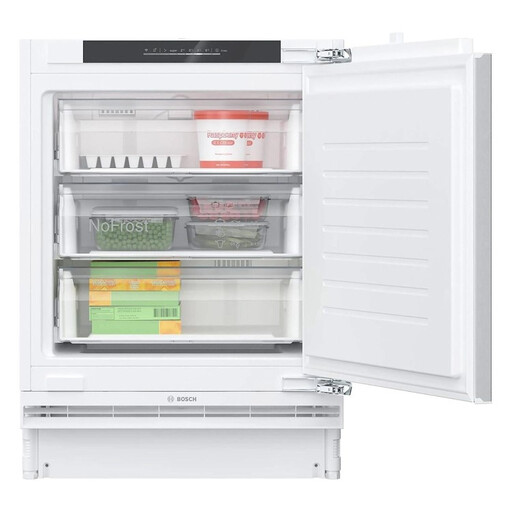
Consider this for separated portions if you have compatible built-under cabinetry; check the furniture-door fit and ventilation requirements.
Bosch lists 85 L capacity, Full NoFrost and a rated freezing capacity of 8.0 kg/24 h for the GUN21VFE0G.
 No image available
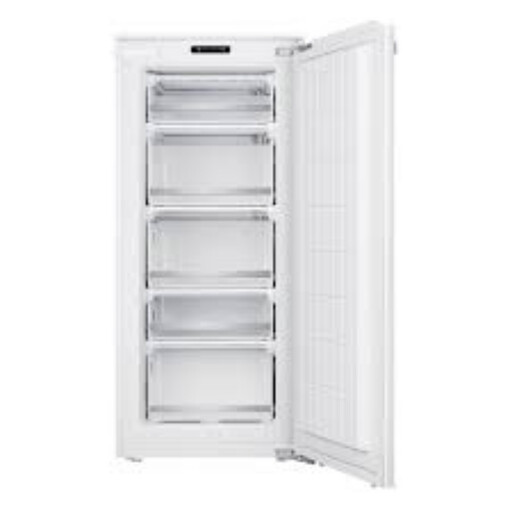
This integrated format is worth considering if you have a compatible kitchen space for additional portion storage. Check the full installation dimensions and cabinetry requirements before ordering.
 No image available
Its upright format may suit accessible storage for meal-sized portions where under-counter space is available; measure that space and the door clearance.
The product name states 85 L capacity and a 55 cm width. Allow for defrosting when assessing upkeep.
 No image available
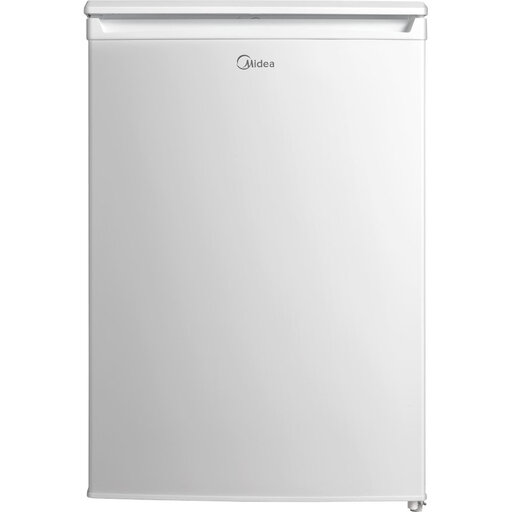
Consider this upright format for organising portions in a smaller kitchen; check its dimensions and door clearance.
The product title states 83 L, while its descriptions state 86 litres, so confirm the capacity for this exact model before comparing space. Allow for manual defrosting.
 No image available
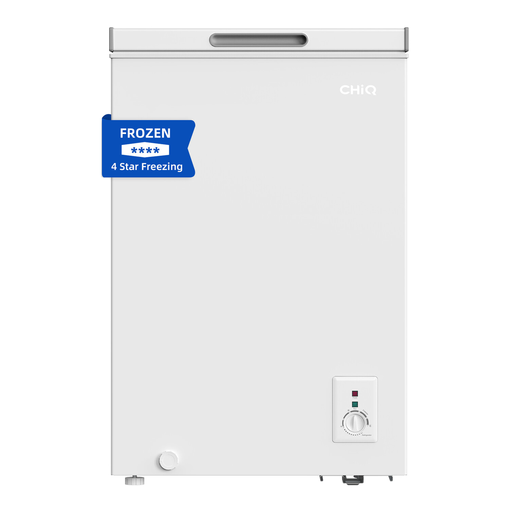
Consider the chest layout if you need space for a larger seasonal batch and can keep small portions organised within it.
The product name states 99 L capacity. Check the floor space, lid clearance and defrost system for this model before buying.
Not if your existing compartment has stable, usable space for your labelled portions. Consider a separate appliance when harvests or other frozen food repeatedly exceed that space; choose its format according to portion access, batch size and available room.
Aim for a freezer temperature at or below −18°C, checking it with a thermometer where needed. Cambridge University Hospitals NHS Foundation Trust gives this target in its food-safety advice for people at increased risk of infection; an appliance’s size alone does not establish its temperature in your installation.
No. Low Frost reduces ice build-up, whereas Frost Free is designed to manage frost automatically. Check the exact model’s instructions if avoiding manual defrosting is central to your choice.
Only choose that location if the exact model’s installation guidance permits the temperatures it may encounter there. Beko states operation down to −15°C for its UFF4584, and Hotpoint states the same for its H55Z1 112W UK; neither claim establishes suitability for other models.
Compare the energy label and product information sheet for the exact freezer and variant, alongside the storage space you will use. GOV.UK states that products within the scope of energy-labelling rules must be supplied with an accurate printed energy label.