Small-batch dressing makers
If you are making dressing for one or two people, pay attention to whether a low fill level reaches the blades. A manageable cup and straightforward rinsing may matter more to you than a large jug.


For one or two portions of avocado dressing, a compact plug-in personal blender is a practical choice if the cottage has a suitable socket and the recipe makes enough to reach the blades. Choose cordless when socket access is uncertain and you can charge the blender beforehand; consider a hand blender if you would rather work in a separate jug or vary the batch size. Whichever format you choose, check its instructions for small, thick mixtures and plan how you will clean it.
If you are making dressing for one or two people, pay attention to whether a low fill level reaches the blades. A manageable cup and straightforward rinsing may matter more to you than a large jug.
If the blender is coming with you for a short stay, consider the space taken by the appliance and its loose parts. Decide before travelling whether you will rely on a cottage socket or need to charge a cordless model.
If you may also prepare dips, sauces or batches larger than a personal cup holds, a hand blender used with a suitable vessel could give you more room to adjust the quantity as you work.
Choose the blending format around the vessel and power supply you can use at the cottage, then check whether it can handle your intended dressing quantity and clean-up routine.
Choose it when: You have a suitable socket and want to make a small batch in a dedicated cup.
Bear in mind: It depends on mains access, and a very small amount may not circulate in its fixed cup shape.
Choose it when: You cannot rely on a convenient socket where you plan to blend.
Bear in mind: You need to charge it, and battery-dependent operation may be less convenient for repeated batches.
Choose it when: You want to adjust the quantity in a separate, suitably tall jug or other appropriate vessel.
Bear in mind: It is less self-contained to transport and can splash if the vessel is unsuitable.
| Concern | What to check | Who this matters to |
|---|---|---|
| Small-batch texture | Check cup shape and any guidance on minimum quantity or thick sauces; allow for the liquid your recipe needs. | I want one or two portions, but the ingredients still need to move through the blades. Around 31% of consumers put small-batch texture first. |
| Travel and kitchen fit | Compare packed size and weight, then plan where the appliance will sit and how it will be powered. | If worktop and luggage space are tight, I need an appliance I can bring and set up without fuss. For around 31% of consumers, travel and kitchen fit are the primary concern. |
| Cleaning | Confirm which parts can go in a dishwasher and whether you can safely reach residue around the blade. | I would rather not wash several vessels after making a small amount of dressing. Ease of cleaning comes first for around 23% of consumers. |
| Socket-free use | Check the charging connection, stated charge time and whether you can recharge during the stay. | When the useful socket is away from the preparation area, I need to blend without plugging in there. Around 15% of consumers make socket-free use their main priority. |
A small amount of dressing may not circulate well in a large jug, which also takes up more luggage and worktop space.
Compare personal cups or a hand blender with a narrow, suitable jug for small portions. Assess a larger jug separately if you also expect to make larger batches.
A motor rating does not tell you whether a low fill level reaches the blades or how the vessel handles a thick mixture.
Check the exact model’s vessel, blade arrangement and instructions for dips or sauces alongside its power rating.
Portability will not help with the first batch if the battery is depleted or you cannot use the required charging equipment.
Charge it before leaving and bring the appropriate cable. If you expect repeated use and have a suitable socket, weigh that convenience against a plug-in model.
A damaged plug, cable or connector presents an electrical hazard. The Health and Safety Executive advises checking portable electrical equipment each time it is used and taking damaged equipment out of use.
Inspect the blender before use, keep electrical parts dry and do not use it if you find damage.
Its 600 Series illustrates a compact, mains-powered personal-cup option. nutribullet UK lists the 600 model at 600 W and 1.9 kg, with dishwasher-safe cups, lids and lip rings.
The cordless Blast BC151UK is relevant when blending away from a convenient socket. Ninja Kitchen UK describes USB-C charging and a dishwasher-safe cup and lid.
The BL15FDG0 Mix & Move is a mains personal-blender example. The listed specification covers a 300 W motor, two 0.6 L bottles, removable blades and dishwasher-safe parts for that model.
Breville Blend Active models are described as blending directly into reusable bottles, a format worth considering when you want fewer vessels to wash.
These choices cover cordless personal blenders for use away from a socket and hand blenders for working in a separate vessel. Check the intended batch size and power arrangements for the particular model before taking it to a holiday cottage.
 No image available
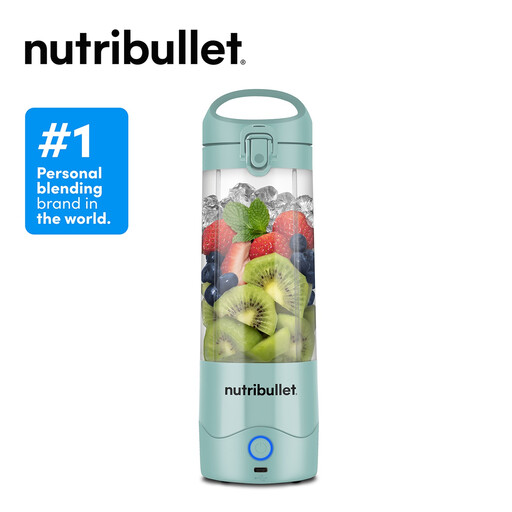
Consider this cordless cup format if you expect to blend away from a convenient cottage socket.
The product name specifies a 475ml cup, extractor blade, to-go lid, USB-C charging cable and 15+ blending cycles. Check the instructions for the amount of liquid and minimum batch size needed for your dressing; charge it before use.
 No image available
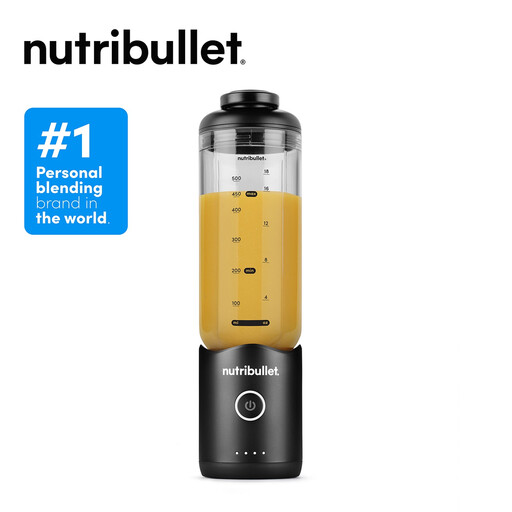
This cordless model is an option when you want a detachable personal vessel for a small batch.
Its product name specifies a 500ml vessel. Before relying on it during a stay, check its charging requirements and instructions for thick mixtures; do not assume a very small amount will blend effectively.
 No image available
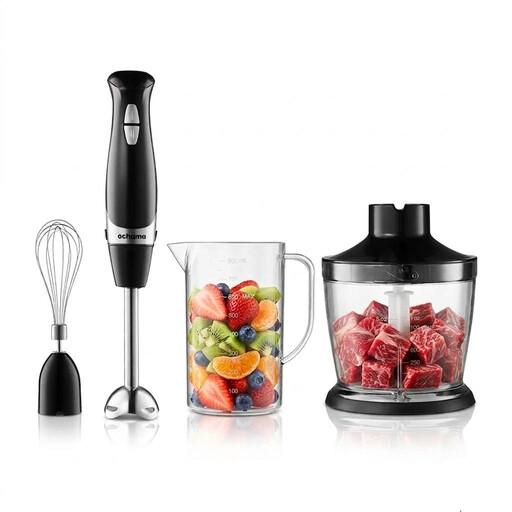
Consider a hand blender if you would rather prepare dressing in a separate vessel and adjust the quantity as you go.
The product name specifies two speeds, a whisk, a meat-grinder attachment, a 500ml chopper cup and an 800ml beaker. Choose a suitable vessel for the amount you intend to make, and follow the stated one-minute limit on continuous operation.
 No image available
This hand-blender format suits someone who wants to work in a separate vessel rather than a personal blending cup.
A beaker and chopper are named in the product title. Check the manual for an appropriate minimum quantity and the exact parts that can go in a dishwasher; unplug the appliance before changing attachments or cleaning it.
 No image available
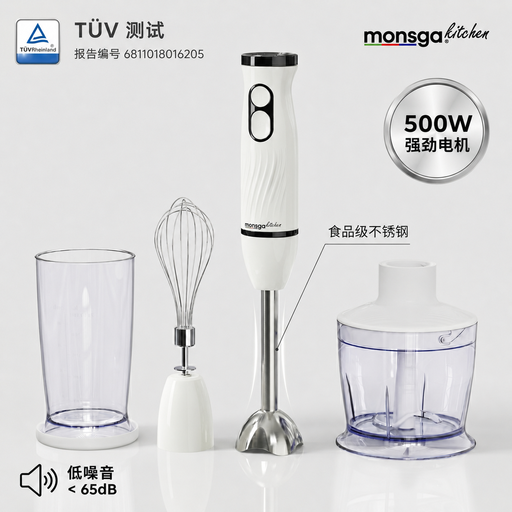
Consider this separate-vessel format if you want a hand blender with a supplied beaker for your cottage kitchen.
The product name specifies a 500mL beaker, 500mL chopper, normal and turbo modes, and a 1.5m cable. Follow the instructions to add liquid, avoid dry blending and limit continuous operation to one minute; check that the intended batch fits the vessel.
A personal blender can be a practical format for a small dressing batch, provided the amount and consistency suit its cup and instructions. Include enough recipe liquid for the ingredients to move around the blades, and check guidance for very small or thick mixtures rather than assuming a drinks cup will handle either.
Choose cordless when you may need to blend away from a suitable socket and can charge the appliance before use. Ninja Kitchen UK states that its Blast BC151UK offers up to 15 blends per full charge and takes about two hours to charge fully; that model-specific claim is a planning reference, not a promise for every dressing recipe.
Look for a vessel you can also use to serve or store the dressing, then check which cup, lid and blade components the exact model permits you to wash in a dishwasher. A cottage may not have one, so consider whether you can safely clean those parts by hand too; keep the motor unit out of water.
Inspect the appliance, plug and cable before each use, and do not use equipment that is damaged. The Health and Safety Executive advises checking portable electrical equipment each time it is used and removing it from use if damage is found; keep electrical components dry and use the appliance as instructed.