Weekly meal-prep dressing makers
If you prepare dressing for several lunches, bowls or salads at once, the jug’s usable capacity matters more than a large-looking total-volume figure.


For batch avocado dressing, choose a jug blender whose permitted fill level accommodates the amount you normally make. Speed or pulse controls give you a way to adjust texture, while the cleaning instructions matter if you prepare oily dressings often. Check whether an advertised volume describes the whole jug or its working capacity before treating it as your batch size.
If you prepare dressing for several lunches, bowls or salads at once, the jug’s usable capacity matters more than a large-looking total-volume figure.
If you want a smooth avocado base but prefer to add some ingredients in short bursts, look for controls that let you vary the blending rather than relying on one fixed setting.
If oily dressing is a regular part of your preparation, check how the jug, lid and blade assembly must be cleaned after use.
Start with the amount of dressing you make in one session, then decide how much texture control and clean-up convenience you need.
| Concern | What to check | Who this matters to |
|---|---|---|
| Usable batch capacity | Compare stated working capacity with your usual batch; if only jug volume is given, check the model’s fill guidance. | I want to make dressing for several meals without stopping to blend it twice. Around 42% of consumers put one-batch capacity first. |
| Texture control | Check whether the exact model offers variable speeds, a pulse function or both. | I want to smooth the avocado base, then decide how finely to blend later additions. For around 33% of consumers, control over the finished texture is the main concern. |
| Clean-up | Check which parts may go in the dishwasher and what care the lid, seals and blade area require. | When I make oily dressing frequently, an awkward clean-up routine could make the appliance less convenient to use. Ease of cleaning comes first for around 25% of consumers. |
A jug can have a lower working capacity than its total volume. Magimix, for example, gives its Blender Power 5XL a 2.8L jug but a 2L working capacity.
Use the working-capacity figure when one is stated. Otherwise, consult the exact model’s fill and operating guidance before planning a batch.
A small cup may be useful for occasional portions but can mean repeating the blend when you prepare dressing for several meals. Ninja lists a 700ml single-serve cup alongside the larger jug supplied with its BN750UK.
If batch cooking is the main purpose, assess the multi-serve jug as your primary blending vessel and treat a personal cup as an additional option.
Vitamix states that its UK-listed E320 is intended for household use and that commercial use invalidates its warranty.
If you will make dressing for sale or in a commercial kitchen, check the exact appliance’s intended use and warranty terms, as well as the food-business rules that apply to your operation.
Using a household-only model commercially can put its warranty cover at risk.
Dishwasher compatibility and self-cleaning methods apply to particular models and parts; they do not tell you how every food-contact surface should be cared for.
Follow the instructions for the jug, lid, seals and blades. For food-business use, GOV.UK advises regular equipment cleaning and cleaning and disinfection after contact with raw food.
For shoppers comparing larger countertop jugs, Magimix UK lists a 2.8L jug and 2L working capacity for the Blender Power 5XL.
For manual control of a household batch, Vitamix UK lists a 2L container, ten variable speeds and a pulse feature for the E320.
For cooks who also prepare smaller portions, Ninja Kitchen UK lists a 2.1L Total Crushing Jug and a 700ml Single-Serve Cup with the BN750UK.
These jug blenders and blender-equipped appliances are options to consider for household dressing batches. Compare the permitted blender-jug fill level with your recipe before choosing; a food processor bowl’s volume is not the blender jug’s capacity.
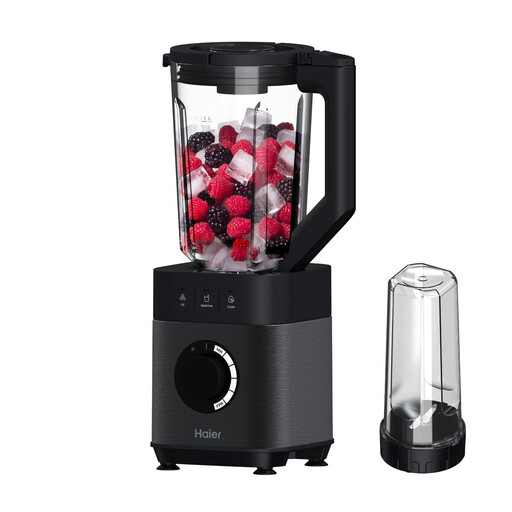 Image unavailable
Consider the jug for a household dressing batch and the separate cup for smaller preparations.
The product name specifies a 1.7L glass jug, a 0.6L Tritan cup and a 1200W motor. Check the jug’s permitted fill level against your usual batch rather than treating 1.7L as working capacity.
 Image unavailable
Consider this combination appliance if you want a blender jug as well as food-processing functions.
The product name specifies variable speed, pulse, integrated weighing and 13 accessories. Its 3L capacity refers to the food processor bowl, not the blender jug; check the jug’s own permitted fill level for your dressing batch.
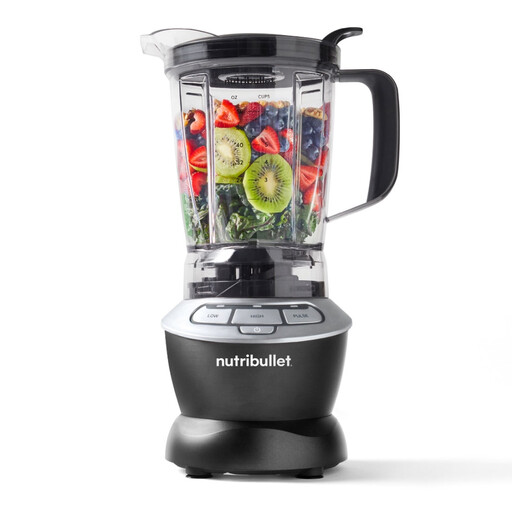 Image unavailable
Consider its pitcher format if you prepare dressing in a jug rather than a single-serve cup.
The product name specifies 1.6L, 1000W and hot and cold blending. Confirm the pitcher’s permitted working fill and operating instructions for your intended quantity.
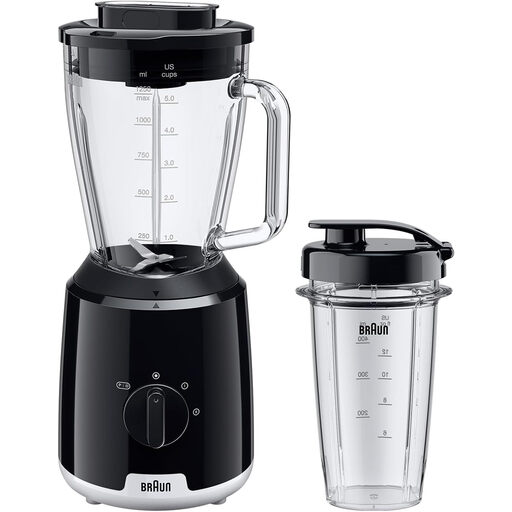 Image unavailable
The jug offers a way to prepare more dressing at once than the accompanying smoothie bottle.
The product name specifies two speeds, a 1.5L glass jug and a Smoothie To Go bottle. Check the jug’s fill guidance for your batch; two speeds do not tell you what texture a particular recipe will produce.
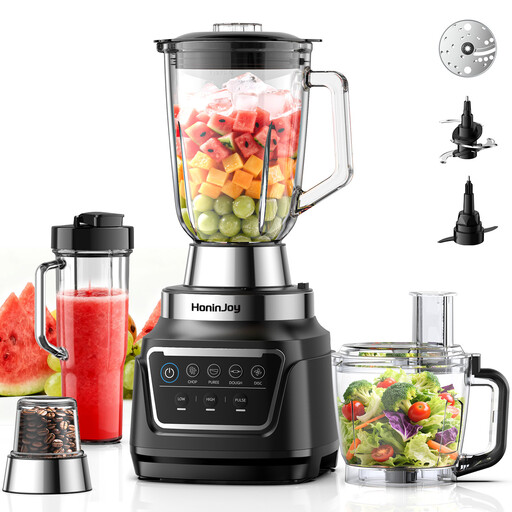 Image unavailable
Consider this combination appliance if you want blending alongside its named food-processing functions.
The product name lists chopping, grinding, slicing and shredding, as well as dishwasher-safe cleaning. Confirm the blender pitcher’s permitted fill level and the controls you need for texture adjustment before choosing it for dressing batches.
Use stated working capacity when it is available, because total jug volume need not be the usable blend volume. Magimix UK lists a 2.8L jug but a 2L working capacity for the Blender Power 5XL; for a model that gives only total volume, check its fill guidance against your usual batch.
The UK-listed E320 is intended for household use, and Vitamix says commercial use invalidates its warranty. If you are preparing dressing for a business, confirm the suitability and warranty terms of the exact appliance before purchase and check the food-business requirements that apply to your operation.
No cleaning feature replaces following the care instructions for all food-contact parts. For UK food businesses, GOV.UK advises cleaning equipment regularly and cleaning and disinfecting food areas and equipment after contact with raw food; a household blender’s cleaning programme is not a substitute for those obligations.