
24/7 Customer Support

Free returns

Same-day & Next-day Delivery

Quality Guaranteed

Unlock Your Welcome Offers: FREE Delivery | Up to 80% OFF | Free 30-day JoyPlus trial
Download the APP
A blender can simplify breakfast smoothies, protein shakes, sauces, soups and baby-food preparation. However, choosing the wrong model may leave you with a noisy appliance that is difficult to clean, too small for family portions or unsuitable for the recipes you actually make.
Marketing can also make comparison difficult. A high wattage figure does not automatically guarantee smoother results, while a compact design may mean a smaller working capacity than expected. Before choosing a blender, check the following practical details.
Motor power is useful, but it is not the complete performance picture. A 600W blender may suit everyday smoothies, sauces and soft ingredients, while harder or larger batches may benefit from a higher-powered motor. Blade design, jug shape and the amount of liquid added also affect circulation and texture.
Always consider the full system rather than comparing wattage alone.
A jug’s stated capacity is not always the amount you should fill while blending. Ingredients need space to circulate, and hot liquids require additional room because steam can increase pressure. Check the manufacturer’s instructions, particularly if you want a soup maker blender or plan to prepare large family portions.
A blender with several attachments can be useful, but every extra component needs washing and storage. Look for dishwasher-safe blender parts, detachable blades and a footprint that suits your cupboard or worktop.
The motor base should not be immersed in water. Blades are sharp, so unplug the appliance before removing attachments or cleaning.
Choose the format around your routine:
For a household, a 1.2L to 1.75L jug may be more convenient than repeatedly processing separate servings. For one person, a 475ml to 700ml cup can reduce washing-up.
A 300W personal model may be appropriate for smaller smoothie portions and softer ingredients. A 450W to 600W blender can offer more flexibility for sauces, fruit, vegetables and routine drinks. Higher-powered models may be more suitable for frequent ice crushing, tougher ingredients or larger portions.
Also check the controls. Two or three speeds provide manual texture control, while pulse settings can help with short bursts. An ice-crushing blender should clearly specify that function rather than relying only on a general power claim.
Check whether the jug or cup is made from glass, Tritan or another food-contact material. Tritan is lightweight and shatter-resistant, while glass is heavier but may be preferred by shoppers who want a more substantial jug.
For daily convenience, inspect:
Do not blend hot liquid unless the product instructions specifically permit it. Several models listed below warn against hot-liquid blending because pressure can build inside a sealed container.
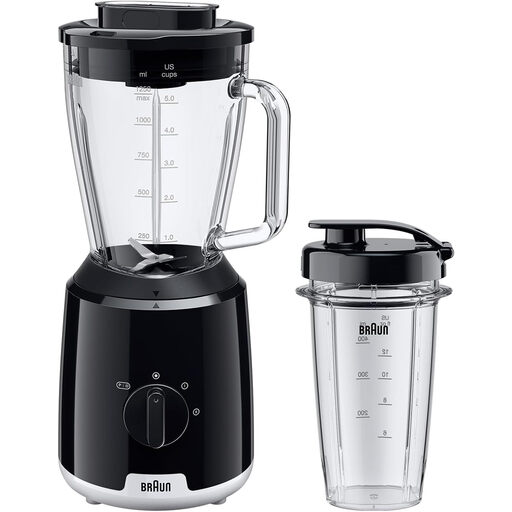
Why This Fits Their Persona: A practical starting point for UK households wanting one jug blender for smoothies, sauces and frozen drinks without a bulky footprint.
Its 1.5L glass jug gives more room than a single-serve cup, while the triangular jug is designed to help ingredients circulate.
600W motor, two speeds plus pulse/ice-crush function and dishwasher-safe jug, lid and blades.
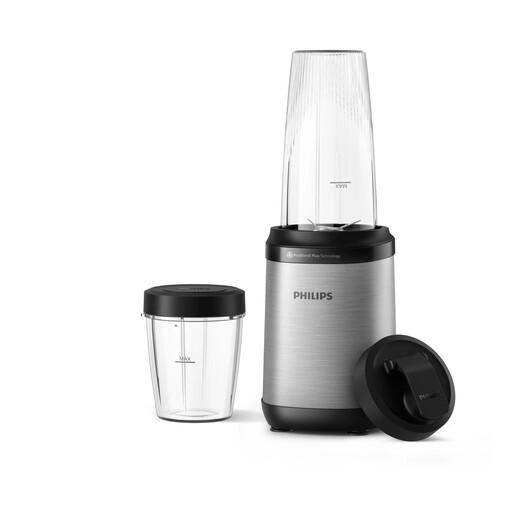
Why This Fits Their Persona: A compact personal blender for shoppers who prioritise a refined finish, direct drinking and straightforward cleaning.
The 700ml Tritan tumbler has a leak-proof lid and dishwasher-safe detachable blade unit, reducing cup transfers and manual washing.
800W motor, three speeds, pulse and ice-crushing functions. Note: the listed model has an EU power cord and needs a suitable UK adapter.
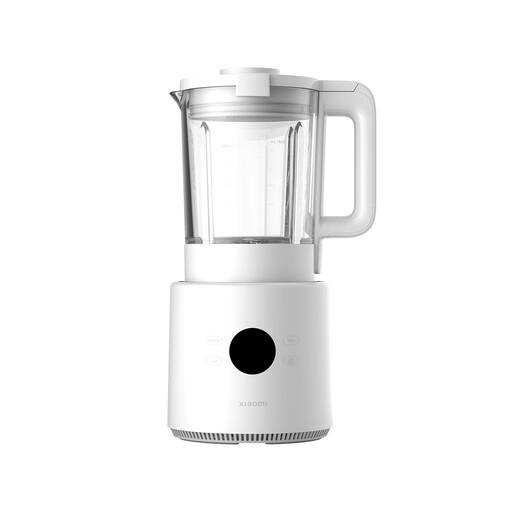
Why This Fits Their Persona: Designed for households that regularly prepare larger portions and want both hot and cold drink programmes.
It specifies separate maximum capacities of 1.75L for cold drinks and 1.4L for hot drinks, making the distinction clear.
Six hot and cold beverage options, a 12-hour preset timer and automatic keep-warm function. Follow the instructions for hot-liquid use.
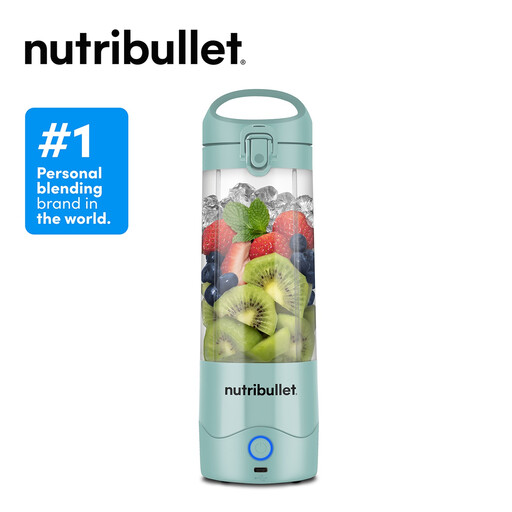
Why This Fits Their Persona: A cordless option for blending smaller drinks at work, after exercise, while travelling or away from a kitchen socket.
Its 475ml cup makes the serving size clear, while the rechargeable battery avoids dependence on a mains socket.
USB-C charging, a stated 15-plus blending cycles per charge and dishwasher-safe cup, lid and blade assembly.
We have compiled a complete, real-time list of products that fully satisfy these strict selection criteria and UK safety regulations.
A 600W blender can be suitable for smoothies, sauces, soft fruit, vegetables and some frozen ingredients, depending on the recipe and manufacturer instructions. For frequent large batches, dense mixtures or regular ice crushing, compare the blade system, capacity and higher motor ratings as well as wattage.
A hand blender is convenient because it can blend directly in a saucepan or deep container, reducing transfers and washing-up. A jug blender may provide more consistent circulation for larger batches, but only use hot liquids if the model’s instructions allow it. Never seal or blend hot contents in a container that is not designed for them.
Avoid overfilling, add sufficient liquid and use pulse settings for short bursts where appropriate. Do not run a motor continuously beyond the stated limit. Rinse the jug or blending shaft soon after use, keep the motor base dry and check that blades, seals and lids are correctly fitted before each use.