Cold-soup holiday cooks
If you prepare chilled tomato soup, gazpacho or sauces rather than cooking soup in the blender, focus on blending control, useful capacity and cleaning before considering a heating function.


For cold tomato soup, start with a conventional jug blender: choose enough useful capacity for the guests, speed or pulse control, and parts you can clean easily. A larger working capacity matters if you regularly serve a group; a hot-and-cold soup maker makes more sense if you also plan to cook soup in the appliance, because the cold recipe does not need heating.
If you prepare chilled tomato soup, gazpacho or sauces rather than cooking soup in the blender, focus on blending control, useful capacity and cleaning before considering a heating function.
If you serve several guests at once, plan portions using the blender’s useful or working capacity, which can be lower than its total jug capacity.
If you also want to prepare cooked soups or compotes, compare hot-and-cold models with ordinary jug blenders. The extra cooking functions are not needed for cold tomato soup.
Choose the appliance type around what you will actually prepare, then check the working batch size and how the parts are cleaned.
Choose it when: You mainly blend raw or chilled ingredients and do not need the appliance to cook soup.
Consider: A modest working capacity may mean making a second batch for a larger group.
Choose it when: You regularly prepare soup for several guests in one batch.
Consider: The larger format may take more storage space than you need for one or two portions.
Choose it when: You also intend to cook hot soups or similar recipes in the appliance.
Consider: Its heating functions add nothing to a cold-only tomato soup recipe.
| Concern | What to check | Who this matters to |
|---|---|---|
| Cold-soup texture | Look for speed or pulse controls suited to adjusting a chilled blend; motor wattage alone does not establish the finished texture. | If I want a smooth soup from tomatoes and other raw ingredients, I want control over the blend rather than a heating programme. Around 40% of consumers put texture and control first. |
| Batch capacity | Compare the stated useful or working capacity with your intended portions, not just the total jug size. | When several guests want soup together, I would rather plan around one usable batch than discover I need two. For around 30% of consumers, batch size is the primary concern. |
| Cleaning and storage | Check exactly which parts can go in a dishwasher and whether the jug and accessories have somewhere to dry and be stored. | If different people use the cottage kitchen, I need the blender to be straightforward to clean and put away. Ease of upkeep comes first for around 20% of consumers. |
| Hot-soup use | Consider heating programmes only if you plan to make cooked recipes; follow the selected model’s programme and fill instructions. | I might make cold soup now but also want the same appliance to cook soup later. That wider use is the main priority for around 10% of consumers. |
Total and usable capacities are different: Tefal UK states that the Blendforce BL5958G0 has a 1.9 L jug but a 1.25 L useful capacity, while Magimix UK gives the Blender Power 4 a 2.5 L jug and 1.8 L working capacity.
Plan your batch against the model’s useful or working limit and follow its fill guidance.
A combined cooking blender can make hot recipes, but heating is not part of preparing cold tomato soup.
Compare ordinary jug blenders first unless cooked soups or compotes are also planned uses.
Jug material does not replace model-specific temperature instructions. Tefal UK specifies use up to 70°C for the Blendforce BL5958G0 glass jug.
If you later blend warm ingredients, check that exact model’s temperature, fill and lid instructions.
A blender supplied in guest accommodation needs to be considered alongside the property’s safety arrangements. GOV.UK guidance for small paying guest accommodation in England addresses fire-safety responsibilities and risk assessment within its stated scope.
Keep the appliance instructions accessible, check its condition between stays and confirm the requirements that apply to the property’s location and operating arrangement.
Tefal UK lists both a conventional Blendforce BL5958G0 jug blender and a Blendforce Cook BL5758G0 cooking blender, making these specific models useful points of comparison.
Magimix UK positions its Blender Power 4 for families of up to six and states a 1.8 L working capacity.
Ninja describes the Foodi Blender & Soup Maker HB150UK as an appliance for both hot and cold preparations.
These choices include jug blenders for cold soup, appliances with additional hot-and-cold functions, and a combined blender and food processor. Match the usable batch limit and controls to your cottage’s usual portions before choosing.
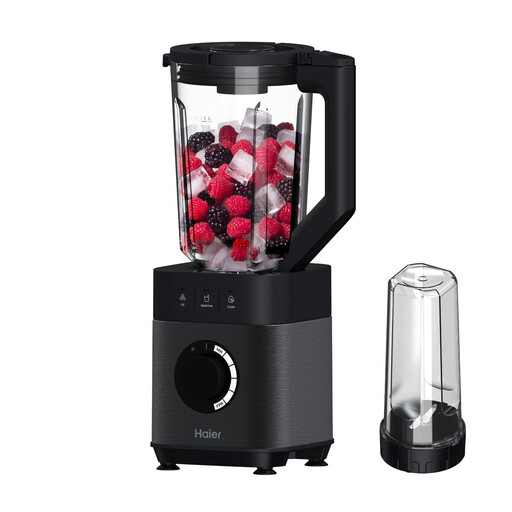 No image available
A glass-jug option for blending cold soup when you also want a separate smoothie bottle.
The title specifies a 1200 W motor, six-tier blades and a 1.7 L jug. Check the cold-blending fill limit before planning portions from the jug capacity.
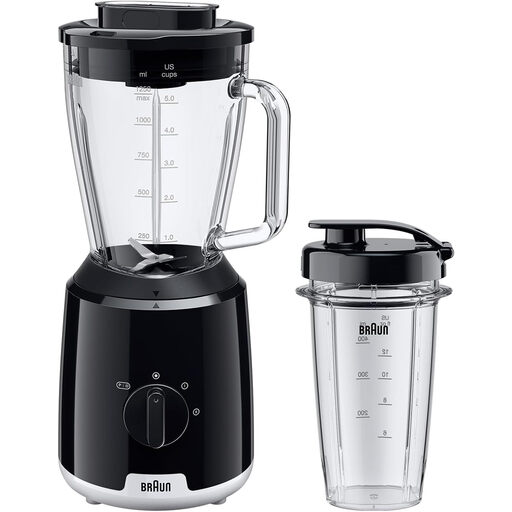 No image available
Consider this jug blender if you want basic speed control for a cold-soup batch.
The title specifies a 600 W motor, two speeds, a 1.5 L glass jug and a smoothie-to-go bottle. Check the usable fill limit rather than treating jug capacity as the batch size.
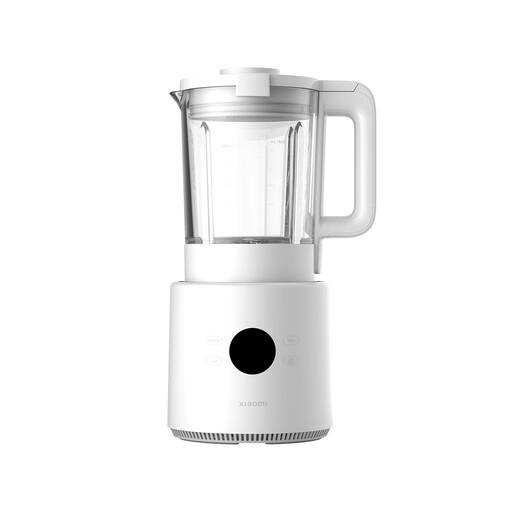 No image available
Consider this hot-and-cold option if you plan to use the appliance for cooked recipes as well as cold tomato soup. For a cold-only recipe, check whether you need its additional cooking functions.
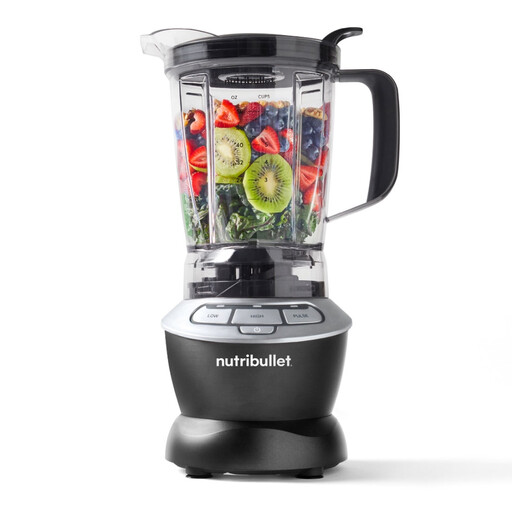 No image available
This is an option if you want hot-and-cold blending beyond the immediate cold-soup task.
The title specifies a 1.6 L pitcher; check its usable cold-fill limit when planning portions. Heating capability is not needed for cold tomato soup alone.
 No image available
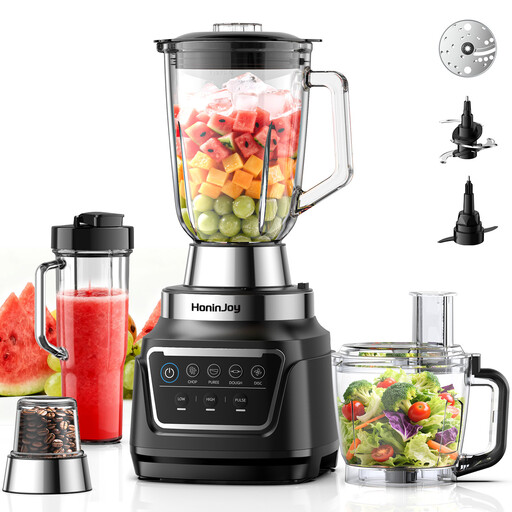
Consider a combined blender and food processor if the cottage kitchen will use both functions. For cold soup, check the blending vessel’s usable fill limit and available texture controls before choosing it for group portions.
No: a conventional jug blender is the more direct choice when the recipe only needs cold blending. Consider a hot-and-cold soup maker if you also expect to cook soups or similar recipes in it.
Plan around useful or working capacity and the portions you intend to serve, not total jug size. Tefal UK states a 1.25 L useful capacity for the Blendforce BL5958G0; Magimix UK states a 1.8 L working capacity for the Blender Power 4.
Rinse the blender promptly and follow its cleaning instructions. Removable blades, dishwasher-safe parts or a cleaning programme may be useful, but put only the parts expressly approved for dishwashing in the machine.
Include the appliance in the property’s safety arrangements and check the requirements for its location and type of accommodation. GOV.UK guidance addresses fire-safety responsibilities and risk assessment for small paying guest accommodation in England; it does not establish one appliance-testing rule for every holiday cottage across the UK.