Single-serve drink makers
If you usually make one strawberry milkshake, a personal cup may suit the serving size and give you fewer shared parts to manage. Check how the cup, lid and blade assembly are cleaned.


For strawberry milkshakes, choose a personal blender if people usually make one drink and wash their own cup; choose a jug blender if several drinks are normally made together. A sound-enclosed commercial model is worth considering only when frequent blending makes disruption a significant concern and its size is acceptable. Whichever format you choose, check the working capacity, the cleaning instructions for food-contact parts and, if you use ice or frozen strawberries, the exact model’s ingredient guidance.
If you usually make one strawberry milkshake, a personal cup may suit the serving size and give you fewer shared parts to manage. Check how the cup, lid and blade assembly are cleaned.
If two or more people regularly want milkshakes together, compare jug working capacities and check for pulse control or stated ice-crushing suitability where your recipe calls for them.
If repeated blending interrupts other people, a sound enclosure may be worth considering. Allow for the space a commercial machine occupies, and seek comparable sound measurements if noise will determine the purchase.
Choose when: One person usually makes and washes their own drink in a kitchen with limited space.
Trade-off: Making drinks for a group may mean running several batches.
Choose when: Several people normally want milkshakes at the same time.
Trade-off: A larger jug takes more room to store and wash; a multifunction system adds accessories to manage.
Consider when: Blending is frequent enough that disruption to others is a significant issue.
Trade-off: A commercial machine needs substantial space, and an enclosure alone does not establish how quiet it will be.
| Concern | What to check | Who this matters to |
|---|---|---|
| Shared clean-up | Identify removable food-contact parts and check the exact model’s washing instructions. Agree who cleans the appliance after use. | I want to make a drink without leaving milkshake residue or allergen-containing ingredients for the next user; around 36% of consumers would put shared clean-up first. |
| One-drink size | Compare usable cup capacity with your intended serving and available storage space. | When I usually make just one milkshake, I want a cup that fits my drink without taking over the shared worktop; roughly 29% of consumers would prioritise a compact single-serve format. |
| Several servings | Compare usable or working liquid capacity; check pulse control and stated ice suitability if your recipe needs them. | If several people are waiting, I would rather make a batch than repeat a single-serve cycle; around 21% of consumers would put batch preparation first. |
| Blending disruption | If quiet operation is decisive, seek sound measurements made under comparable conditions and check the space an enclosure needs. | Frequent blending could interrupt people sharing my space, so I need to judge whether noise control warrants a larger machine; roughly 14% of consumers would make this their primary concern. |
A small cup may require repeated cycles when several people want drinks together. Bosch UK, for example, lists a 0.6 L usable volume for the MMB2111SG personal blender and 1.5 L for the MMB6174SG jug model.
Size the appliance for the largest batch you normally make, using the exact model’s usable or working liquid capacity rather than its outside dimensions.
Cleaning instructions can differ between the cup or jug, lid, seals and blade unit. Washing only the main vessel can leave food-contact parts uncleaned.
Check the care instructions for each component you expect to remove, and decide where washed parts will dry in the shared kitchen.
Ingredients left on food-contact equipment matter particularly when users need to avoid allergen cross-contact. Food Standards Agency guidance for food businesses calls for controls to prevent contamination; it does not set out a household-specific legal rule.
Agree how users will clean the blender and nearby surfaces after each drink. Where someone needs to avoid an allergen, consider separate equipment or an appropriate shared-use arrangement.
Roto Quip describes the RYT-9003 enclosure as reducing operational noise, but an enclosure does not by itself tell you how the machine will sound during your recipe.
If noise is the deciding factor, request measurements taken under comparable conditions or assess the appliance with a representative drink before relying on the enclosure.
The RYT-9003 is listed by Roto Quip at 525 mm high and 8.5 kg, so placement and storage need planning.
These named product lines illustrate different blender formats; check the specification of the particular model rather than treating a feature as common to every product from a brand.
Bosch UK lists both a personal-format blender and a larger jug model relevant to single drinks and shared batches.
Kenwood GB lists food-preparation systems that combine blending with other kitchen functions, including personal-blender accessories on the named models.
The RYT-9003 is a commercial option for frequent preparation where a sound enclosure is relevant.
These personal blenders and jug-format choices address individual drinks or shared batches. Match the vessel and cleaning arrangement to how your kitchen is used; consider noise separately if it is a deciding requirement.
 No image available
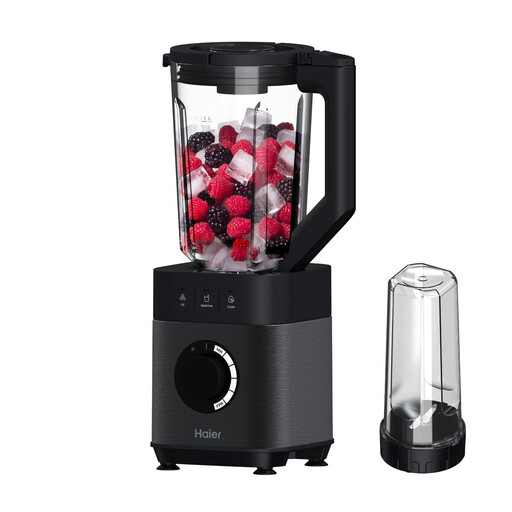
Consider this two-vessel format if the kitchen makes both individual drinks and shared batches.
The product name specifies a 1.7 L jug, a 0.6 L Tritan cup and a 1,200 W motor. Check which food-contact parts the care instructions permit you to put in the dishwasher.
 No image available
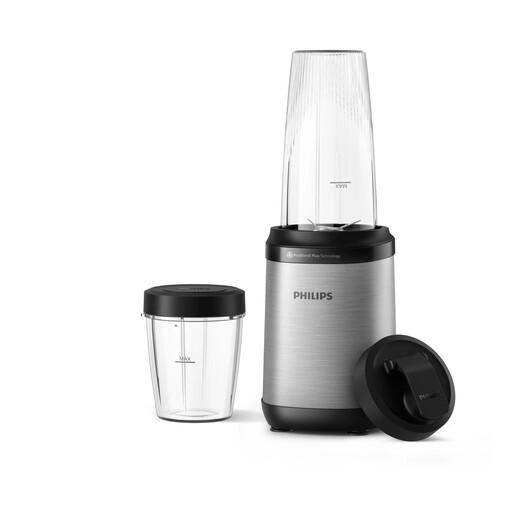
Consider this personal format when users mainly prepare their own drinks rather than a group batch.
The product name specifies a 900 ml cup and 1,200 W rating, and describes the blender as suitable for crushing ice and iced fruit. Check the safe-fill limit against your usual milkshake serving.
 No image available
Consider this model for individual milkshakes, checking the fill limit and ingredient guidance against your recipe.
The product listing calls for a suitable adapter for UK use. Confirm the supplied cord and appropriate plug arrangement before buying.
 No image available
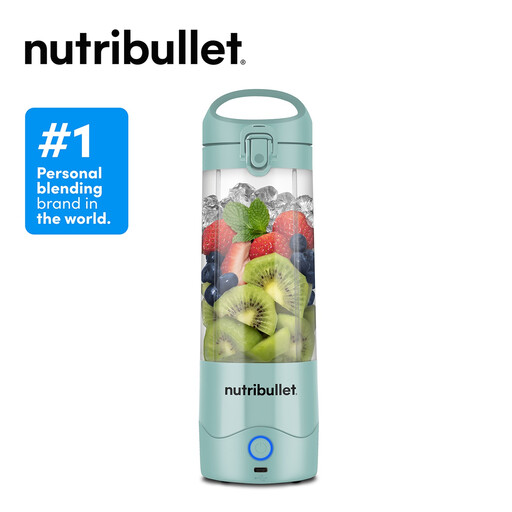
The portable cup format may suit someone who makes one drink and takes it away from the shared kitchen.
The product name specifies a 475 ml cup, to-go lid and USB-C charging cable. Several drinks would require repeated batches; check the usage guidance if frozen ingredients are part of your usual recipe.
 No image available
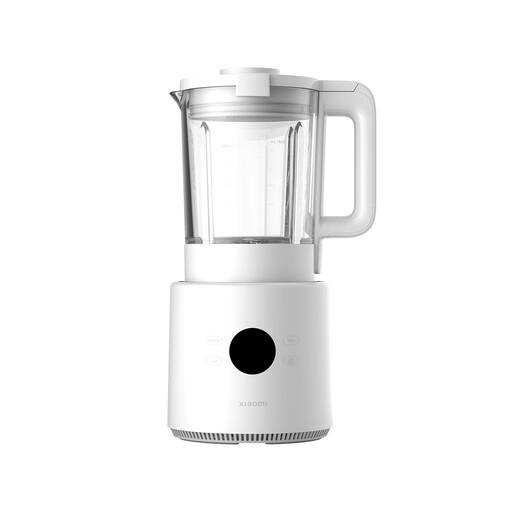
Consider this jug-format option if you normally prepare cold drinks for several people. Check the cold-drink fill limit against your intended batch.
Review the instructions for cleaning removable food-contact parts before planning how the blender will be shared.
Choose by the number of drinks you normally make together: a personal cup can suit one serving, while a jug gives more room for a group batch. Bosch UK lists 0.6 L usable volume for the MMB2111SG and 1.5 L for the MMB6174SG, but neither figure guarantees the same volume of finished milkshake for every recipe; check fill limits.
Not if your recipe uses ingredients that do not call for ice crushing. If you regularly add ice or frozen strawberries, check that the exact model is specified for those ingredients rather than judging suitability from its wattage alone.
Agree how food-contact parts and nearby surfaces will be cleaned between uses, and consider separate equipment where needed to avoid cross-contact. For food businesses, Food Standards Agency guidance calls for systems to prevent and control contamination, including allergen cross-contamination; that guidance does not establish a household-specific legal requirement.
No: an enclosure is relevant to noise control, but quietness still needs judging under comparable operating conditions. Roto Quip describes an enclosure on the RYT-9003; if noise will determine your choice, request comparable measurements or assess it with a representative milkshake recipe.