Solo dressing maker
You make small portions of herb oil for dressings, marinades or sauces and also want an appliance for other single-serve blends. A personal blender is worth considering if your usual mixture is large enough to process in its cup.


Choose a personal blender if you want smooth, single-serve dressings as well as herb oil, or a hand blender with a small chopper if you mainly want to chop herbs before adding oil and control the texture. For either format, check the instructions for your intended batch size: cup or chopper capacity and motor wattage do not establish how well a few spoonfuls will process. A larger jug makes more sense if you also prepare larger recipes.
You make small portions of herb oil for dressings, marinades or sauces and also want an appliance for other single-serve blends. A personal blender is worth considering if your usual mixture is large enough to process in its cup.
You want to choose between visibly chopped herbs and a finer blend. A hand blender supplied with a small chopper lets you prepare the herbs separately before deciding how to add the oil.
You make herb oil infrequently and want to limit washing and storage. Compare every supplied cup, blade and attachment, not just the size of the motor unit.
Choose it when: You want a single-serve cup for smoother dressings, sauces and other blends.
Trade-off: A cup’s stated capacity is not its minimum workable quantity, and blending may take herbs beyond a coarse chop.
Choose it when: You want to chop herbs separately, then blend or stir in the oil using a suitable vessel.
Trade-off: The attachments mean more parts to wash, and a herb chopper does not by itself establish the result when oil is added.
Choose it when: You also make larger smoothies, soups or sauces and can prepare a quantity suited to the jug.
Trade-off: Check the instructions before expecting a very small one-person batch to process in a larger vessel.
| Concern | What to check | Who this matters to |
|---|---|---|
| Small-batch handling | Check the exact model’s quantity guidance and the supplied cup or chopper capacity; capacity is not a minimum-fill guarantee. | If I make only a few spoonfuls, I need the herbs and oil to reach the working area rather than spread across an oversized vessel. Around 46% of consumers put small-batch handling first. |
| Herb texture | Decide whether you want chopped herbs or a smoother dressing; compare a dedicated chopper with pulse or variable-speed control. | When visible pieces of herb matter to my recipe, I want to stop processing before the mixture becomes finer than intended. For around 36% of consumers, texture control is the primary concern. |
| Cleaning and storage | Check which parts detach, which may go in the dishwasher and how much space the complete set occupies. | For an occasional portion, I do not want washing oily blades and storing several attachments to outweigh the convenience of using the appliance. Cleaning and storage come first for around 18% of consumers. |
A motor rating cannot tell you the smallest quantity a cup or chopper will process, or whether the herbs will stay coarse.
Choose the format for your recipe first, then compare its vessel, controls and quantity instructions.
The 470 ml cup specified for the Ninja QB3001UKS and the 350 ml chopper specified for the Braun MQ10.201MWH describe capacity, not a guaranteed result with a few spoonfuls.
Check the instructions for the exact model if your usual portion is particularly small.
Food Standards Agency guidance for England, Northern Ireland and Wales warns that bottling herbs or garlic in oil at home can be risky. Blending does not make the mixture shelf-stable.
Follow tested food-preservation guidance rather than relying on the appliance or a clean-looking mixture. Oregon State University Extension Service advises refrigerating homemade herb-and-oil mixtures and using them within four days, or freezing them for longer storage, unless a tested acidification process is followed exactly.
Oil and chopped herbs can remain on blades and in cups, seals or chopper bowls; extra attachments also mean extra pieces to store.
Check the manufacturer’s cleaning instructions for each part and wash used components promptly.
The QB3001UKS is an example of Ninja’s personal-blender format for single-serve preparation.
nutribullet UK describes its personal-blender range as compact and intended for single-serve smoothies and shakes.
Braun’s MQ10.201MWH pairs a hand blender with a small chopper for herbs.
Bosch’s MSM66020GB is a hand-blender option with a supplied chopper.
These hand-blender sets and a blender with single-serve cups offer different ways to prepare herbs and oil. Match the supplied vessel and attachments to whether you want to chop the herbs first or make a smoother blend, and check the instructions for your usual portion.
 No image available
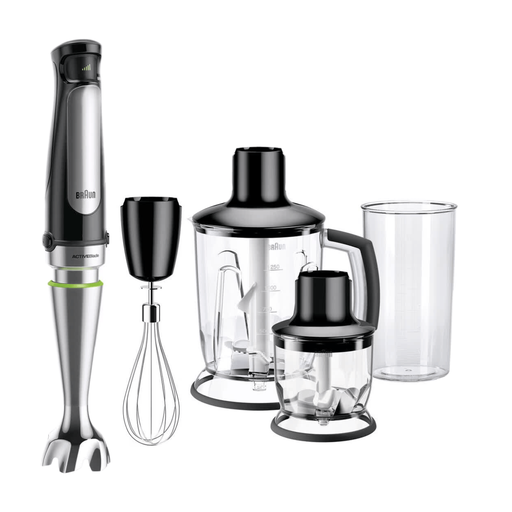
Consider this hand-blender format if you want to work in a separate vessel rather than a single-serve cup. Check the MQ7045 instructions for suitable quantities, supplied attachments and how to clean each part.
 No image available
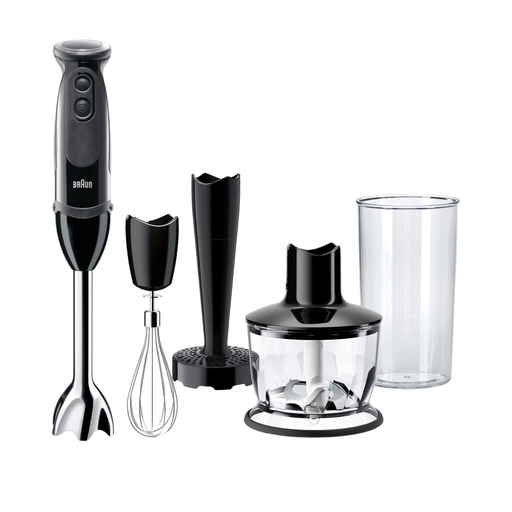
The supplied chopper makes this set worth considering if you want to prepare herbs before adding oil. It also includes a beaker; check the instructions for workable quantities and allow storage space for the attachments.
 No image available
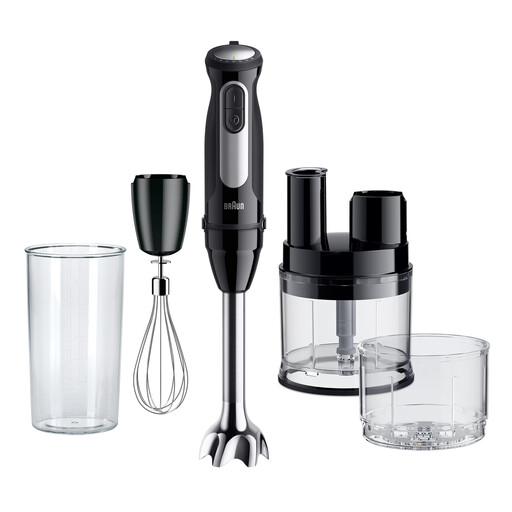
Consider the mini food processor and hand blender if you want separate preparation options for herbs and oil. The product name specifies a 1000 W rating, whisk and beaker; that rating does not establish a workable minimum batch, so check the instructions for your portion.
 No image available
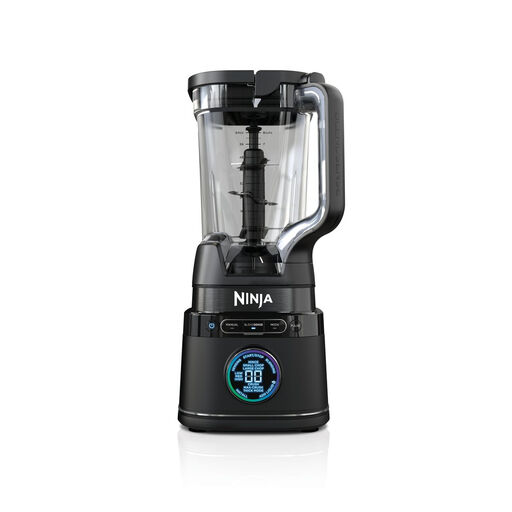
The single-serve format is relevant if you want to make smoother herb-oil dressings as well as other individual blends. Check the supplied cups and quantity guidance before relying on it for a few spoonfuls.
 No image available
The supplied herb chopper offers a way to prepare herbs before adding oil. Braun Household GB specifies a 350 ml chopper for this exact model; its one-speed control limits speed adjustment, and the chopper capacity does not establish a minimum workable batch.
Choose a personal blender if you also want smoother single-serve dressings and your mixture suits its cup; choose a hand blender with a small chopper if preparing the herbs separately and controlling their texture matter more. Check the exact model’s quantity guidance before expecting either format to handle a few spoonfuls.
No. Wattage is a motor rating, not a minimum workable quantity or a guarantee of herb-oil texture. Check the vessel, controls and manufacturer instructions for the model you are considering.
Only put parts in the dishwasher when the instructions for your exact model permit it. Check cups, seals, blades and attachments individually, and wash oily parts promptly.
Do not treat freshly blended herb oil as shelf-stable. Food Standards Agency guidance for England, Northern Ireland and Wales warns that bottling herbs or garlic in oil at home can be risky. Oregon State University Extension Service advises refrigerating homemade herb-and-oil mixtures and using them within four days, or freezing them for longer storage, unless a tested acidification process is followed exactly; that timing is food-safety guidance, not a UK legal shelf-life approval.