Ice-first iced-chocolate drinkers
If you want ice blended into the drink rather than left in pieces, look for an ice claim for the exact model and check how much liquid and ice fit below its maximum-fill line.


Choose a cordless personal blender if you make one iced chocolate at a time, want to blend without occupying a shared socket and can manage charging. A mains-powered model is worth considering when an exact model has an explicit ice-crushing claim and your workplace permits its use. Either way, check the blending fill line and how you will clean the cup and blade area promptly.
If you want ice blended into the drink rather than left in pieces, look for an ice claim for the exact model and check how much liquid and ice fit below its maximum-fill line.
A rechargeable blender lets you choose where to blend without using a socket at that moment. You still need somewhere suitable to charge it and should check your workplace’s rules for personal appliances.
Milk and chocolate residue need prompt attention, particularly around the blade and lid. Check which parts detach, which can go in a dishwasher and whether you can clean up after making your drink.
Choose it when: You make a single drink and want to blend without depending on a nearby socket.
Allow for: Charging and a smaller usable serving than the cup’s headline capacity may suggest; ice capability varies by model.
Choose it when: An ice-capable model and a suitable, permitted kitchen setup matter more than cordless use.
Allow for: A motor base, cable and suitable electrical supply in the shared space.
| Concern | What to check | Who this matters to |
|---|---|---|
| Ice handling | Look for an ice or frozen-ingredient claim for the exact model, then follow its instructions and fill limit. | If I want ice blended through my chocolate rather than left in pieces, that claim is my starting point; around 40% of consumers put ice handling first. |
| Shared-kitchen cleanup | Check whether the blade area detaches and which food-contact parts are dishwasher safe. | When I use a communal kitchen, I need to remove milk and chocolate residue promptly; around 30% of consumers prioritise cleanup. |
| Sockets and workspace | Check workplace permission and, for a mains model, the available supply; for a cordless model, check charging arrangements. | I may have little room around the sockets and do not want a cable across shared space. Cordless convenience comes first for around 20% of consumers. |
| Serving size | Compare maximum blending fill lines, not just cup capacities; consider insulation if you will carry the drink for later. | If I prepare a drink before leaving my desk or commuting, I need enough usable cup space for both milk and ice; around 10% of consumers put serving size and cold holding first. |
A blender described for powders or soft ingredients is not necessarily intended to break down solid ice. Salter’s ActiBoost description names fruits, powders and soft ingredients, while nutribullet makes an ice claim for its Portable and Flex models.
Check the exact model’s ice guidance rather than relying on its portability, blade material or motor rating.
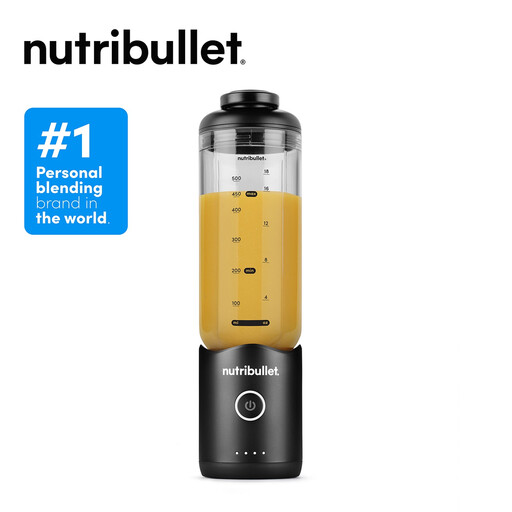
The nutribullet Portable has a 475ml cup but a 350ml maximum-fill line, according to nutribullet UK. That lower line is the useful figure when leaving room for milk, chocolate and ice.
Check the fill line before deciding whether a single blend will make the serving you want.
A cup, lid and blade area that are awkward to wash can leave residue behind. A mains-powered blender also needs a suitable workplace setup; the Health and Safety Executive advises checking that electrical equipment used for work is suitable for its use and supply.
Ask about personal-appliance rules and cleaning access before buying, and follow the model’s instructions for washing each part.
Its portable range includes single-drink models with different cup and cleaning arrangements.
The cordless Blast BC151UK range is relevant if a rechargeable single-drink format and straightforward cup cleaning are priorities.
The cordless ActiBoost offers a single-serve format for mixing drinks at work.
These choices cover cordless blenders for a single drink and mains-powered personal blenders for a shared kitchen where their use is permitted. Check each exact model’s ice instructions before choosing it for a drink containing solid ice.
 No image available
Consider this cordless model if you want an iced drink without using a kitchen socket while blending. nutribullet UK states that the Flex handles ice and has a detachable, dishwasher-safe blade block. Check the vessel’s maximum-fill line for your intended serving and use cooled ingredients.
 No image available
This cordless option suits one drink made away from a kitchen socket, provided you can keep it charged. Its title lists USB-C charging, and nutribullet UK states that the model can blend ice. Plan ingredients around its 350ml maximum-fill line rather than its 475ml cup capacity.
 No image available
The two-bottle mains format may suit a permitted shared-kitchen setup when you want a drink to take away. Check the exact model’s instructions for solid ice, and confirm workplace permission and a suitable electrical supply before bringing it in.
 No image available
Consider this mains-powered kit if you want the listed 900ml cup format and have a suitable, permitted place to use it. The product title names ice among its intended ingredients; follow its instructions for ice quantities and do not blend boiling liquids.
 No image available
This mains-powered model has a 900ml cup, and its product title expressly describes it as suitable for crushing ice. Confirm workplace permission and supply compatibility. If colleagues work nearby, assess whether its operating noise is acceptable in the space rather than relying on an unmeasured quietness claim.
Check with your workplace before bringing one in, especially a mains-powered model. The Health and Safety Executive advises that electrical equipment used for work should be suitable for its use and electrical supply and kept in good condition; your workplace can tell you what permission or inspection arrangements apply.
No: check ice capability for the exact model. nutribullet UK states that its Portable and Flex models handle ice, whereas Salter’s ActiBoost description focuses on fruits, powders and soft ingredients. Follow the chosen blender’s instructions for ingredients and fill levels.
Clean the food-contact parts and any spills promptly, following the model’s instructions for the cup, lid, blade assembly and motor base. For example, nutribullet UK says the Flex blade block detaches and is dishwasher safe; check that a dishwasher or other suitable washing facilities are available where you will use it.
Use cooled ingredients unless the exact blender’s instructions expressly allow hot liquids. The Breville Blend Active is listed as not suitable for hot liquids; that restriction illustrates why you should check your own model rather than assume a personal blender can handle them.