People making purée for a group
If you usually prepare more than one portion, the usable batch capacity and the work of cleaning the jug after everyone has used it will shape your choice.


For mango purée shared by several people, start with a jug blender whose usable capacity fits your usual batch and whose food-contact parts can be cleaned thoroughly. A compact personal blender makes more sense for individual portions and limited storage, but its smaller bottle may mean repeated batches. If ingredients could cause allergic reactions, agree how shared parts will be cleaned and kept separate; appliance choice alone is not a cleaning procedure.
If you usually prepare more than one portion, the usable batch capacity and the work of cleaning the jug after everyone has used it will shape your choice.
If you blend one portion at a time and cupboard space is tight, a smaller bottle blender may be easier to accommodate. Check that its food-contact parts suit your cleaning routine.
If other users prepare ingredients that could cause allergic reactions, accessible blades, lids and seals matter alongside an agreed cleaning and separation routine. Food Standards Agency guidance on contamination controls is particularly relevant when the kitchen is used for a food business.
Choose it when: you regularly make a batch for several people.
Trade-off: the larger vessel takes more room to store and wash; check usable fill capacity rather than relying on the headline jug size.
Choose it when: portions are usually individual and compact storage matters most.
Trade-off: the smaller bottle can require repeated batches, and separate cups do not remove the need to clean shared blades.
Choose it when: you also need the appliance for tasks such as chopping or grinding.
Trade-off: extra attachments need storage and their own cleaning routine.
| Concern | What to check | Who this matters to |
|---|---|---|
| Cleaning and ingredient cross-contact | Check which food-contact parts can be removed and washed, and how to reach the blade, lid and seals. | If ingredients are shared between users, I need to remove residue before the next person blends. Around 42% of consumers would put cleaning and cross-contact control first. |
| Batch size and texture control | Compare usable working capacity with your usual batch, then check the available speed and pulse controls. | Making purée for several people in one go matters more to me than storing a small bottle; roughly 33% of consumers would make batch size and texture control their primary concern. |
| Compact storage and individual portions | Check the bottle against your usual portion and the space available for the appliance and its parts. | When I normally make one portion, I want a blender I can put away easily, even if a group batch takes longer. About 25% of consumers would prioritise compact storage and individual portions. |
Wattage does not establish whether a blender holds your usual batch or whether its food-contact parts are practical to clean between users.
Decide on the vessel format and usable capacity first, then compare controls and the cleaning instructions for the exact model.
Residue can remain around blades, lids and seals. Dishwasher-safe status does not, by itself, establish that allergen cross-contact has been controlled.
Follow the instructions for each component, inspect parts after washing and agree who cleans shared equipment. Separate containers can help keep ingredients distinct, but shared parts still need cleaning.
Breville lists a 0.6 L bottle for its Blend Active Standard Blender, while the Kenwood Blend-X Fresh BLP41.A0CT has a stated 1.5 L working liquid capacity. Those capacities serve different batch sizes.
If you normally prepare purée for several people, compare a jug blender with your usual batch before choosing a personal bottle for its smaller footprint.
Repeated batches also mean more preparation and washing between rounds.
Hot-liquid instructions differ by model. nutribullet describes hot blending with a vented lid for its Blender 1000W, while Breville's personal-blender instructions prohibit hot or boiling liquids.
Before blending a heated mango mixture, follow the exact model's manual; do not transfer another model's instructions to yours.
The Blender 1000W is a jug option for shared batches; the Ultra Plus+ combines personal blending with food-processing and grinding functions.
The Blend-X Fresh BLP41.A0CT is a jug-blender option when working capacity for a shared batch matters.
The Blend Active Standard Blender is a personal-bottle option for individual portions and limited storage space.
These choices include jug blenders for shared batches, multi-function appliances for additional kitchen tasks and a hand blender for blending in a suitable container. Compare the usable fill limit and cleaning instructions for the particular model you choose.
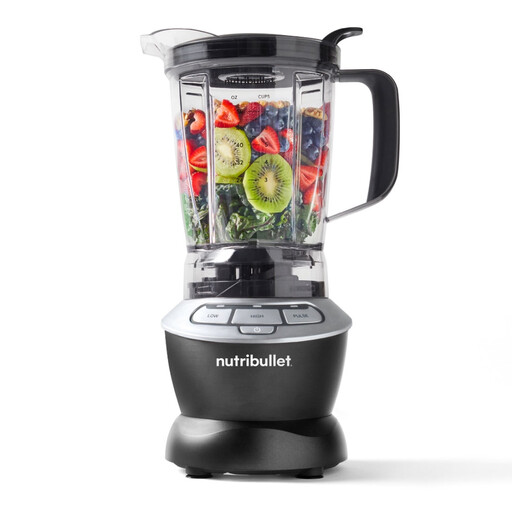 No image available
Consider this jug format when you usually make more than one portion of mango purée.
The named jug capacity is 1.6 L; check its usable fill limit against your batch and follow the cleaning instructions for shared use.
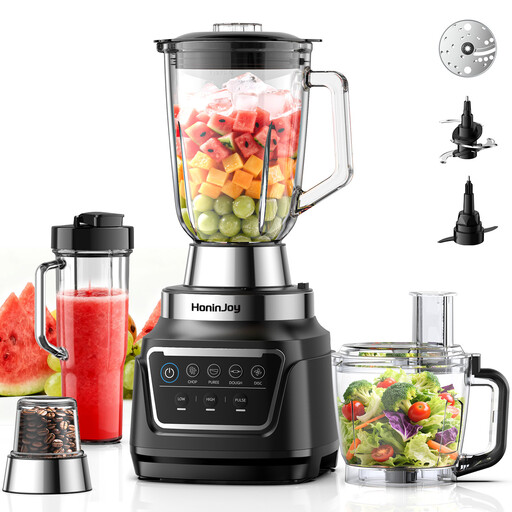 No image available
Consider a multi-function appliance if you need food-processing tasks as well as mango purée.
Allow space for its attachments, and check the blending container's usable capacity and the cleaning instructions for each part.
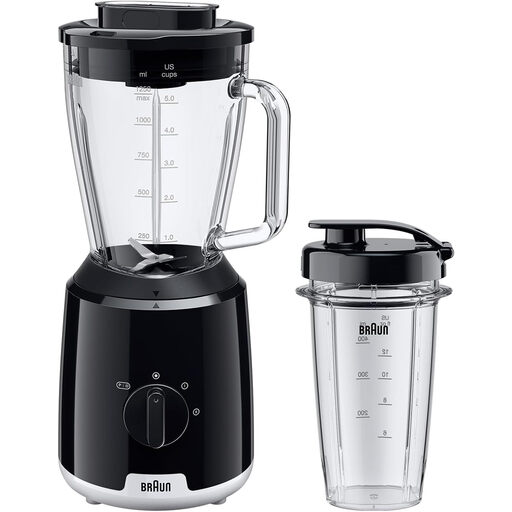 No image available
The jug format is worth considering for purée prepared for more than one person.
The product name specifies a 1.5 L glass jug, two speeds, a 600W motor and a Smoothie To Go bottle. Check the jug's usable fill limit and the instructions for cleaning shared parts.
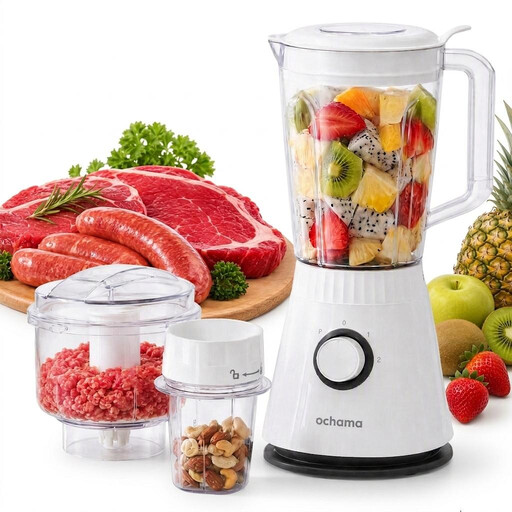 No image available
Consider this pitcher format if shared portions and additional food-preparation tasks are both part of your routine.
The product name specifies a 1.5 L pitcher and three speed settings. Check the usable fill limit and how each food-contact component should be cleaned.
 No image available
A hand blender may suit you if you want to blend purée in a suitable container rather than use a jug blender.
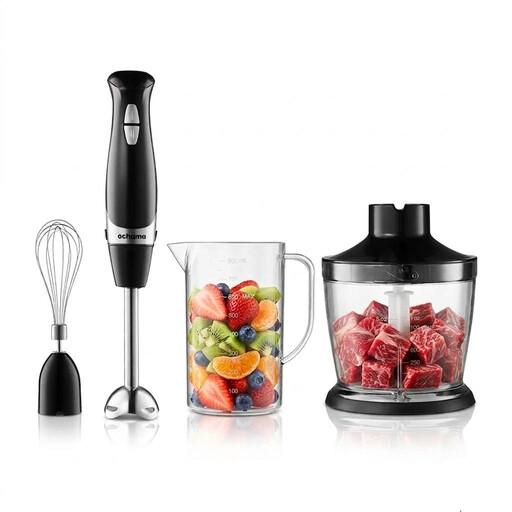
The product name lists two speeds, a 500 ml chopper cup and an 800 ml beaker. Check the capacity needed for a shared batch and the instructions for cleaning the shaft and attachments.
Start with your usual batch size and compare it with the blender's usable working capacity. Kenwood specifies 1.5 L working liquid capacity for the Blend-X Fresh BLP41.A0CT, while Breville lists a 0.6 L bottle for its Blend Active Standard Blender; the smaller bottle is more suited to individual portions than a larger group batch.
No. Follow the instructions for each component and inspect areas where residue may remain, including blades, lids and seals. Food Standards Agency guidance for food businesses identifies cleaning and contamination controls as safeguards; a dishwasher-safe claim is not a complete allergen-control procedure.
Switch it off, disconnect it from the mains and wait for moving parts to stop before disassembly or cleaning. Breville's personal-blender instructions include these precautions; follow your own model's instructions and handle blades carefully.
Only if the instructions for your exact blender permit it. nutribullet describes hot blending with a vented lid for its Blender 1000W, whereas Breville's personal-blender instructions prohibit hot or boiling liquids and require them to cool first.
Appliance selection must sit alongside the food business's cleaning and contamination-control procedures. Food Standards Agency guidance calls for systems to prevent, control and detect contamination, while its business-registration guidance addresses registration with the local authority when starting or taking over a food business. Check the requirements for your actual operation before trading rather than relying on domestic appliance advice.