One-drink, small-kitchen users
If you usually make one smoothie, compare the cup size and the space the assembled blender takes up on your worktop or in a cupboard. A large jug may add storage you do not need for that routine.


For one pear smoothie made at home, start by considering a mains-powered personal blender with a cup sized for your serving. Check its assembled dimensions and the ingredients permitted for that exact model; choose cordless operation if you need to blend away from a socket, or a larger system if you regularly make several portions or use its food-processing functions.
If you usually make one smoothie, compare the cup size and the space the assembled blender takes up on your worktop or in a cupboard. A large jug may add storage you do not need for that routine.
If your pear smoothie also contains ice, frozen fruit, nuts or seeds, check the exact model’s permitted ingredients. Which? assesses tough blends separately in its blender testing, so motor wattage alone is not a texture result.
A larger jug and food-processing attachments may be worth storing if you regularly prepare several drinks or use those other functions. Check where every component will go, not just the motor base.
For a single drink in a small kitchen, decide whether you need to blend at home, away from a socket or as part of broader food preparation. Then check the dimensions, serving capacity and ingredients allowed for the format you favour.
Consider it: When you normally make one drink at home and want a personal cup rather than a large jug.
Trade-off: Cup capacity limits batch size, and permitted tougher ingredients vary by model.
Consider it: When blending away from a socket matters, rather than simply carrying a finished smoothie.
Trade-off: Check serving capacity and charging needs; Tefal lists a 300 ml portable format alongside other blender formats.
Consider it: When you regularly make several portions or will use the food-processing functions.
Trade-off: Jugs, bowls and accessories need storage beyond the main unit.
| Concern | What to check | Who this matters to |
|---|---|---|
| Space and serving size | Compare assembled dimensions with your storage space and choose a cup volume that suits one drink. Bosch lists the MMB2111MG at 367 × 122 × 126 mm with a 0.6 L usable volume. | I want to make one smoothie without leaving a bulky appliance out or finding room for a large jug. Around 36% of consumers put space and single-serving fit first. |
| Tougher additions | Check the exact model’s instructions for any ice, frozen fruit, nuts or seeds you plan to add; do not use wattage as a texture guarantee. | If I add frozen fruit or seeds to pear, I need to know whether my chosen blender permits those ingredients. For around 29% of consumers, that ingredient capability is the primary concern. |
| Taking a drink out | Check cup volume and whether a travel lid is supplied; decide separately whether you need to blend away from a socket. | I would rather blend in a cup I can carry than transfer the drink to another container. That convenience comes first for around 21% of consumers. |
| Several portions or tasks | Compare jug and cup capacities, the functions you will use and storage for all attachments. | When smoothies are only one part of my food preparation, I can make room for more components if I will use them regularly. Around 14% of consumers primarily need that batch or multi-purpose flexibility. |
A motor rating does not establish how a particular blender will handle ice, frozen fruit, nuts or seeds. Which? evaluates tough blends separately in its testing.
Match the model’s permitted ingredients to your pear-smoothie recipe, and consult independent test results for that model where available.
A cordless blender addresses blending away from a socket. A mains-powered personal blender can also have a cup you take with you after blending.
If you prepare drinks at home, compare assembled size, cup volume and cleaning requirements before making cordless operation the deciding factor.
A multi-function system may also need cupboard space for its jug, bowl, blades and cups.
Check the complete list of supplied components and where each one will be stored.
Electrical Safety First advises against putting appliances or battery-containing appliances in general waste or normal recycling. Recycle Your Electricals includes blenders among small appliances to reuse or recycle.
Check your local recycling arrangements, particularly for a rechargeable portable blender.
The VitaPower Series 2 MMB2111MG is a specific personal-blender option to measure against a small kitchen: Bosch lists a 0.6 L usable volume and dimensions of 367 × 122 × 126 mm.
The Blend Active VBL251 is a 0.6 L personal blend-and-go model.
The BN800UK is a larger multi-purpose option. Its Joybuy listing specifies a 2.1 L jug, a 700 ml cup and food-processing functions.
Tefal’s range includes portable, mini and larger jug-blender formats, making it useful for comparing the type of appliance you need.
These choices cover a cordless cup blender for blending away from a socket, a larger-capacity personal blender and a hand blender for preparing a smoothie in a beaker. For a small kitchen, compare storage fit and how you will prepare your usual serving before choosing between these formats.
 No image available
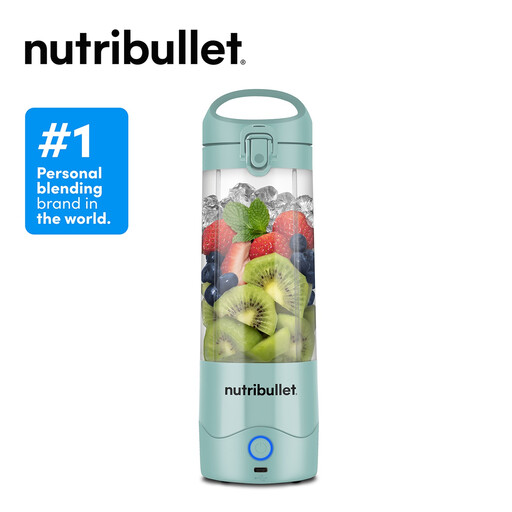
Consider this cordless format if you need to blend away from a socket, not merely take a finished drink with you.
The product name specifies a 475 ml cup, a to-go lid and a USB-C charging cable. Check its assembled dimensions against your storage space and plan for charging between uses.
 No image available
Consider this personal format if its 900 ml cup suits your recipe; it may be more capacity than you need for one small drink.
The product name specifies a 1200 W rating and two blending options. Check assembled height and footprint before allocating cupboard or worktop space, and consult the model instructions for any frozen additions.
 No image available
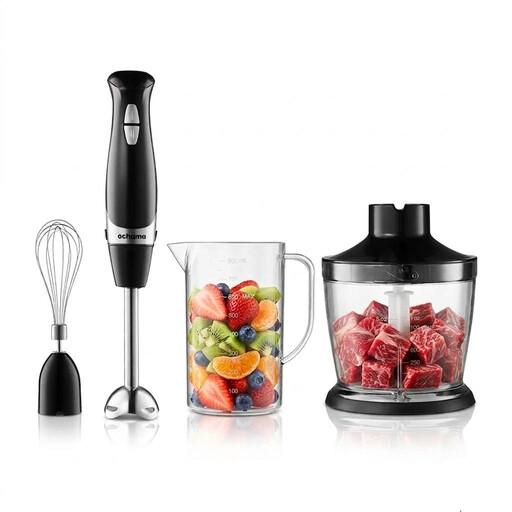
Consider a hand blender if you prefer preparing a pear smoothie in a beaker rather than a personal blending cup and will use its other attachments.
The product name specifies two speed settings, a whisk, a 500 ml chopper and an 800 ml beaker. The supplied usage guidance calls for adequate liquid when blending solid foods and limits continuous operation to one minute. Check storage space for the attachments as well as the blender.
A personal blender is a sensible format to consider for one serving if its cup volume suits your recipe and its assembled size fits your kitchen. If you add ice, frozen fruit, nuts or seeds, check the exact model’s permitted ingredients rather than assuming every compact blender handles them alike.
Measure the cupboard or worktop space you intend to use, then compare it with the appliance’s assembled dimensions. Bosch lists its MMB2111MG at 367 × 122 × 126 mm; remember to allow storage for any separate cups, lids, jugs or bowls as well.
No: cordless operation matters when you need to blend away from a socket, whereas a mains-powered personal blender can make a drink in a take-away cup. Check the cup and lid supplied with the exact model if carrying the finished drink is your priority.
Check the product information and markings supplied with an electrical blender offered for your market. The Office for Product Safety and Standards’ guidance on the Electrical Equipment (Safety) Regulations 2016 covers Great Britain; requirements can differ in Northern Ireland under the Windsor Framework, so do not assume GB-specific guidance applies there unchanged.
Look for a suitable reuse or electrical-recycling route rather than putting it in general waste or normal mixed recycling. Electrical Safety First advises checking local arrangements for rechargeable-battery appliances, and Recycle Your Electricals includes blenders among small appliances that can be reused or recycled.