Shared-batch dip makers
If you make dip for housemates, guests or meal prep, compare vessel capacity with the amount you normally prepare so you can avoid unnecessary repeat batches.


For occasional roasted pepper dip in a shared kitchen, choose a vessel that fits the batch you intend to make, is practical to wash between users and lets you stop at your preferred texture. A compact blender–processor suits smaller batches when chopping and storage space matter; a jug blender suits a straightforward batch to share. Consider a larger multi-function system if the household will use its other food-preparation functions regularly enough to justify the extra parts.
If you make dip for housemates, guests or meal prep, compare vessel capacity with the amount you normally prepare so you can avoid unnecessary repeat batches.
If worktop and cupboard space are limited, consider whether one appliance can handle your regular preparation tasks and how easily its removable parts can be washed between users.
If you sometimes want a smooth dip and sometimes a coarser one, look for controls that let you stop and check the mixture as you blend.
Decide how much dip you usually make before choosing a format: a larger vessel helps with a batch to share, while a processor adds preparation functions that also bring more parts to store and wash.
Choose when: Cupboard space is tight and you want to chop ingredients as well as blend smaller portions. Nutribullet UK describes the magic bullet Kitchen Express as combining blending cups with an 830ml processor bowl.
Trade-off: That smaller bowl may mean preparing a shared batch in stages.
Choose when: Blending a batch to share is the main job. The magic bullet Blender listed by nutribullet UK has a 1.5L pitcher and High, Low and Pulse controls.
Trade-off: You may still need to chop or slice ingredients separately; follow the exact model's instructions before blending warm peppers.
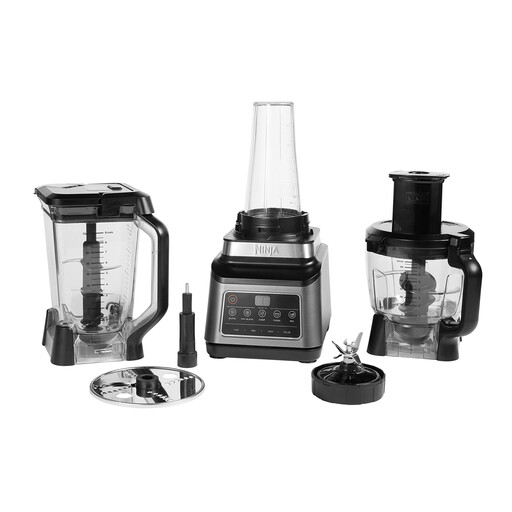
Choose when: Several people will regularly use the appliance for dips and wider meal preparation. The Ninja BN800UK listing describes a 1.8L processor bowl and 2.1L blending jug.
Trade-off: Separate vessels and attachments need more shared storage and washing-up.
| Concern | What to check | Who this matters to |
|---|---|---|
| Batch capacity | Compare jug or bowl capacity with the amount of dip you intend to prepare; check whether a compact bowl would mean repeat batches. | If I make dip for several people, I want enough room to prepare the intended amount without repeatedly filling the vessel. Around 36% of consumers put batch capacity first. |
| Cleaning between users | Check which parts detach, which are dishwasher-safe and how blades must be washed. | When someone else needs the appliance next, I want a clear wash-up routine rather than parts left for them to clean. For around 29% of consumers, cleaning is the primary concern. |
| Dip texture | Look for pulse or manual speed settings if you want to check the dip as it changes from coarse to smooth. | If I prefer some texture in the dip, I want to stop blending before it becomes more uniform than intended. Texture control comes first for around 21% of consumers. |
| Storage and preparation | Measure the intended storage space and consider whether you will use the extra bowls and attachments for other tasks. | With limited cupboard space, I would rather store one appliance for the preparation I regularly do than keep several separate ones. Around 14% of consumers prioritise storage and versatility. |
Warm ingredients can create steam and pressure in an unsuitable closed container. A vented-lid feature on one jug does not establish that another model or a personal cup is suitable.
Check the exact model's warm-ingredient instructions and follow any cooling and filling directions before blending.
Washable vessels do not mean the motor base, blades and seals all have the same cleaning instructions. In a shared kitchen, that distinction matters when handing the appliance over to the next person.
Check the parts list and agree who washes each component after use. Nutribullet UK says the magic bullet Blender pitcher is top-rack dishwasher-safe, while its blade is removed and rinsed separately.
Extra bowls and attachments can be useful for broader food preparation, but each needs somewhere to go and may add to washing-up.
Choose a larger multi-function system if its processing tasks or larger vessels will be used regularly; otherwise, compare a simpler jug blender with your usual batch size.
A communal kitchen is not necessarily a business kitchen. For the Vitamix E320, Vitamix UK states that its blenders are intended for household use and that commercial-environment use invalidates the warranty.
If the appliance will be used for a food business, check the intended-use and warranty terms of the exact model before buying.
Nutribullet UK lists both the 1.5L magic bullet Blender and the more compact Kitchen Express, which combines blending cups with an 830ml processor bowl.
Ninja UK describes the BN800UK as a 3-in-1 food processor, multi-serve blender and personal blender for tasks including dips.
The Vitamix UK E320 listing describes a 2L container, ten variable speeds and Pulse control for household blending.
These jug blenders and blender–processor combinations cover straightforward batches to share and wider food preparation. Compare their vessels with your usual dip quantity, then check the exact model's cleaning and warm-ingredient instructions.
 No image available
Consider this combination if the kitchen regularly needs both blending and food processing. Its listing specifies a 1.8L processor bowl, 2.1L jug, 700ml cup, 1200W rating and five automatic programmes.
The listing says not to process hot liquids, so let roasted peppers cool as directed before blending. The separate vessels need storage and washing.
 No image available
The separate processor bowl and blender jug suit a kitchen that prepares ingredients as well as blending dip. The product title specifies a 750W rating, 2L bowl and 1.8L jug.
Check the model's instructions before blending warm peppers, and allow space to store and wash both vessels and their blades.
 No image available
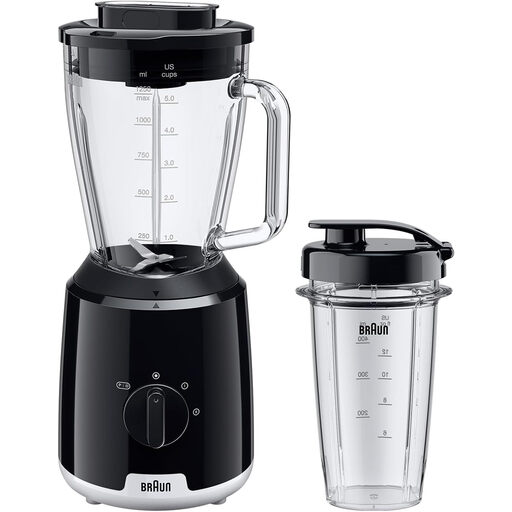
Consider this jug blender if blending a batch to share is the main task rather than chopping or slicing ingredients. Its title specifies a 600W rating, 1.5L glass jug, two speeds and a Smoothie To Go bottle.
Check the manual's temperature limit before using the jug with warm peppers.
 No image available
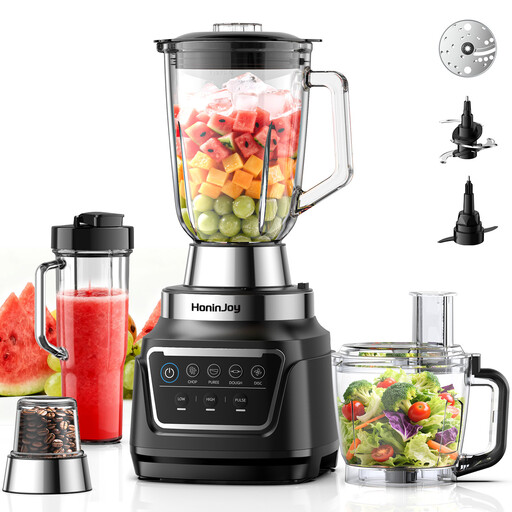
This combination suits a shared kitchen that will use processing functions beyond dip making. Its title specifies a 3L capacity, 1000W rating, integrated weighing, variable speed, Pulse and 13 accessories.
Check where the accessories will be stored, which parts can go in the dishwasher and the model's instructions for warm ingredients.
 No image available
Consider this combination if chopping, slicing, shredding and grinding are regular tasks alongside blending dip. Its title lists those functions and dishwasher-safe detachable parts.
Allow space for its vessels and attachments, and check the exact model's warm-ingredient instructions before blending roasted peppers.
Choose a jug blender if your main task is blending a batch of peppers and seasonings; consider a blender–processor if you will also chop, slice or prepare other ingredients with the same appliance. Compare the vessel size you need with the number of parts you are willing to store and clean.
Only if the exact model's instructions permit it, and only under the stated conditions. Nutribullet UK describes the magic bullet Blender's vented pitcher as suitable for warm ingredients when used as directed; that does not apply automatically to sealed personal cups or other blenders.
Check how each removable part is washed and agree to clean and return the appliance after use. Dishwasher-safe wording may apply to a jug or bowl without applying to the motor base or every blade and seal.
GOV.UK's food-business guidance does not, by itself, make a private household kitchen a food business. If dip is made or sold as part of a food business, GOV.UK says the business must make and follow a food-safety management system, and its cleaning schedule must cover what is cleaned or disinfected, how often and with which products.
Not on its own: a motor rating does not establish the texture you will prefer or how practical the appliance is to share. Check batch capacity, available controls, cleaning requirements and the instructions for your ingredients alongside the stated power rating.