
24/7 Customer Support

Free returns

Same-day & Next-day Delivery

Quality Guaranteed

Unlock Your Welcome Offers: FREE Delivery | Up to 80% OFF | Free 30-day JoyPlus trial
Download the APP
Buying one of the many blenders available in the UK can look straightforward until you compare motor ratings, cup sizes, blade designs, cleaning instructions and safety limitations. A compact personal blender may suit a daily protein shake, while a family preparing soups and sauces needs a very different machine.
The right choice depends less on impressive-sounding marketing and more on how, where and how often you plan to blend. This guide explains the key buying checks, common traps and suitable options for different households.
A higher wattage figure can indicate greater available motor power, but it does not automatically guarantee a smoother result. Jug shape, blade arrangement, ingredient order and programmed controls also affect circulation.
For example, a 300W personal blender may be practical for soft fruit, yoghurt and protein powder, whereas frequent ice crushing or frozen fruit preparation may justify a more powerful machine. Do not compare wattage figures without considering capacity and intended use.
A 1.7-litre jug is not necessarily suitable for filling to the brim. Ingredients need room to circulate, and hot liquids may require an even lower fill level because of pressure and splashing risks.
Portable models typically offer around 475–500ml, which is convenient for one serving but unsuitable for preparing drinks for several people. A family-size blender or jug blender is more appropriate for batch preparation.
Blades that cannot be removed may leave residue around seals and underneath the blade assembly. Similarly, a large glass jug can be durable but difficult to store in a small flat kitchen.
Look for dishwasher-safe removable parts, a wipe-clean motor base and accessories that serve more than one purpose. A blender with a travel cup can reduce washing-up, while a self-cleaning programme may help with daily maintenance, although removable parts still need inspection and rinsing.
Match the specification to the ingredients you use:
An ice-crushing blender should have a dedicated pulse or ice-crush setting. Add liquid where the instructions recommend it, and avoid running a motor empty or continuously for longer than the stated limit.
Choose capacity according to serving size rather than the largest number on the product page:
A glass jug may resist odour and staining, while BPA-free Tritan or similar plastic is generally lighter and more convenient for carrying. A cordless blender must also be checked for charging type, battery indication and the number of stated cycles per charge. USB-C charging is convenient with a suitable plug, laptop or power bank, but the motor base must still be kept away from water.
Before ordering, check:
For example, the Philips 5000 series HR2765/00 listing specifies a standard EU power cord, so UK shoppers should account for a suitable adapter. Portable products should not be treated as hot-drink appliances unless the manufacturer specifically allows it.

Why This Fits Their Persona: Two 0.6-litre Tritan bottles make this a practical starting point for students, commuters or couples preparing separate drinks.
Its capacity and included bottles are clearly specified, avoiding the need to buy a separate travel cup.
300W motor, one-button control, pulse function and dishwasher-safe bottles and blades.

Why This Fits Their Persona: The 1200W motor and 900ml cup suit shoppers who want a compact personal blender for frozen fruit, ice and larger individual servings.
The stated cup size, automated cycle and manual pulse option make its operating format clear rather than relying only on vague performance language.
1200W motor, 900ml Tritan Renew cup, two blending controls and dishwasher-safe removable parts.
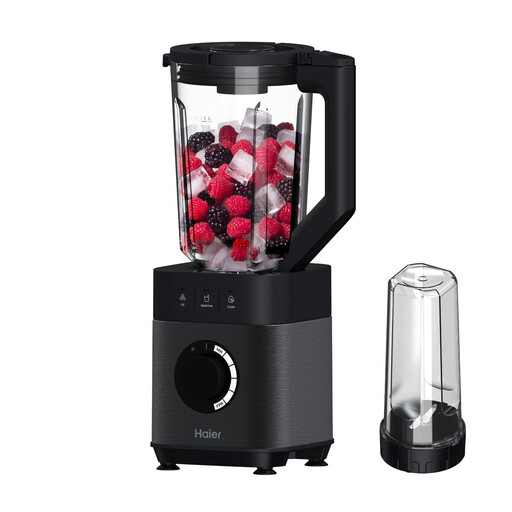
Why This Fits Their Persona: Its 1.7-litre glass jug and separate 0.6-litre Tritan cup suit families, home cooks and households preparing several recipes.
Five manual speeds, pulse control and dedicated ice-crushing, juicing and auto-clean programmes provide more clearly defined control.
1200W motor, six-layer jug blade system, dishwasher-safe parts and safety interlock.

Why This Fits Their Persona: A rechargeable battery, USB-C cable and leak-proof on-the-go cup are convenient for gym lockers, offices, travel and small kitchens.
The product specifies USB-C charging, a 475ml vessel and more than 15 stated blending cycles per charge, helping set practical expectations.
Cordless operation, one-touch use, extractor blade and dishwasher-safe cup, lid and blade assembly.
We have compiled a complete, real-time list of products that fully satisfy these strict selection criteria and UK safety regulations.
Use the correct ingredient order: liquids first, followed by soft ingredients and then harder items or ice. Cut large pieces down before blending and never exceed the maximum line.
Rinse the vessel soon after use, especially after protein powder, nut butter or thick sauces. Remove detachable blades only when the appliance is switched off and unplugged. Never immerse the motor base in water, and follow the manufacturer’s instructions for dishwasher placement.
A hot and cold blender needs particular care. Do not assume a standard personal blender can process boiling soup. Pressure can build inside a sealed vessel, so use only a model designed for hot ingredients and follow its temperature and lid instructions.
Some cordless and portable models list ice crushing or frozen-fruit blending among their functions, but results depend on ingredient size, liquid quantity and battery condition. Check the product instructions and avoid oversized or excessively hard pieces.
Service life varies with frequency of use, cleaning, storage and the ingredients processed. Avoid overloading, extended continuous operation and running the machine empty. Replace damaged cups, lids or blade assemblies rather than continuing to use them.
A blender normally operates for short periods, so overall household consumption depends mainly on motor power and frequency of use. A 1,200W model running for one minute uses less energy than its rating might suggest; the rating describes power draw while operating, not a fixed daily cost.