
24/7 Customer Support

Free returns

Same-day & Next-day Delivery

Quality Guaranteed

Unlock Your Welcome Offers: FREE Delivery | Up to 80% OFF | Free 30-day JoyPlus trial
Download the APP
A blender can simplify breakfast smoothies, protein shakes, soups, sauces and everyday food preparation. However, choosing between a portable blender, personal blender, hand blender and jug blender is not always straightforward. Product pages often highlight motor speed or attractive accessories while giving less attention to capacity, cleaning and usage limits.
The following guide explains the specifications that matter most, common buying traps and which type of blender suits different UK households.
A higher wattage figure can indicate greater electrical input, but it does not automatically guarantee a smoother blend. Blade design, cup or jug shape, ingredient circulation and suitable liquid levels also affect results.
For example, a 300W smoothie maker may be suitable for soft fruit and shakes, while frozen fruit, nuts and ice may require a more powerful motor and a suitable blade system. Look at the complete specification rather than comparing wattage alone.
A 475ml portable blender is convenient for one drink, but it is not designed for preparing several portions. Similarly, a 1.5L or 1.75L jug may have a lower recommended working capacity, particularly when processing hot ingredients.
Check the stated maximum fill line and consider how much you normally prepare. A personal blender is practical for one commuter or gym user, whereas a family-size blender is more appropriate for batch smoothies, sauces or meal preparation.
Blades, seals and lids can retain food residue if they are difficult to remove. Dishwasher-safe detachable parts can reduce daily cleaning effort, but the motor base should generally only be wiped with a damp cloth.
Do not assume every blender can process hot liquids. A dedicated hot and cold blender may be designed for heated contents with a vented lid and heating function. Conventional personal blenders and many smoothie blenders must not be used with hot liquids because pressure can build inside a sealed cup.
Choose capacity according to your routine:
If you regularly make baby food, purées or small portions of sauce, a hand blender can be more practical than a large jug. For more options, browse the purée blender range.
For soft fruit, milkshakes and protein powder, moderate power may be sufficient. Frozen fruit and ice place greater demands on the motor and blade assembly. Look for clearly stated functions such as ice crushing, pulse control or suitability for frozen ingredients.
A food preparation blender or hand blender with attachments may be more useful than a high-powered personal model if you also chop onions, whisk eggs, grate vegetables or prepare dips.
A rechargeable blender should have a clearly stated charging method, battery information and safe transport design. USB-C charging is convenient for offices, travel and power banks, but check whether the cup has a secure, leak-resistant lid.
For regular use, consider BPA-free food-contact materials, shatter-resistant cups, detachable blades and dishwasher-safe components. UK buyers should also check that the product is supplied for the intended electrical market and carries appropriate compliance markings and instructions. An EU plug may require a suitable UK adapter; confirm compatibility before purchase.

Why This Fits Their Persona: The compact 300W personal blender is suited to students, office workers and first-time buyers making individual smoothies or protein shakes.
Its two 0.6L Tritan bottles make the serving size clear, while removable blades simplify cleaning instead of leaving residue around a fixed assembly.
Two 0.6L to-go bottles, one-button operation, pulse function and dishwasher-safe parts.
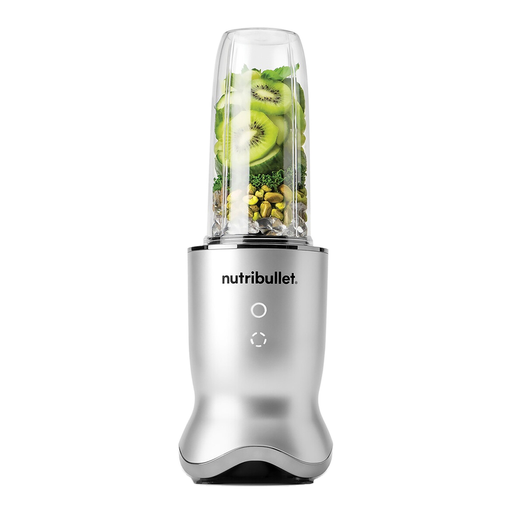
Why This Fits Their Persona: This 1200W personal blender suits users who want a larger 900ml cup and dedicated controls for frozen fruit, ice and thick drinks.
The product specification states both cup capacity and blending controls, avoiding vague claims based only on rotational speed.
1200W motor, 900ml Tritan Renew cup, automated 30-second cycle and manual pulse function.
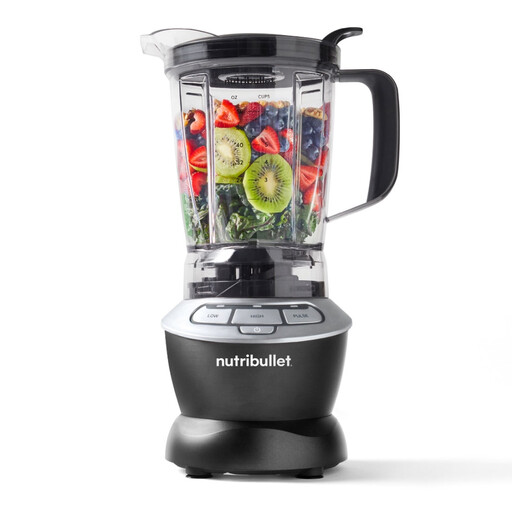
Why This Fits Their Persona: Families and home cooks can prepare larger batches of cold drinks, soups and sauces in one appliance.
It identifies a 1.6L pitcher, vented locking lid and dedicated hot-and-cold function, rather than implying that every jug blender handles heat safely.
1000W motor, 1.6L capacity, preset programmes and self-clean function.
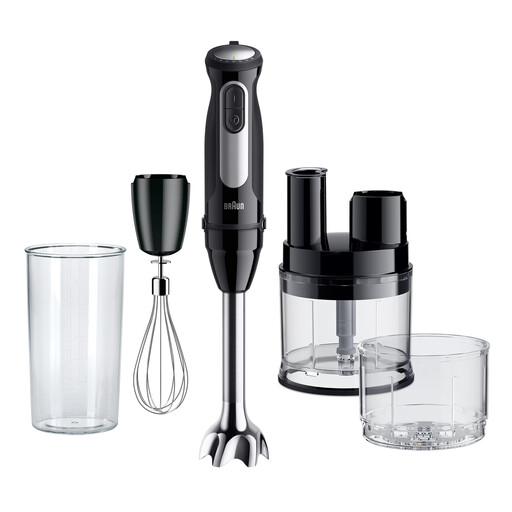
Why This Fits Their Persona: Home cooks needing soups, sauces, baby food, whipped mixtures and chopping can use one motor unit with several attachments.
The included mini food processor, whisk, beaker and blending shaft are specified individually, so buyers can assess whether the accessories match their recipes.
1000W motor, 25-speed control, Turbo mode and ice-crush attachment.
We have compiled a complete, real-time list of products that fully satisfy these strict selection criteria and UK safety regulations.
Some rechargeable blender models are designed for ice and frozen ingredients, but performance depends on the quantity, liquid level and manufacturer’s instructions. A 475ml portable blender is intended for individual portions, not repeated large batches. Cut ingredients into smaller pieces and avoid overfilling.
Lifespan depends on build quality, frequency of use, cleaning and whether the appliance is used within its stated limits. Avoid running a hand blender continuously beyond the manual’s recommended period, keep liquid away from the motor base and inspect cups, lids and blades for damage. A warranty provides a defined period of manufacturer support, but it does not replace correct care.
Not necessarily. Electricity use depends on the appliance’s power rating and how long it runs. A 1000W blender operating briefly may use less energy for one task than a lower-powered model that needs several longer cycles. Compare suitable power with preparation time, batch size and the ingredients you regularly use.