
24/7 Customer Support

Free returns

Same-day & Next-day Delivery

Quality Guaranteed

Unlock Your Welcome Offers: FREE Delivery | Up to 80% OFF | Free 30-day JoyPlus trial
Download the APP
Choosing between modern blenders can be surprisingly difficult. A compact smoothie maker may look convenient but lack the capacity for family meals, while a powerful jug blender may take up valuable worktop space. Marketing language can also make similar machines appear very different.
Before buying, focus on how you will use the appliance, what it can safely process and how easy it will be to clean. The right choice could support smoothies, soups, sauces, baby food, frozen drinks or everyday chopping without paying for functions you rarely use.
A higher wattage figure does not automatically guarantee a smoother blend. Blade design, jug shape, speed control and ingredient circulation also affect results. A 600W multifunction blender may be more suitable for everyday sauces and smoothies than a poorly designed higher-powered machine.
For frozen fruit or ice, look for a stated ice-crush function, suitable blade system and clear operating instructions. Avoid assuming that every personal blender or USB-C blender can process hard ingredients simply because the product description uses words such as “powerful”.
A 1.5-litre jug is not necessarily designed to be filled to the top. Hot ingredients usually require additional space because steam and pressure can build inside a sealed container. Always check the manufacturer’s guidance for hot liquids and maximum fill levels.
For a household, a larger jug blender may be practical for multiple portions. For one person, a personal blender with a 475ml to 600ml cup can reduce waste and washing up.
Blades that cannot be removed, narrow jug openings and accessories that are difficult to dry can make regular use inconvenient. Check whether detachable parts are dishwasher safe, but keep the motor base, plug and cable away from water.
A cordless blender is useful for travel, offices or gym bags, but it also needs charging and has a smaller cup. A worktop model offers more capacity but requires access to a suitable UK mains socket and enough storage space.
Power ratings provide a useful comparison, but they should be considered alongside the intended task.
Speed control also matters. One-touch operation is simple for basic recipes, while two or three speeds, pulse and dedicated ice-crush modes give more control over texture. A multifunction blender with a chopper, whisk or grinder can replace several small appliances, provided you have room to store the attachments.
A jug blender is generally more suitable for family portions, while a smoothie maker with a take-to-work bottle is designed for individual servings. Glass jugs can feel substantial and resist absorbing some food odours, but they are heavier. Tritan or other shatter-resistant plastic containers are lighter and convenient for carrying.
For hot food, verify that the product is specifically designed for heated blending or cooking. Some standard blenders are suitable for cold ingredients and cooled soups only. Follow the supplied instructions rather than relying on general assumptions.
Look for:
Blades are sharp and should be handled carefully. Never place hands or utensils into a moving jug, and unplug corded appliances before attaching or removing accessories. For hot liquids, use only a model and temperature range approved in its instructions.
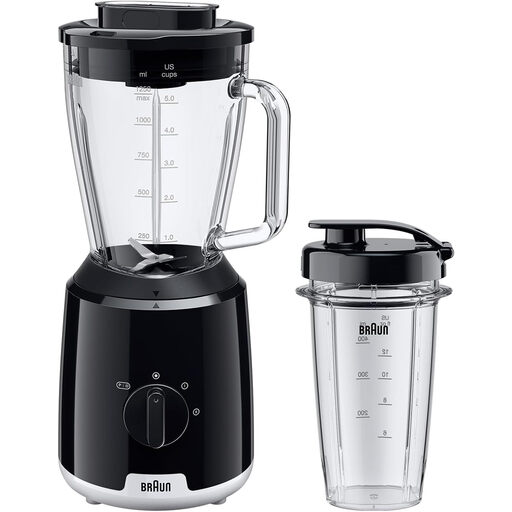
Why This Fits Their Persona: A practical starting point for UK households that want smoothies, sauces and frozen drinks from one worktop appliance.
Its triangular 1.5L glass jug is designed to improve ingredient circulation, while two speeds and an ice-crush function provide more control than a basic one-speed model.
600W motor, dishwasher-safe jug parts and a Smoothie2Go bottle with sealed lid.
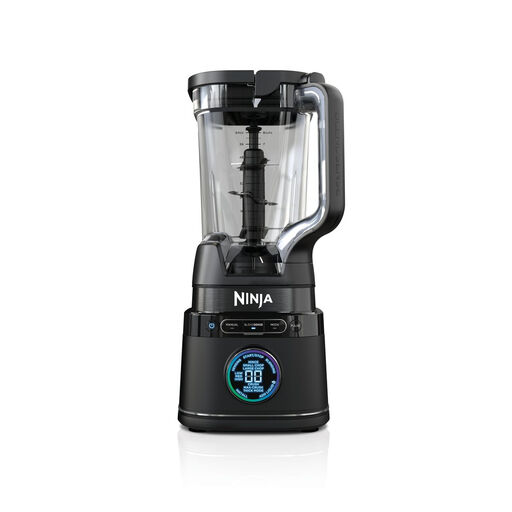
Why This Fits Their Persona: Suitable for keen home cooks who want one system for family jugs and individual drinks.
The package includes a traditional jug and two single-serve cups, reducing the need to buy separate appliances for different portion sizes.
1200W motor, 10 speeds, automatic BlendSense programmes and top-rack dishwasher-safe parts.
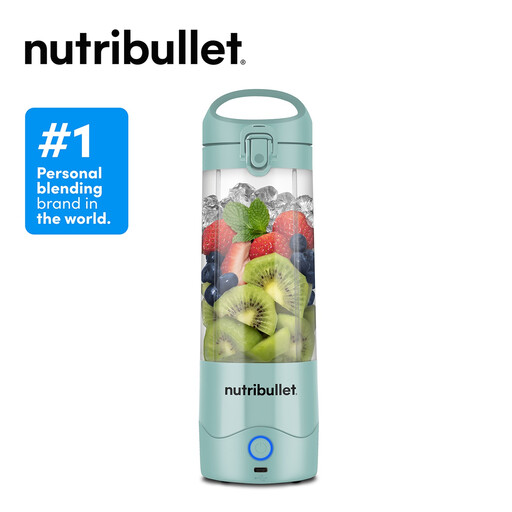
Why This Fits Their Persona: A compact option for commuters, students, gym users and travellers who need individual drinks without a mains socket.
Its 475ml cup clearly suits personal portions, while the rechargeable battery avoids dependence on a worktop socket.
USB-C charging, stated 15+ blending cycles per charge and dishwasher-safe cup, lid and blade assembly.
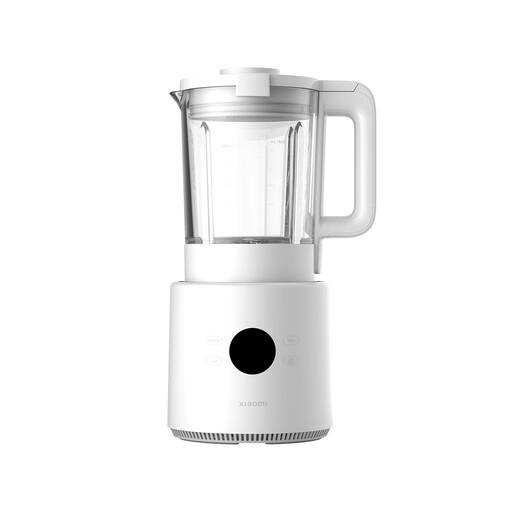
Why This Fits Their Persona: Designed for households preparing larger quantities of hot and cold drinks, blended dishes and soups.
It states separate maximum capacities for cold and hot drinks, helping buyers plan portions rather than relying on one headline capacity.
1.75L cold-drink capacity, 1.4L hot-drink capacity, six hot and cold programmes and a 12-hour preset timer.
We have compiled a complete, real-time list of products that fully satisfy these strict selection criteria and UK safety regulations.
Running cost depends on the appliance’s wattage and how long it operates. A 300W personal blender uses less power during a short blend than a 1,000W hand blender running for the same period, although actual cost also depends on the electricity tariff. Short blending cycles and avoiding unnecessary re-blending can reduce consumption.
Lifespan depends on frequency of use, ingredient choice, cleaning and correct assembly. Do not exceed the recommended operating time, overload the jug or process unsuitable ingredients. Replace damaged seals, cups or blades according to the manufacturer’s guidance, and keep electrical components dry.
No. A standard jug blender may not be designed for hot liquids, and a sealed container can allow pressure to build. Check the manual for temperature and capacity limits. A dedicated heated blender may state separate hot-drink capacity and include cooking programmes, but it must still be operated as instructed.