
24/7 Customer Support

Free returns

Same-day & Next-day Delivery

Quality Guaranteed

Unlock Your Welcome Offers: FREE Delivery | Up to 80% OFF | Free 30-day JoyPlus trial
Download the APP
Choosing among modern blenders can be harder than it appears. Product listings often emphasise wattage, blade counts or automatic programmes while leaving out details that affect everyday convenience, cleaning and safety. A compact personal blender may suit a morning smoothie, but it may struggle with family-sized batches. Equally, a powerful hand blender can be versatile, yet it may not replace a dedicated jug blender for large quantities.
This guide from the Joybuy Product Recommendation Officer focuses on practical specifications rather than marketing language, helping UK home cooks, families and meal-preparation users select a suitable appliance.
A high wattage figure does not automatically indicate smoother results. Blade design, jug shape, speed control and the way ingredients circulate also matter. A powerful blender may still leave ingredients near the sides if the container creates dead spots.
For everyday use, consider the complete system:
For example, the Braun PowerBlend 1 uses a 600W motor, a triangular jug and an ice-crush function, while the Haier Series 5 combines a 1200W motor with six blade layers and five manual speeds.
A standard jug or personal blender may not be suitable for hot soup. Heat creates pressure inside a sealed container, increasing the risk of splashing when the lid is removed. Always check the manufacturer’s instructions before using a soup maker blender or any appliance with hot ingredients.
Some models are specifically designed as a hot and cold blender. The nutribullet 1.6L model includes a thermal-control pitcher and vented locking lid, while the Xiaomi Blender Pro lists a maximum hot-drink capacity of 1.4L. These features do not remove the need to follow the supplied safety instructions.
A blender that takes several minutes to dismantle may be left unused after the initial excitement. Check whether the removable parts are dishwasher-safe, whether the blades detach and whether the appliance fits your available cupboard space.
Also look at accessories. A hand blender with a chopper or whisk may replace several small tools, but a larger attachment set needs extra storage.
A hand blender, also called an immersion blender, is useful for soups, sauces, purées and baby food directly in a saucepan or suitable container. It is generally easier to store and can be paired with a beaker, whisk or chopper.
A jug blender is more suitable for larger quantities, frozen drinks and repeat smoothie preparation. A personal blender or smoothie maker normally uses a smaller cup, allowing you to blend and take the drink with you.
Choose a food processor blender or blender with chopper attachment if you also want to chop herbs, nuts, vegetables, cheese or other ingredients. A whisk attachment is useful for eggs and cream, but it does not turn a hand blender into a full stand mixer.
Do not judge capacity solely by the printed maximum. Hot ingredients often require a lower fill limit and dense mixtures need room to circulate.
Useful capacity ranges include:
A 600ml beaker, such as the one supplied with the Braun MultiQuick 1, is convenient for individual portions. By contrast, the Xiaomi 1.75L model and Haier’s 1.7L glass jug are intended for larger batches.
For simple recipes, one speed may be sufficient. Variable speeds provide more control when moving from soft fruit to thicker mixtures. Pulse or turbo functions can help with short bursts, ice or dense ingredients.
Before ordering, confirm:
The Tefal Quickchef+ provides 20 speeds, Turbo and an 800ml beaker. The Braun MultiQuick 5 Pro adds a 25-speed control wheel, Turbo, a mini food processor, whisk, slicing and grating disc and ice-crush knife.

Why This Fits Their Persona: A straightforward option for students, smaller households and occasional cooks making smoothies, sauces or small chopped ingredients.
Its 450W motor, one-speed control, 600ml BPA-free beaker and chopper provide clearly defined everyday functions without unnecessary controls.
Lightweight design, EasyTwist attachment changes and dishwasher-safe listed parts.
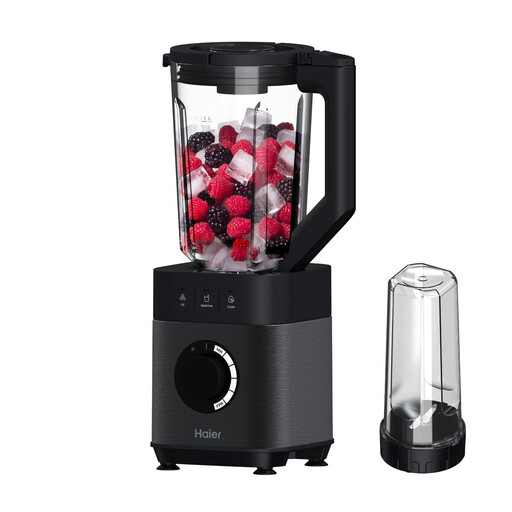
Why This Fits Their Persona: Suitable for households wanting a larger glass jug, automatic programmes and a separate smoothie container for regular cooking.
The 1.7L glass jug, five manual speeds and safety interlock make capacity, control and assembly requirements clear.
Includes ice-crushing, juicing and auto-clean programmes, plus dishwasher-safe parts and a 0.6L Tritan cup.
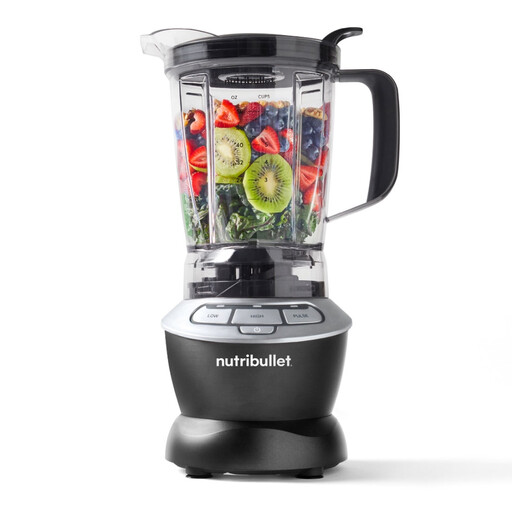
Why This Fits Their Persona: A practical match for families and meal-preparation users who want one appliance for cold drinks, sauces and heated soups.
It is specified for hot and cold blending and includes a vented locking lid, addressing the limitations of standard sealed personal cups.
Offers a 1000W motor, 1.6L pitcher, preset programmes, variable speed, pulse and self-cleaning.
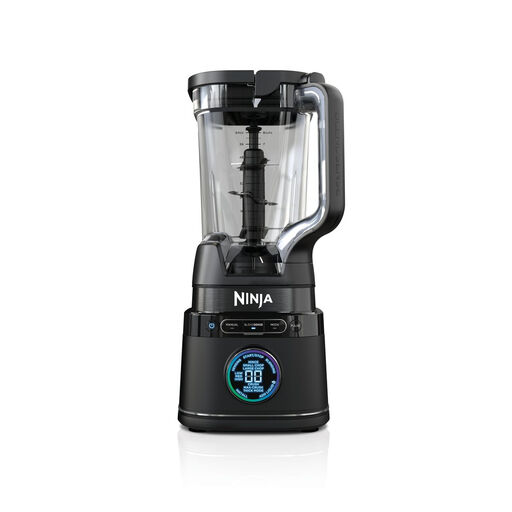
Why This Fits Their Persona: Useful for shoppers who alternate between family jug blending and individual drinks, particularly smoothies and frozen recipes.
Rather than relying only on a headline wattage figure, it provides a jug, two single-serve cups, manual modes and automatic ingredient detection.
The 1200W motor base supports 10 speeds, BlendSense programmes and top-rack dishwasher-safe cups, jugs and blades.
Before buying, confirm that the appliance is compatible with the UK electrical supply and that the included plug is suitable. The Philips 5000 Series HR2765/00 is supplied with a standard EU power cord, so UK users need a suitable adapter.
For safe operation:
We have compiled a complete, real-time list of products that fully satisfy these strict selection criteria and UK safety regulations.
Yes, a hand blender can be convenient for blending soup directly in a saucepan, provided the appliance and container are suitable. Keep the blending shaft submerged to reduce splashing and follow the stated temperature limits. A dedicated hot and cold blender may be more appropriate for cooking and blending in one container.
Lifespan depends on frequency of use, ingredients, cleaning and whether the motor is overloaded. Avoid running continuously beyond the manual’s limit, particularly with ice or dense mixtures. Regularly checking seals, blades and attachments can also help identify wear before it affects operation.
A higher wattage appliance can use more electricity when operating at full power, but actual running cost depends on usage time and electricity tariffs. Short blending cycles, suitable ingredient preparation and pulse control may reduce unnecessary operating time. A smaller personal blender can be practical when you regularly prepare single servings.