
24/7 Customer Support

Free returns

Same-day & Next-day Delivery

Quality Guaranteed

Unlock Your Welcome Offers: FREE Delivery | Up to 80% OFF | Free 30-day JoyPlus trial
Download the APP
Choosing between personal blenders, jug blenders and cordless blenders is not simply a matter of picking the highest wattage. The right choice depends on what you blend, how many people you serve and whether you value portability over capacity.
For UK households, three buying traps appear particularly often:
The following guide explains the key specifications to check before choosing kitchen blenders for smoothies, protein shakes, sauces, frozen drinks or soups.
A personal blender with a cup between 475ml and 900ml is suitable for one smoothie or protein shake at a time. These models are generally compact and can be convenient for students, commuters and gym users.
For family breakfasts, batch sauces or several portions of soup, a jug blender is more practical. Models with around 1.5L to 1.75L cold-drink capacity can reduce the need for repeated batches. Always check whether the product specifies a lower maximum for hot liquids. For example, the Xiaomi Blender Pro lists a 1.75L maximum for cold drinks and 1.4L for hot drinks.
Power should be considered alongside the intended ingredients:
These figures are not a guarantee of texture. Look for practical controls such as pulse functions, dedicated ice-crush settings or automatic programmes. A six-blade system, shaped jug or internal ribs may help ingredients circulate rather than sit around the sides.
For everyday use, BPA-free, shatter-resistant Tritan cups offer a lightweight alternative to glass. Glass jugs can feel substantial and resist odour absorption, but they are heavier and need careful handling.
Check whether the removable parts are dishwasher safe, while keeping the motor base away from water. Blades are sharp and should be handled only when the appliance is unplugged.
UK shoppers should also confirm the plug and electrical details before ordering. A product supplied with an EU plug may require a suitable UK adapter. Do not blend carbonated drinks or excessively hot liquids unless the instructions specifically allow it, as pressure can build inside a sealed container.

Why This Fits Their Persona: Its compact footprint and two 0.6L bottles suit first-time buyers, smaller kitchens, couples and anyone preparing separate drinks for work or exercise.
The two included bottles reduce washing-up and avoid the need to transfer a smoothie into another container.
300W motor, pulse function, removable blades and dishwasher-safe parts; two Tritan to-go bottles are included.

Why This Fits Their Persona: This personal model is suited to regular smoothie makers who want a powerful worktop appliance without moving to a full-size jug.
Its stated 1200W motor is paired with a titanium-coated rapid extractor blade and manual pulse control, rather than relying on wattage alone.
900ml Tritan Renew cup, two blending options and dishwasher-safe cups, lids and blade assembly.
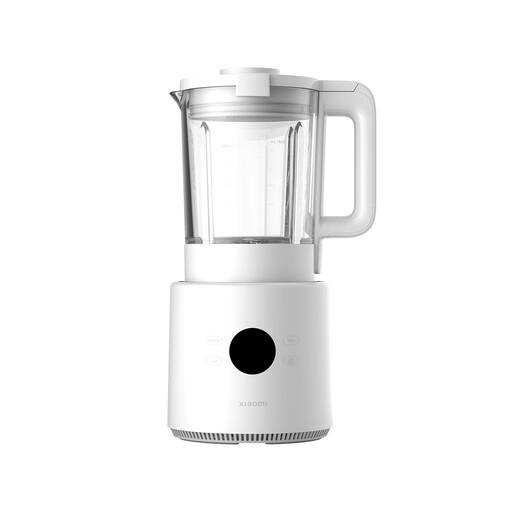
Why This Fits Their Persona: A household preparing soups, warm drinks and cold blends may prefer one appliance with dedicated hot-and-cold functions and a larger jug.
The separate hot and cold capacity figures make the limits clearer, while the ceramic-coated heating plate is designed to reduce sticking during cooking.
1.75L cold-drink capacity, 1.4L hot-drink capacity, six hot-and-cold options, self-cleaning modes and a 12-hour preset timer.
We have compiled a complete, real-time list of products that fully satisfy these strict selection criteria and UK safety regulations.
Portable blenders and cordless blenders are useful when access to a socket is limited. The Nutribullet Portable Blender has a 475ml cup, USB-C charging and a stated 15+ blending cycles per charge. The Nutribullet Flex offers a detachable 500ml vessel, a leakproof sip lid and a three-tier battery indicator.
However, battery-powered models usually have smaller capacities than jug blenders and may require ingredients to be chopped into smaller pieces. Check the charging time, battery indicators and maximum fill line before buying. They are particularly suitable for offices, commutes, student accommodation and post-workout drinks.
For larger batches, an appliance such as the Ninja Detect Blender Pro & Single Serve combines a jug with two single-serve cups. Its 1200W motor, manual settings and automatic programmes provide more flexibility, but the larger base and accessories require more cupboard space.
The electricity used by a blender depends on motor power and blending time. A 300W model running for one minute uses less electricity for that session than a 1,200W model running for the same duration, although the higher-powered appliance may process tougher ingredients more quickly.
To keep use efficient:
Some hot-and-cold blenders are designed for heated recipes, but not every model is suitable. Follow the manufacturer’s maximum hot-liquid capacity and temperature guidance. Never seal and blend very hot liquid in a container that is not designed for it, because steam pressure may cause leaks or force the lid open.
Lifespan depends on frequency of use, ingredient hardness, cleaning and correct assembly. Avoid overfilling, do not run a blender without sufficient liquid where instructions advise against it and handle blades carefully. A model with dishwasher-safe removable parts and separately available accessories may be easier to maintain over time.
Not necessarily. If you mainly use fresh fruit, yoghurt or protein powder, a standard personal blender may be sufficient. For frozen fruit, ice cubes or frozen drinks, look for a stated ice-crushing function, suitable blade system and clear instructions about ingredient size and liquid quantity.