
24/7 Customer Support

Free returns

Same-day & Next-day Delivery

Quality Guaranteed

Unlock Your Welcome Offers: FREE Delivery | Up to 80% OFF | Free 30-day JoyPlus trial
Download the APP
Choosing between the many blenders available in the UK is not simply a matter of comparing wattage or selecting the lowest price. A compact personal blender may suit one person making a breakfast smoothie, while a family may need a larger jug and a home cook may benefit more from a hand blender or soup maker blender.
The wrong choice can lead to poor textures, difficult cleaning or an appliance that spends more time in a cupboard than on the worktop. This guide explains the main buying pitfalls, the specifications worth checking and which blender types suit different lifestyles.
A high wattage figure does not automatically guarantee smoother results. Blade design, jug shape, ingredient circulation and the quantity being blended also affect performance. A 600W blender with an effective jug design may be more practical for everyday smoothies than a larger machine that is awkward to store.
For frozen fruit, ice or dense mixtures, check whether the product specifically includes an ice-crush function, suitable blades or instructions for adding liquid. Avoid assuming that every smoothie blender is suitable for large ice cubes or very hard ingredients.
A jug’s advertised size is not always the amount you can safely process. Hot liquids require extra space because steam and pressure can build up. Some models also specify different capacities for hot and cold drinks.
For example, the Xiaomi Blender Pro has a 1.75L maximum cold-drink volume and a 1.4L hot-drink volume. A soup maker blender with heating functions may therefore offer less usable capacity than its headline figure suggests.
Blades, seals and narrow lids can make cleaning frustrating. Look for dishwasher-safe removable parts, detachable blades or a cleaning programme, but always check whether the motor base, blade gearbox or electrical components must be kept out of water.
Worktop space matters too. A large jug blender may offer family-sized preparation but require permanent worktop space. A portable blender or hand blender may be more suitable for a small-footprint UK kitchen, student accommodation or a shared house.
A blender with travel cup can reduce washing up because the blending vessel doubles as a bottle. However, a personal blender is less suitable for preparing several servings at once.
Power should be considered alongside controls and blade construction. A hand blender with variable speeds gives more control over soups and sauces, while a jug blender with pulse or ice-crush settings can be more convenient for frozen drinks.
A multi-function blender may include a whisk, chopper or food processor attachment. These accessories can be useful if they replace separate appliances, but check how much storage space they require and whether all parts are easy to wash.
Glass jugs are heat-resistant and less likely to retain odours, but they are heavier than plastic. Tritan and BPA-free plastic vessels are lighter and shatter-resistant, making them practical for travel.
For UK households, check for a UK-compatible plug, the product’s voltage information and the supplied safety instructions. Never blend hot liquids in a container that is not designed for them. Keep hands and utensils away from moving blades, and unplug the appliance before removing attachments or cleaning.
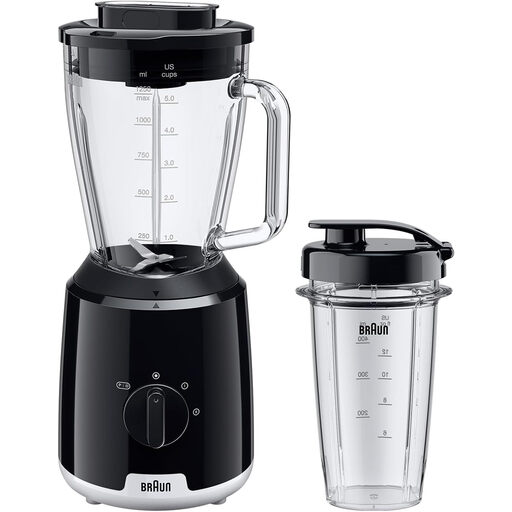
Why This Fits Their Persona: A compact jug blender for everyday smoothies, sauces and frozen drinks without the size of a full family appliance.
Its 1.5L glass jug, two speeds and stated ice-crush function provide clearer everyday capability than relying on wattage alone.
Triangular glass jug, Smoothie2Go bottle and dishwasher-safe jug, lid and blades.
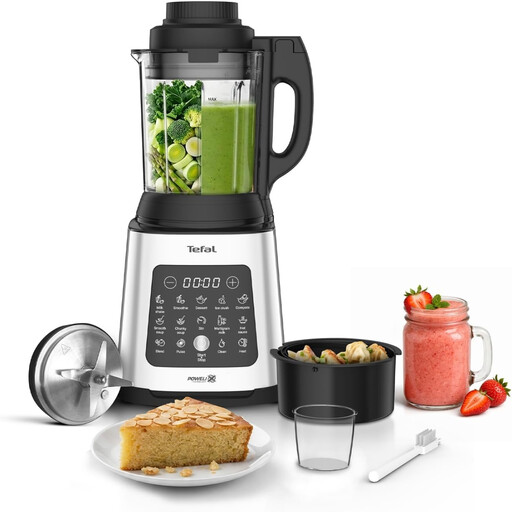
Why This Fits Their Persona: A feature-rich option for UK home cooks who want blending and cooking functions in one worktop appliance.
The product specifies separate hot and cold programmes, a 1.75L useful jug capacity and a heatproof glass jug.
Ten automatic programmes, steam basket, removable blades and automatic deep-clean programme.
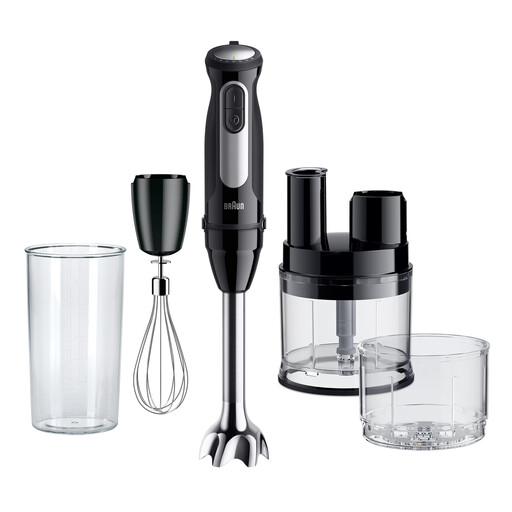
Why This Fits Their Persona: Suitable for cooks preparing soups, sauces, batters and chopped ingredients with different attachments.
The 25-speed wheel makes control more specific than a one-speed stick blender, while the instructions identify limits for continuous operation.
1000W motor, mini food processor, whisk, beaker and ice-crush knife included.

Why This Fits Their Persona: A rechargeable personal blender for gym bags, office desks, university accommodation and travel.
Its rechargeable battery removes dependence on a mains socket, while the 475ml cup defines a realistic single-serving size.
USB-C charging, to-go lid, dishwasher-safe cup and blade assembly, with 15+ stated blending cycles per charge.
We have compiled a complete, real-time list of products that fully satisfy these strict selection criteria and UK safety regulations.
A smoothie blender or personal blender with a suitable blade system, enough liquid and a travel cup is convenient for individual servings. For several drinks, choose a jug blender with a larger capacity and an ice-crush or pulse function.
Running cost depends mainly on motor power and usage time. A short blend uses relatively little electricity, but higher-powered models may draw more energy while operating. Using the correct quantity, pulse settings and pre-cut ingredients can help reduce unnecessary blending time.
Lifespan depends on frequency of use, ingredients, cleaning and whether the motor is operated within the stated limits. Avoid overfilling, blending unsuitable hard foods and running a hand or immersion blender continuously beyond its instructions. Regularly checking seals, blades and attachments can also help identify wear before performance declines.