
24/7 Customer Support

Free returns

Same-day & Next-day Delivery

Quality Guaranteed

Unlock Your Welcome Offers: FREE Delivery | Up to 80% OFF | Free 30-day JoyPlus trial
Download the APP
Choosing between the many blenders available in the UK can be surprisingly difficult. A compact portable blender may suit a morning protein shake, while a larger jug blender could be more practical for family portions or soup. Hand blenders offer a different kind of convenience, particularly when working directly in a saucepan.
The main risk is paying for features that do not match your routine. Before buying, look beyond motor wattage and attractive programme names. Check the usable capacity, cleaning method, power source, blade design and whether the appliance is suitable for hot or frozen ingredients.
A jug labelled 1.5L or 1.75L may not be suitable for filling to the rim, particularly when blending hot food or ingredients that expand. Portable models are also measured differently: a 475ml or 500ml cup is generally intended for an individual serving, not a family batch.
Check whether the listed capacity is a maximum, recommended working capacity or hot-liquid capacity. For soups, always follow the manufacturer’s instructions rather than assuming a cold-drink capacity also applies to hot contents.
Motor power is useful, but it does not tell the whole story. Blade shape, speed control, liquid quantity and ingredient preparation also affect the result. A 450W hand blender may be suitable for sauces and soups, whereas frozen fruit, ice or nuts may call for a more powerful ice-crushing blender with a suitable blade assembly.
A high-powered model can also be noisier, heavier and more demanding to store. Select power according to the ingredients you regularly use rather than choosing the largest number on the product page.
Food residue around blade assemblies, seals and jug bases can make an appliance frustrating to use. A dishwasher-safe blender can reduce cleaning time, but check exactly which components are dishwasher-safe. Motor units should not be immersed in water.
Detachable blades, removable shafts and easy-access vessels are practical features for frequent use. Also measure your cupboard, worktop and drawer space before buying; a tall jug blender may not fit beneath a kitchen cabinet.
For individual use, a 475ml to 600ml vessel can be convenient. Families may prefer a 1.2L to 1.75L jug, while a soup maker blender should clearly state whether it is designed for hot ingredients and whether heating is built in.
Look for controls that match your recipes. Two or three speeds and a pulse function provide manual control over texture. Automated cycles can be useful for repeatable smoothies, but they do not remove the need to add enough liquid or stay within the fill line.
For a cordless blender, check the charging connection, stated blends per charge and battery indicator. A USB-C rechargeable blender can be topped up using a compatible charger, laptop or power bank, but charging time and battery performance will vary by model and usage.
Food-contact parts should have clear material information, such as BPA-free plastic where stated. Look for secure locking mechanisms, leak-resistant lids and stable, non-slip bases. Blades are sharp and require careful handling during cleaning.
For UK use, check the supplied plug, voltage information, instructions and responsible manufacturer or importer details. Never blend carbonated liquids, and do not process hot liquids in a vessel unless the instructions specifically permit it.
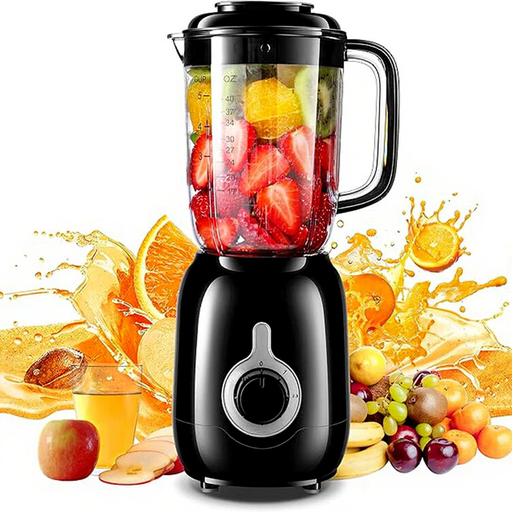
Why This Fits Their Persona: A practical option for students, couples or first-time buyers who want a worktop smoothie maker for everyday drinks and small food-preparation tasks.
The 1.2L capacity is stated clearly, while two speeds and pulse control avoid relying on wattage alone. The safety lock and non-slip base support stable operation.
500W motor, four stainless steel blades, pulse function and additional grinding and chopping accessories.

Why This Fits Their Persona: Suitable for users who regularly prepare frozen fruit smoothies, iced drinks and thicker personal blends at home.
Its stated 1200W motor is paired with a rapid extractor blade and manual pulse option, giving users both high power and control rather than a single automatic setting.
900ml cup, two blending options, stainless steel titanium-coated blade and dishwasher-safe cups, lids and blade assemblies.
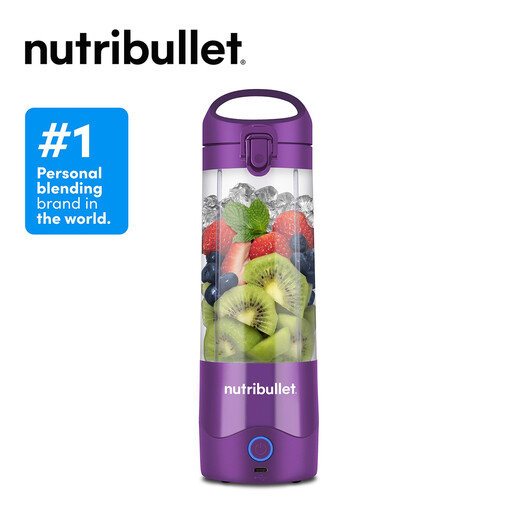
Why This Fits Their Persona: A cordless personal blender for commuters, gym users and travellers who want to blend and drink from one compact vessel.
The product specifies a 475ml cup, USB-C charging and a stated 15+ blending cycles per charge, making its portability more measurable than vague travel-focused wording.
One-touch operation, leak-proof to-go lid, stainless steel extractor blade and dishwasher-safe cup, lid and blade assembly.
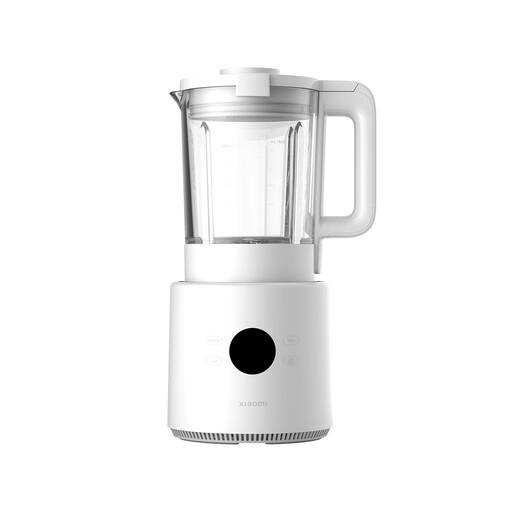
Why This Fits Their Persona: Designed for households preparing larger quantities of hot and cold recipes, including soups and shared drinks.
The cold-drink capacity is listed as 1.75L and the hot-drink capacity as 1.4L, helping prevent the common mistake of treating every capacity figure as interchangeable.
500W blending power, 800W heating power, six hot and cold beverage options, ceramic-coated heating plate and self-cleaning modes.
We have compiled a complete, real-time list of products that fully satisfy these strict selection criteria and UK safety regulations.
A personal blender or portable blender is convenient for one serving, particularly when you want to blend and drink from the same cup. A jug blender is more suitable for several portions or recipes requiring more space. If you regularly use ice or frozen fruit, check that the product description specifically states suitability for those ingredients.
Some jug models are designed for hot and cold preparation, while a hand blender can purée soup directly in a suitable saucepan. Never assume a standard personal or portable blender can handle hot liquid. Check the instructions, maximum hot-liquid capacity and lid requirements before use.
Running cost depends mainly on the appliance’s rated power and how long it operates. A simple calculation is: power in kilowatts × operating time in hours × your electricity tariff. Short blending cycles generally use less electricity than prolonged operation, but the exact cost varies with your tariff and usage. Cordless models also require electricity to recharge their battery.