
24/7 Customer Support

Free returns

Same-day & Next-day Delivery

Quality Guaranteed

Unlock Your Welcome Offers: FREE Delivery | Up to 80% OFF | Free 30-day JoyPlus trial
Download the APP
Choosing between different blenders can be surprisingly difficult. Product listings often highlight wattage, speed settings or “professional” styling, but these details do not always tell you whether an appliance will suit your kitchen, routine or cleaning habits.
A portable blender may be convenient for a morning commute, while a countertop blender is more suitable for family portions. A hand blender can prepare soup directly in a saucepan, but may not replace a food processor for chopping and slicing. Before buying, look beyond headline features and check the practical details that affect everyday use.
A higher wattage figure can indicate greater motor input, but it does not automatically guarantee smoother results. Blade design, vessel shape, speed control and the type of ingredients used also matter.
For example, a 300W smoothie maker may be suitable for soft fruit, liquid-based shakes and occasional frozen drinks, whereas harder ingredients or larger quantities may require a more powerful countertop blender. Check the manufacturer’s permitted ingredients and operating instructions rather than relying on wattage alone.
A blender’s stated capacity is not always the same as the amount you can process safely. Ingredients need room to circulate, and hot liquids may require additional space to reduce pressure and splashing risks.
A 475ml or 500ml vessel is practical for one serving. A 1.2L to 1.75L jug is more suitable for family smoothies, sauces or batch preparation, but it will take up more cupboard or worktop space.
Blades, seals and attachment points can collect residue if they are difficult to remove. A blender that looks versatile on paper may become inconvenient if its accessories require extensive hand washing.
Look for detachable blades or shafts, dishwasher-safe removable parts and a motor base that can be wiped clean without being immersed in water. Also consider where the appliance will be stored, particularly in a smaller UK kitchen or student accommodation.
Match the vessel to how you normally prepare food:
Do not fill beyond the marked maximum line. For hot food, follow the product’s temperature guidance and use a deep container to help reduce splashes.
A countertop blender with multiple speeds and pulse control gives more control over texture. Pulse mode is useful for short bursts, such as breaking down ice or mixing chunky ingredients. Some models provide automated programmes, while a simple one-speed blender may be easier for quick daily use.
For a blender for smoothies, check whether the product is designed for frozen fruit and ice. Do not assume every portable or hand blender can process large ice cubes, bones, hard shells or completely frozen ingredients. Cut food into smaller pieces and add sufficient liquid where the instructions recommend it.
A rechargeable blender can be useful at work, in a gym bag or while travelling, but battery models normally have smaller vessels and less continuous power than mains-operated appliances. USB-C charging is convenient with a compatible charger or power bank, although you should check charging time and the number of blends per charge.
For regular cooking, a corded immersion blender or countertop model may offer greater flexibility. A hand blender is also easier to store than a large jug appliance and can be useful for soups, purées and sauces.
For UK household use, check that the product information includes appropriate electrical and safety details, such as a 220–240V supply, applicable UKCA or CE marking where stated, and clear operating instructions. Food-contact parts should be identified, and detachable components should be securely locked before operation.
Always unplug before removing attachments or cleaning. Keep hands away from moving blades, do not immerse the motor unit and follow the stated continuous operating limit. For hot liquids, use only a model and container specifically approved for that purpose.

Why This Fits Their Persona: Its compact footprint and two 0.6L bottles suit first-time buyers, small kitchens, office routines and straightforward smoothie preparation.
The listing clearly states its 300W motor, 0.6L bottles and one-speed plus pulse control, making its intended use easier to judge than relying on vague performance wording.
Two Tritan to-go bottles, removable blades and dishwasher-safe parts support simple daily use.

Why This Fits Their Persona: The 1200W personal blender is designed for users who want a larger 900ml cup and more control over frozen ingredients and blending time.
Its specifications identify the 1200W motor, 900ml cup, automated 30-second cycle and manual pulse function, giving buyers measurable selection points.
Dishwasher-safe cups, lids and blade assemblies; Tritan Renew cups contain 50% recycled plastic according to the product information.
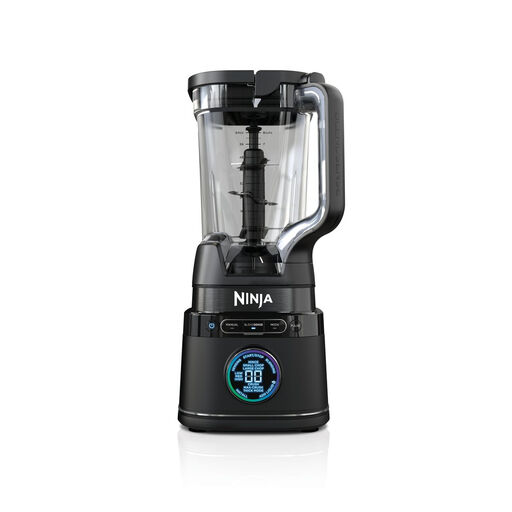
Why This Fits Their Persona: This two-in-one system suits households that want both a traditional jug blender and personal cups for smoothies or individual drinks.
Rather than offering a single capacity, it includes a jug and two single-serve cups. Its listed BlendSense functions detect ingredients, ice and portion size, while manual modes remain available.
1200W motor base, 10 speeds, preset modes and top-rack dishwasher-safe jugs, cups and blades.
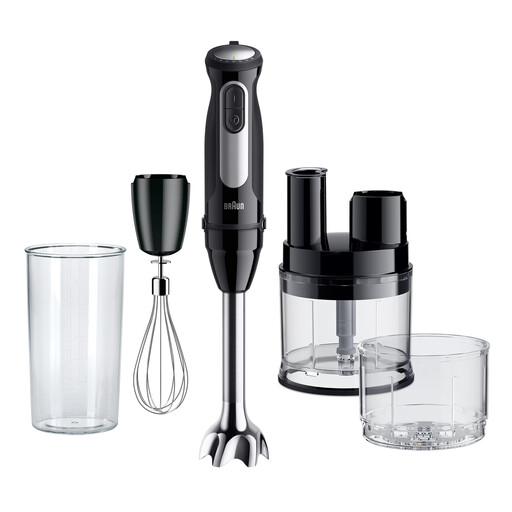
Why This Fits Their Persona: Home cooks preparing soups, sauces, batters and chopped ingredients may prefer a hand blender with several attachments rather than a single-purpose smoothie maker.
The accessory list specifies a mini food processor, whisk, beaker, slicing and grating disc, helping buyers assess whether they will use the attachments instead of paying for unused extras.
1000W motor, 25-speed control plus Turbo, and a metal blending shaft with several listed attachments.
We have compiled a complete, real-time list of products that fully satisfy these strict selection criteria and UK safety regulations.
They can be suitable for single servings, particularly when portability and USB-C charging matter. Check the cup capacity, battery cycles, ingredient restrictions and whether the model permits ice or frozen fruit. For several servings or frequent food preparation, a mains-powered countertop blender may be more practical.
A hand blender can handle soups, sauces, purées and some smoothies, while attachments may support whisking or chopping. However, a countertop blender generally offers a larger vessel and may be more suitable for family batches or repeated ice-crushing tasks. The right choice depends on your recipes and available storage.
Electricity use depends on motor rating, blending time and frequency. Use the correct amount of liquid, cut ingredients into smaller pieces and avoid running the appliance longer than necessary. Cleaning removable parts promptly can also help maintain efficient operation and prevent residue from affecting seals or blades.