
24/7 Customer Support

Free returns

Same-day & Next-day Delivery

Quality Guaranteed

Unlock Your Welcome Offers: FREE Delivery | Up to 80% OFF | Free 30-day JoyPlus trial
Download the APP
Choosing between blenders and food processors can be surprisingly difficult. Product listings often focus on motor wattage, blade speed or the number of accessories, but these figures do not always tell you how well an appliance will suit your kitchen.
A smoothie blender may be convenient for breakfast, while a food processor blender could be more useful for chopping vegetables, slicing ingredients and preparing sauces. Before buying, consider the food you make most often, the amount you prepare and how much cleaning you are prepared to do.
A higher wattage can indicate greater motor capacity, but it is not the only factor affecting performance. Blade design, container shape, speed controls and recommended operating times also matter.
For example, a 900W high-powered blender may be suitable for frozen fruit, nuts and ice, whereas a lower-powered appliance may be more appropriate for soft fruit, soups or small portions. Check the intended uses rather than comparing wattage alone.
Some multifunction blender kits include several cups, blades and discs. These can be useful, but they also increase storage requirements and the number of parts to wash.
If you mainly prepare smoothies, a compact smoothie blender with a portable cup may be more practical than a large food processor. Conversely, anyone who regularly chops onions, shreds cheese or slices vegetables may benefit from a food processor with dedicated discs.
A large bowl does not mean you can fill it to the rim. Always follow the appliance’s maximum fill line to reduce the risk of spills and motor strain. Hot liquids require particular care: several personal blenders are not designed for boiling or very hot ingredients because pressure can build inside the container.
For soups, check whether the product is specifically designed for hot and cold preparation. The Xiaomi Blender Pro, for example, lists a maximum cold-drink volume of 1.75 litres and a maximum hot-drink volume of 1.4 litres.
For everyday blending, look for a motor that matches your ingredients:
Speed settings and pulse control can be just as important as wattage. A multifunction appliance with several speeds gives you more control over smooth soups, chunky salsa and finely chopped ingredients.
A 500ml to 900ml cup is convenient for one person, a student or an individual smoothie. A 1.5-litre to 1.8-litre bowl is more useful for family meals, batch preparation and entertaining.
Remember that usable capacity is normally lower than the total container size. Leave space for ingredients to circulate safely, particularly when blending liquids.
Look for BPA-free food-contact components where specified, secure locking mechanisms and detachable parts. A dishwasher-safe blender can reduce daily cleaning, but check exactly which components are dishwasher safe. Motor bases should generally be wiped with a damp cloth rather than immersed in water.
Sharp blades and grating discs need careful handling. Unplug the appliance before disassembly, allow the motor to cool between cycles and never operate a unit with a cracked cup, damaged blade or loose attachment.
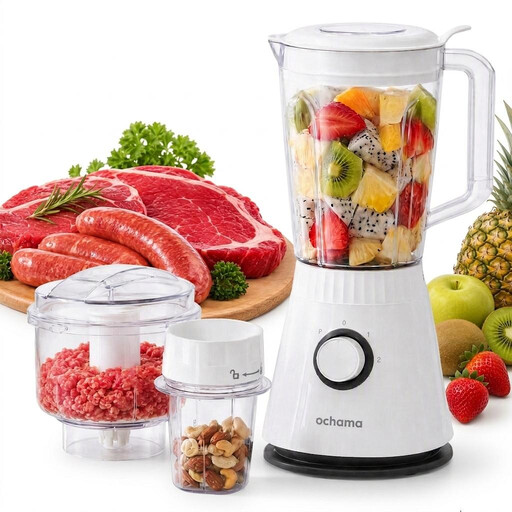
Why This Fits Their Persona: A practical choice for smaller UK households wanting one appliance for smoothies, juices, purées and occasional chopping without taking up excessive worktop space.
Its listed 1.5-litre pitcher and three speed settings make capacity and control clear, while detachable components address the common cleaning drawback.
600W motor; functions listed include ice crushing, meat chopping, spice grinding and baby-food purées.

Why This Fits Their Persona: Designed for shoppers who prioritise personal smoothies, portable cups and a straightforward routine over a large processing bowl.
The listed 909ml and 680ml cups clarify portion sizes, and the dishwasher-safe removable parts reduce reliance on complicated manual cleaning.
900W power; extractor blade system and cups with sip lids for blending and taking drinks away.
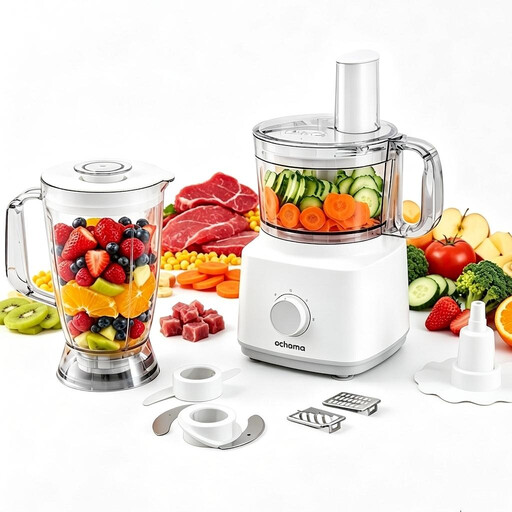
Why This Fits Their Persona: Suited to families and frequent home cooks who need more than a smoothie blender for daily ingredient preparation.
It states a 1.8-litre bowl capacity and includes separate chopping, slicing, shredding and grating functions rather than relying on one general-purpose blade.
750W motor; detachable parts and multiple discs for everyday vegetable preparation and puréeing.
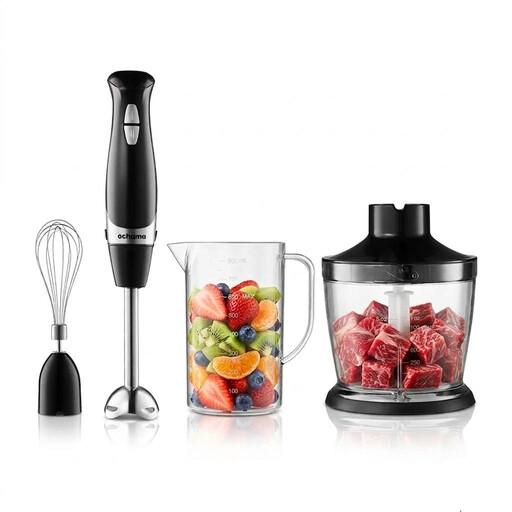
Why This Fits Their Persona: A hand blender is convenient for blending soup directly in a suitable container and preparing small batches of purées, sauces and baby food.
Its 500ml chopper cup and 800ml beaker make small-batch use clearer than a bulky family processor, while the detachable shaft simplifies washing.
600W motor; whisk, meat-grinder attachment, two speeds and detachable components.
We have compiled a complete, real-time list of products that fully satisfy these strict selection criteria and UK safety regulations.
Choose a portable blender if you usually make one drink at a time and want a cup with a resealable or sip lid. Select a vegetable chopper or food processor if preparing ingredients is the main task. A baby food maker or hand blender can be more manageable for small portions, but always follow age guidance and food-safety instructions supplied with the product.
For ice and frozen fruit, look for an explicitly listed ice-crushing blender rather than assuming every model can process hard ingredients. If you want one appliance for several jobs, compare the attachments of a multifunction blender carefully and confirm whether each part is included.
No. Blenders generally use a jug or cup and are designed for liquids, smoothies, soups and purées. Food processors usually offer wider bowls and attachments for chopping, slicing, shredding and grating. Combination models can perform some functions of both, but capacity and attachment design should be checked.
Energy use depends on motor rating and operating time. A 600W appliance running for one minute uses approximately 0.01kWh, before considering standby consumption. Actual running cost depends on your electricity tariff and how long the motor operates. Short processing cycles and switching the appliance off at the socket can help avoid unnecessary usage.
Lifespan depends on build quality, frequency of use, ingredient choice and maintenance. Avoid overfilling, respect maximum operating times, allow the motor to cool and clean removable parts promptly. Replace damaged cups, blades or seals rather than continuing to use them.