
24/7 Customer Support

Free returns

Same-day & Next-day Delivery

Quality Guaranteed

Unlock Your Welcome Offers: FREE Delivery | Up to 80% OFF | Free 30-day JoyPlus trial
Download the APP
Choosing between blenders and juicers is not simply a question of motor power. The right appliance depends on what you prepare, how much space you have and whether you are willing to clean several parts after every use. A compact smoothie blender may suit a commuter, while a centrifugal juicer or high-performance blender may be more practical for family portions and tougher ingredients.
The following guide highlights common buying traps, the specifications worth checking and suitable options for different UK households.
A 900W blender may offer more capacity for frozen fruit, nuts and ice than a 300W personal blender, but wattage alone does not determine texture or convenience. Blade design, cup shape, speed control and recommended operating time also affect day-to-day performance.
Similarly, a powerful motor does not automatically make an appliance suitable for juice extraction. A blender retains fibre and produces a thicker drink, whereas a juice extractor separates liquid from pulp.
A smoothie blender breaks down whole ingredients, including the fibre. A centrifugal juicer uses a rotating filter to separate juice from pulp. Neither design replaces the other completely.
If you want smoothies, protein shakes, sauces or crushed-ice drinks, consider a personal blender, jug blender or nutrient extractor. If your priority is fresh apple, carrot or vegetable juice with less pulp, look at a centrifugal juicer.
An appliance that takes too long to wash can quickly become an unused purchase. Check whether the cups, jugs, blades, sieves and lids are removable and dishwasher-safe. The motor base should never be immersed in water.
Also measure your worktop and cupboard space. A 1.5-litre jug blender may be suitable for a family, while a compact kitchen blender or portable blender is easier to store in a smaller flat or shared kitchen.
For occasional soft-fruit smoothies, a 300W personal blender can be sufficient. Models such as the Tefal Mix & Move and ochama Personal Blender are designed around compact, one-touch use.
For frozen fruit, seeds, nuts and regular ice crushing, a high-performance blender with around 900W or more provides a larger power margin. The Nutribullet 900 Series kits list a 900W motor and extractor blade speeds of up to 24,000–25,000 RPM. These figures describe motor and blade specifications; actual results still depend on liquid levels, ingredient size and loading.
For larger family batches and varied food preparation, consider a 600W to 1,200W jug blender with a larger vessel and multiple speed settings.
Cup capacity should match the number of people you usually serve:
A blender with travel bottle can reduce washing-up because you blend and drink from the same container. However, check whether the bottle has a secure lid, whether it fits your bag and whether the appliance is intended for continuous use.
Look for removable components made from clearly specified food-contact materials, such as BPA-free plastic or Tritan where stated. Dishwasher-safe parts can make regular use more realistic, but follow the manufacturer’s instructions and avoid placing the motor base in the dishwasher.
Always add liquid before harder ingredients where instructed, stay below the maximum fill line and secure the blade or jug correctly. Never place boiling liquids in a personal blending cup unless the manufacturer specifically permits it. Sharp blades require careful handling, and the appliance should be unplugged before assembly, disassembly or cleaning.

Why This Fits Their Persona: Its 300W motor, two 0.6-litre bottles and compact footprint suit first-time buyers, commuters and smaller UK kitchens.
The blend-and-carry bottle format reduces transfers and avoids buying a bulky jug appliance for single portions.
Two Tritan to-go bottles, removable blades and dishwasher-safe parts.
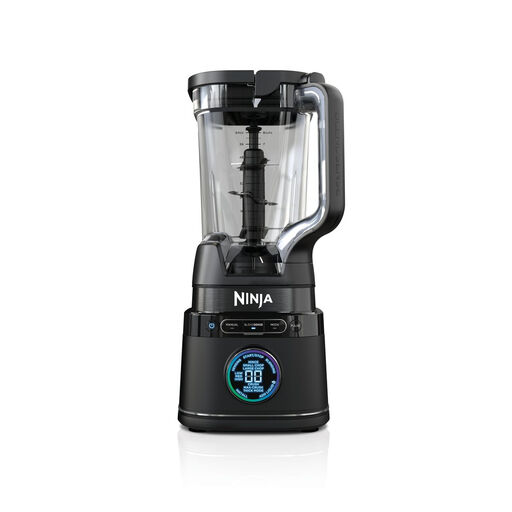
Why This Fits Their Persona: It combines a traditional jug and two single-serve cups, making it suitable for home cooks who want varied textures and serving sizes.
Its 1,200W motor base, manual modes and stated ice and portion detection provide more control than a basic one-speed smoothie maker.
Jug and personal blending formats, 10 speeds, preset modes and top-rack dishwasher-safe components.

Why This Fits Their Persona: Families and regular juice makers can use the 1.5-litre pulp basin and wide 3-inch feed chute for larger preparation sessions.
It is a dedicated juice extractor rather than a blender marketed as a juicer, with a stainless steel sieve and separate pulp collection.
800W motor, two speed settings, 800ml juice pitcher and dishwasher-safe sieve, basin and pitcher.

Why This Fits Their Persona: The 600ml travel bottle and compact one-touch design suit gym bags, office desks and quick morning drinks.
The detachable blade and safety interlock address two common drawbacks of low-cost portable models: awkward cleaning and insecure cup attachment.
One-touch operation, 600ml bottle, detachable blades and a compact design for personal portions.
We have compiled a complete, real-time list of products that fully satisfy these strict selection criteria and UK safety regulations.
Running cost depends mainly on motor rating and usage time. A 300W personal blender used for a short cycle generally consumes less electricity per session than a 1,200W model, although the difference also depends on how often you use it. Compare the stated wattage, blending duration and cleaning requirements rather than assuming a lower purchase price means lower running costs.
You can blend fruit and vegetables with liquid to make a smoothie, but the result usually contains the ingredient’s fibre. A smoothie blender does not normally separate pulp. For clearer juice with a separate pulp container, choose a dedicated juice extractor such as a centrifugal juicer.
Lifespan depends on frequency of use, ingredient load, cleaning and whether the motor is allowed to cool between cycles. Avoid overfilling, do not force ingredients into a juicer chute and replace cracked cups, damaged blades or worn seals. Checking the manufacturer warranty and availability of replacement components before buying can also reduce the risk of an appliance becoming impractical to maintain.