
24/7 全天候客户支持

免费退货

当日/次日达

品质保障

开启新人专享福利: 全场免邮 | 低至 2 折 | 免费试用 30 天 JoyPlus 会员
下载 Joybuy
Buying a blood glucose monitor and test strips should be straightforward, but product listings can make comparison difficult. A low purchase price may not reflect the ongoing cost of replacement strips, while impressive phrases such as “fast testing” or “painless sampling” do not always explain compatibility, sample size or storage requirements.
For people living with diabetes, prediabetes or another blood glucose monitoring need, the practical details matter. The right diabetes testing kit should suit your routine, be simple to operate and use test strips that are easy to replace in the UK.
Test strips are not universal. A glucose meter normally accepts only the strips designed for that specific model or product family. For example, Yuwell 710 test strips are listed for the Yuwell 710 monitor and are not interchangeable with other brands or models. Similarly, Sinocare Safe AQ Smart strips are intended for the compatible Safe AQ Smart blood glucose monitor.
Before buying, check:
Buying an attractive starter kit without checking future strip availability can make regular home blood glucose monitoring more expensive or inconvenient.
A 5-second blood glucose testing time can be useful, particularly for people who test regularly or need a quick reading before leaving home. However, result speed is only one part of usability. Also check the required blood sample, how the strip is inserted and whether manual coding is needed.
A no-code glucose monitor can reduce one setup step, while automatic coding may help match the meter to the strip batch. Neither feature removes the need to follow the instructions carefully.
Blood glucose test strips are sensitive to moisture, heat and poor closure of the vial. Remove one strip, close the container promptly and follow the storage instructions supplied with the product. Some products specify a period of use after opening, such as six months, while the printed expiry date still applies.
The advertised kit price may include 50 strips and 50 lancets, but regular users should compare the cost of future diabetes test strips, not just the initial meter.
The required blood sample is usually measured in microlitres (µL). A meter requiring 0.6 µL or 0.8 µL may suit users who prefer a smaller sample, while a 1 µL requirement is also common. The lancing device is equally important. Look for adjustable depth settings, replacement lancets and a design that can be operated comfortably.
Never share a lancing device, lancet or blood glucose meter. Used lancets and strips should be disposed of safely in accordance with local guidance, using an appropriate sharps container where required.
Manual coding adds an extra step and creates another opportunity for setup mistakes. No-code systems or automatic coding are more convenient for many beginners, older users and carers.
Some listings describe multi-electrode systems, FAD-GDH enzyme technology, composite silver electrodes or gold electrodes. These are technical design features intended to support stable measurement. They should not be treated as a substitute for correct handwashing, adequate sample application, suitable storage or advice from a healthcare professional.
A large display can be helpful for users with limited vision or reduced dexterity. Memory capacity also varies. Some blood sugar monitors store several hundred readings and calculate averages over periods such as 7, 14, 30, 60 or 90 days.
Consider whether you need:
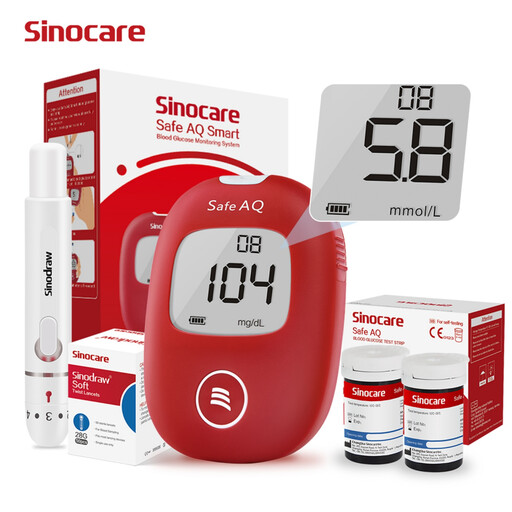
Why This Fits Their Persona: A complete starter set for someone beginning home testing and wanting the meter, lancing device, strips and lancets together.
The no-code design avoids manual code entry, and the listing specifies a 0.6 µL sample requirement and a five-second display time.
Includes 50 test strips, 50 lancets, an adjustable lancing device, large display and carrying bag.
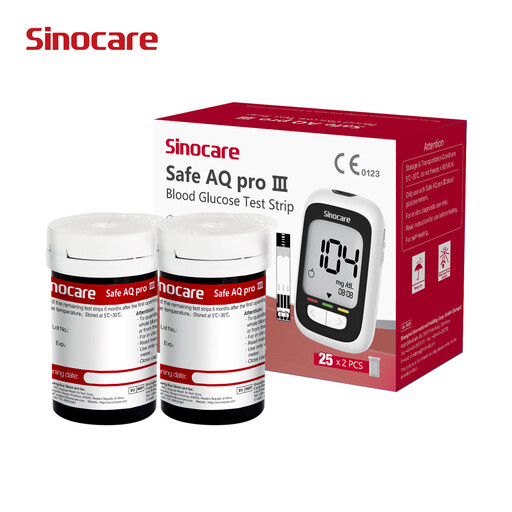
Why This Fits Their Persona: Suits regular users who want a larger memory capacity and a dedicated carrying case for organised home or travel use.
The package description identifies the compatible Safe AQ Pro III system, helping buyers avoid mixing strips with a different model.
Includes 50 strips and 50 lancing devices, with five-second testing, automatic coding and 500-reading memory.
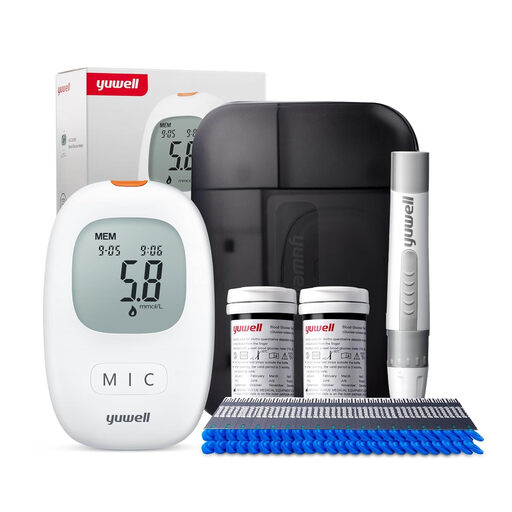
Why This Fits Their Persona: A practical option for users who record readings frequently and want stored averages for pre-meal and post-meal tracking.
The listing clearly states that the monitor accepts only Yuwell strips for the same model, making compatibility easier to check before purchase.
Stores up to 250 readings, provides 7/14/30/60/90-day averages and includes 50 Yuwell test strips, 50 lancets, a battery and case.
We have compiled a complete, real-time list of products that fully satisfy these strict selection criteria and UK safety regulations.
If you already own a monitor, buying replacement supplies may be more economical than replacing the entire kit. For example, the Yuwell blood glucose test strips and lancets for Model 710 contain 50 strips and 50 lancets, but are specified for Yuwell models 582 and 710 only.
For Safe AQ Smart owners, the Sinocare 50 blood glucose test strips and 50 lancing devices are listed for that system. Check the model printed on your existing meter before ordering. Also confirm the expiry date, open-vial usage period and whether the packaging has remained sealed and dry.
Use each strip once and do not use strips beyond the printed expiry date. Follow the product’s instructions for how long an opened vial remains suitable, as this period differs between products. Keep the container tightly closed and away from moisture.
Many lancets are designed to fit standard lancing devices, but compatibility should still be checked. The depth setting, needle gauge and device design affect comfort and blood collection. Use a new lancet for each test and never share one with another person.
A five-second result may make routine testing more convenient, but it does not determine whether a meter is suitable for your personal needs. Check the unit, sample size, memory, strip compatibility and instructions. Use readings as directed by your healthcare professional and seek medical advice when results are unexpected or concerning.