
24/7 Customer Support

Free returns

Same-day & Next-day Delivery

Quality Guaranteed

Unlock Your Welcome Offers: FREE Delivery | Up to 80% OFF | Free 30-day JoyPlus trial
Download the APP
Buying a blood glucose monitor and test strips can seem straightforward until you compare sample sizes, testing units, strip compatibility and ongoing costs. A low-priced glucose meter may become inconvenient if replacement strips are difficult to find, while a feature-rich diabetes testing kit may include accessories you do not need.
This guide explains the practical details to check before buying a blood sugar monitor, whether you are testing at home, travelling around the UK or helping a family member manage regular readings.
Blood glucose test strips are usually designed for a particular meter, model or product family. A strip that looks similar may not work with your device. For example, the listed Sinocare Gold AQ Plus strips are intended for compatible Gold AQ Plus meters, while Safe-Accu 2 strips are specified for the Safe-Accu 2 glucose meter.
Before ordering replacement test strips, check:
The initial purchase is only part of the cost. If you test frequently, replacement strips and lancets will determine the long-term running cost. A complete blood glucose monitoring kit with 50 strips and 50 lancets may be more practical for regular home diabetes testing than a meter supplied with only a small starter quantity.
Also check whether the kit includes a lancing device, carrying case and batteries. Missing accessories can make a seemingly economical purchase less convenient.
Test strips can be affected by moisture, heat and poor sealing. A vial should generally be closed promptly after removing a strip, and the strips should remain in their original packaging. Always follow the product instructions for shelf life after opening. Do not use strips past their expiry date or if the packaging has been damaged.
A smaller required sample can make routine testing more manageable, particularly for people who find fingertip sampling uncomfortable. The products listed here specify sample requirements ranging from 0.6 µL to 1 µL.
Testing speed is another practical consideration. Several compatible meters and strips in this range provide a displayed reading in approximately 5 seconds, while the Safe-Accu 2 system specifies approximately 10 seconds. These figures describe the product’s stated reading time; they do not replace correct preparation or professional advice.
Blood glucose readings in the UK are commonly discussed in mmol/L, so confirm that the meter is an mmol/L glucose meter before buying. A large display, clear digits and simple controls can be useful for older users or carers taking readings on someone else’s behalf.
Some meters also store previous results. The Gold AQ Plus listing refers to compatibility with meters that store up to 999 results, while the Safe-Accu 2 meter listing specifies storage for 200 timestamped results. Storage capacity is useful for reviewing readings, but it should not be treated as a substitute for advice from a healthcare professional.
A no-code glucose monitor can reduce setup steps because the user does not need to enter a strip batch code manually. Automatic coding offers a similar convenience on compatible systems.
Look at the strip’s collection area as well. The Gold AQ Plus strips specify a 180-degree blood sampling port and a 0.8 µL sample requirement. The Safe AQ Pro III system specifies a 1 µL sample, five-electrode technology, automatic coding and a five-second result time.
These technical features are meaningful only when the correct strips and meter are used together.
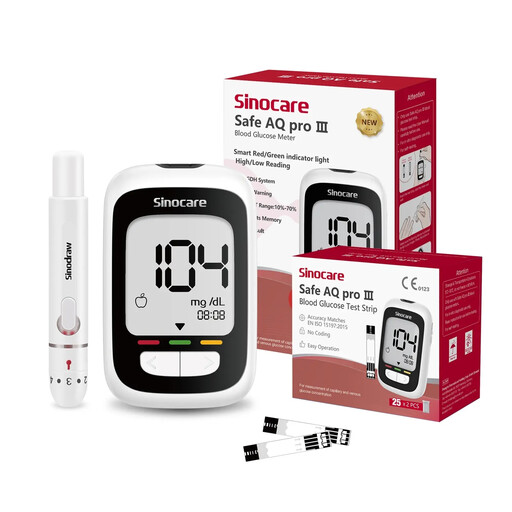
Why This Fits Their Persona: It provides a meter, lancing device, 50 test strips, 50 lancets, manual and carrying bag in one mmol/L package, helping first-time buyers avoid separate accessory purchases.
The package contents and mmol/L format are specified, reducing the risk of buying a meter without the compatible lancing equipment or the preferred UK unit.
Stated five-second testing; automatic coding; 50 strips and 50 lancets included.
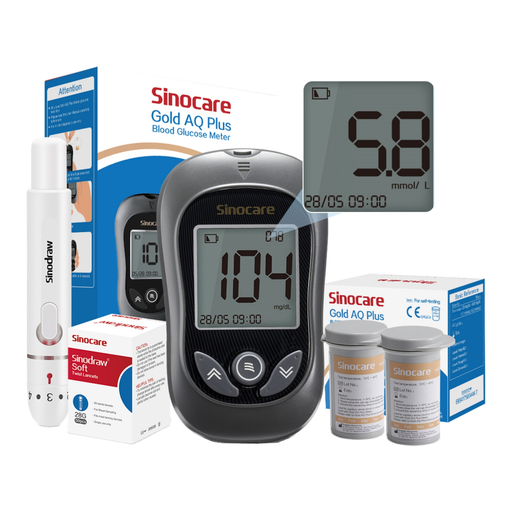
Why This Fits Their Persona: The low stated sample requirement and no-code operation suit users who want a streamlined routine, while the carrying bag supports home and travel use.
The listing clearly identifies the compatible meter family, so buyers can check their device before purchasing replacement strips.
0.8 µL stated sample size; five-second reading; no-code design; 999-result storage compatibility.
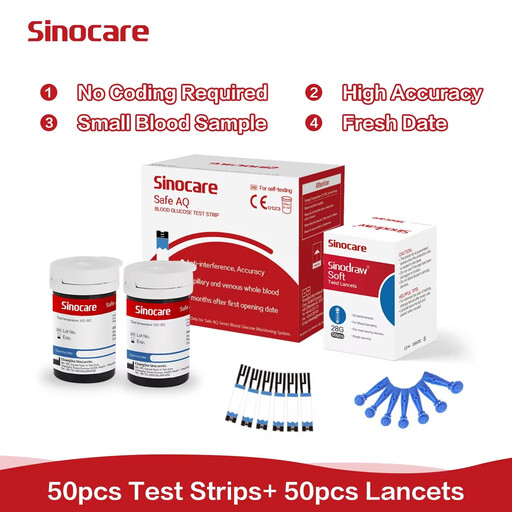
Why This Fits Their Persona: This strips-only pack is suited to existing Safe AQ Smart meter owners who need a larger replenishment supply for regular testing rather than another complete monitor.
It is labelled as strips and lancing devices only, making the contents clear and avoiding payment for a second meter.
50 test strips and 50 lancets; stated 0.6 µL sample; five-second testing; no manual coding.
We have compiled a complete, real-time list of products that fully satisfy these strict selection criteria and UK safety regulations.
For a typical home test:
These products are for in vitro diagnostic use and personal self-testing. They should not be used to diagnose or change treatment without professional guidance.
Check both the printed expiry date and the manufacturer’s post-opening guidance. Some products specify a limited period after opening, such as six months, while others may state three months. Keep the container tightly closed and store strips away from moisture and extreme temperatures.
A smaller stated sample, such as 0.6 µL or 0.8 µL, may make sampling more convenient. However, the result still depends on using the correct strip, obtaining a sufficient sample and following the meter instructions. Do not add more blood after the meter has started a test unless the manual specifically permits it.
The main recurring expenses are replacement strips, lancets and occasional batteries. Compare the price per strip rather than only the headline kit price, and confirm that replacement strips remain available for your exact glucose meter. This gives a clearer indication of the cost of regular testing.