
24/7 Customer Support

Free returns

Same-day & Next-day Delivery

Quality Guaranteed

Unlock Your Welcome Offers: FREE Delivery | Up to 80% OFF | Free 30-day JoyPlus trial
Download the APP
Buying a blood glucose monitor with test strips should be straightforward, but product listings can make comparison difficult. A low headline price may exclude essential lancets, a fast reading may still be inconvenient if the blood sample is difficult to apply, and replacement strips may not fit the meter you already own.
Joybuy Product Recommendation Officer’s practical guide focuses on the details that affect everyday use in a UK home: mmol/L compatibility, test-strip availability, sample size, reading time, storage and ease of operation.
Blood glucose test strips are generally model-specific. Safe AQ Pro, Safe AQ Smart, Safe-Accu2 and Gold AQ Plus strips should not be treated as interchangeable simply because they look similar or come from the same manufacturer.
Before buying, check:
A diabetes testing kit may appear inexpensive but become costly if compatible replacement strips are difficult to source.
A 5-second blood glucose test can be useful when testing before leaving home, at work or while travelling. However, speed is only one part of the experience. Check the required blood volume, how the strip draws up the sample and whether the display is easy to read.
A low blood sample glucose meter may require around 0.6 μL to 1 μL, depending on the model. A smaller sample can be helpful for people who find fingertip testing uncomfortable, but correct hand washing, drying and sample application remain important.
A meter is usually only the starting purchase. Regular users also need test strips and lancets. Some products include 50 of each, while others are supplied as a smaller starter set or as strips only.
Test strips can also be affected by moisture, heat and an open container. Keep them in their original vial, close the lid immediately and follow the stated use-by period after opening. Never use damaged or expired strips.
Blood glucose readings in the UK are commonly displayed in mmol/L. Confirm that the meter is a mmol/L model before ordering, particularly when comparing imported listings. Some meters can switch between mg/dL and mmol/L, while others are supplied in one fixed unit.
Using the wrong unit can cause unnecessary confusion. If a carer or family member helps with readings, make sure everyone understands the display format.
Look for two separate specifications:
A 0.6 μL requirement may suit users seeking a smaller blood sample. A 5-second result may be convenient for frequent testing, while a 10-second meter may still be practical if it offers a larger display or additional memory.
A no-code glucose meter reduces the need to enter a strip batch code manually. Auto-coding or automatic start-up can simplify testing for older users and anyone who prefers fewer steps.
Also consider:
These features are often more useful day to day than promotional claims about advanced technology.
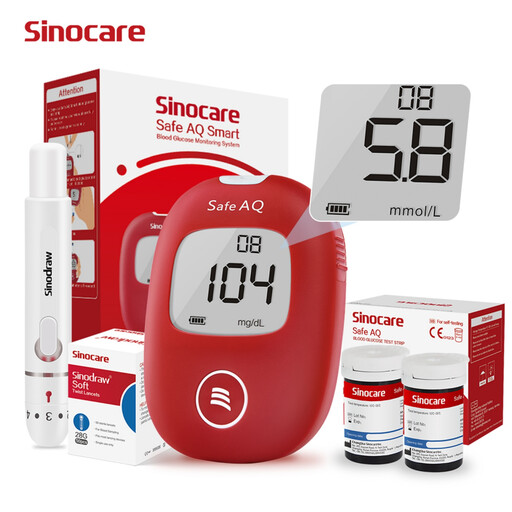
Why This Fits Their Persona: A practical starting option for UK households wanting a complete mmol/L kit rather than buying each component separately.
The package includes the meter, lancing device, 50 test strips and 50 lancets, while its no-code design removes manual coding steps.
5-second readings, 0.6 μL sample requirement, large display and adjustable lancing depth.
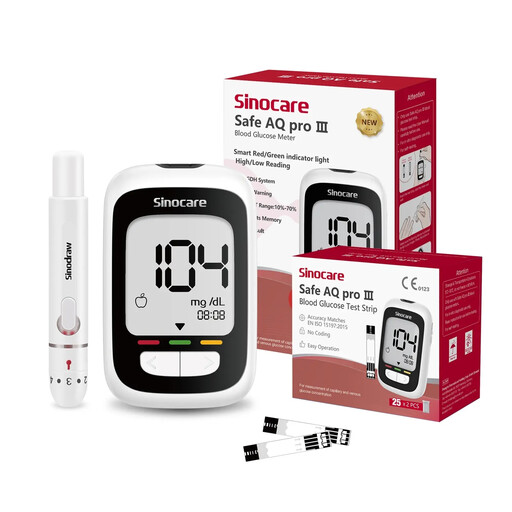
Why This Fits Their Persona: Suitable for users prioritising a defined testing process, automatic coding and a supplied carrying bag for organised home or travel use.
The complete package provides 50 strips and 50 lancets, and the product instructions specify a 1 μL blood sample and compatible strips.
5-second result time, automatic coding, 500-result memory and a stated FAD-GDH system.
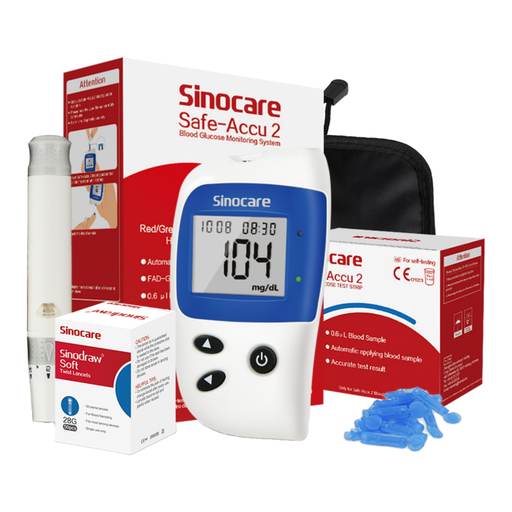
Why This Fits Their Persona: Designed for regular users who value stored readings, a readable screen and quick review of previous results.
The meter is clearly paired with Safe-Accu2 strips, helping reduce the risk of ordering an incompatible refill.
0.6 μL sample requirement, 10-second results, 200-result memory and test-strip eject button.
We have compiled a complete, real-time list of products that fully satisfy these strict selection criteria and UK safety regulations.
Read the manual before the first test and check that the meter displays mmol/L. Wash and dry your hands thoroughly, as food residue or moisture can affect the sample. Insert a compatible strip, use a fresh lancet and apply the blood drop exactly as instructed.
For hygiene and safety:
These products are for in vitro diagnostic use and home monitoring. They do not replace advice from a GP, diabetes nurse or other healthcare professional.
The period varies by product. The Safe AQ Smart information states that strips should be used within six months after opening, while Safe-Accu2 replacement strips state three months. Always follow the packaging and user manual rather than relying on a general rule.
It can be useful for frequent testing, travel and busy routines. However, compare the required blood volume, display, strip cost and replacement availability as well. A slightly longer result time may suit someone who values larger text or greater memory capacity.
Test strips must be confirmed as compatible with the exact meter model. Lancets may fit different lancing devices, but using the manufacturer’s specified size and instructions is the safer approach. Never assume that strips from different Safe AQ or other meter ranges can be exchanged.