
24/7 Customer Support

Free returns

Same-day & Next-day Delivery

Quality Guaranteed

Unlock Your Welcome Offers: FREE Delivery | Up to 80% OFF | Free 30-day JoyPlus trial
Download the APP
Buying a blood glucose monitor kit should be straightforward: choose a meter, add test strips and lancets, then follow the instructions. In practice, hidden compatibility issues, unclear running costs and unsuitable displays can make an apparently good deal inconvenient to use.
Whether you are living with diabetes, supporting a relative, monitoring during pregnancy or simply need a portable home blood sugar testing kit, check the details below before ordering.
Test strips are not universal. A Safe AQ Pro I strip, for example, is designed for the Safe AQ Pro I monitor, while Safe-Accu2 strips are intended only for the Safe-Accu2 meter. Using an incompatible strip can prevent testing or produce an unreliable result.
Always check:
A low-priced refill is not necessarily economical if it does not match the meter already in your home.
Many products advertise 5-second blood glucose testing, but speed is only one part of the process. Sample volume also affects convenience. Some meters require 0.6 μL, 0.8 μL or 1 μL of blood, as stated in their product specifications.
A smaller stated sample requirement may be useful for people who test frequently or find finger-pricking uncomfortable. However, correct hand washing, dry fingers and following the user manual remain important for consistent use.
A no-code blood glucose monitor removes manual code entry, which can simplify setup. It does not remove the need to insert the correct strip, store strips properly or use an in-date vial.
Keep the container tightly closed, protect strips from moisture and avoid using damaged packaging. Do not rely on colour indicators or a single reading to make medical decisions; follow advice from your healthcare professional.
For users in the UK, an mmol/L glucose monitor is generally the practical choice. Confirm that the meter displays mmol/L rather than mg/dL, particularly when buying from an international marketplace.
A large screen, clear digits and high-contrast indicators can help older users and carers. Some meters store readings with dates and times, while others also calculate averages over periods such as 7, 14 or 30 days. Consider whether this information is genuinely useful for your routine.
A complete diabetes testing kit should clearly state what is included. Common combinations are:
Check whether the lancing device has adjustable depth settings. This can make it easier to find a comfortable setting, but used lancets should never be shared. Dispose of used lancets and strips safely according to local guidance.
Read the product instructions for expiry dates, temperature limits and post-opening use. For example, some strip packs specify use within three or six months after opening. This matters when comparing a 50-strip pack for occasional testing with one for regular daily use.
Also check the stated haematocrit range, sample volume, test time and memory capacity. These are technical specifications rather than guarantees that a result will suit every individual, so ask a healthcare professional if you have specific clinical requirements.
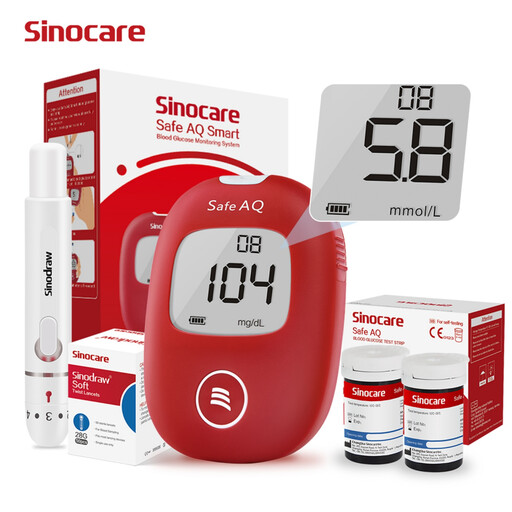
Why This Fits Their Persona: A practical starter set for home users who want a portable mmol/L meter with the main testing supplies included.
The listing identifies a no-code design and states that the set includes 50 strips and 50 lancets, reducing the need to buy separate essentials immediately.
5-second stated reading time, 0.6 μL stated sample volume, large display and adjustable lancing depth.
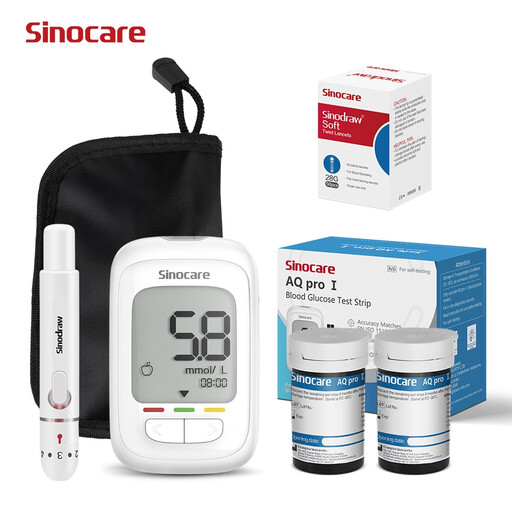
Why This Fits Their Persona: Suitable for users who value colour-coded on-screen indicators, substantial memory and a wider stated haematocrit range.
The product information clearly states that its strips are compatible only with the Safe AQ Pro I monitor, helping buyers avoid an incorrect refill purchase.
5-second stated result time, auto coding, 500-result memory and colour-coded result indicators.
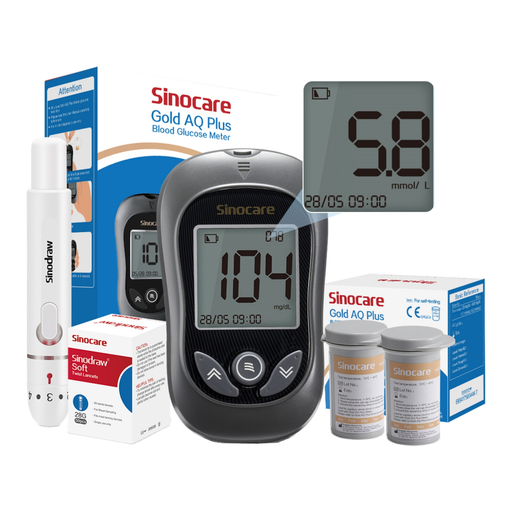
Why This Fits Their Persona: A useful match for regular testers who want a complete kit and higher on-device storage for reviewing readings.
The specification states that the meter supports storage of up to 999 test results, while the included 50 strips and 50 lancets provide a defined starting supply.
5-second stated testing time, no manual coding, 0.8 μL stated sample volume and 20%–70% stated haematocrit range.
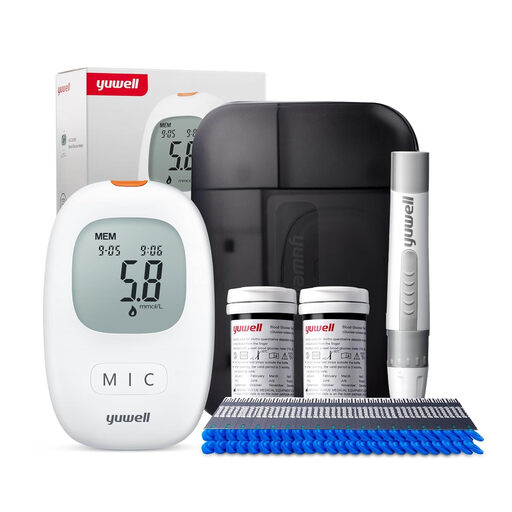
Why This Fits Their Persona: Its stated 40 g weight, large display, five lancing settings and dated memory may suit home users who prefer straightforward handling.
The listing specifies automatic power-on and no manual coding, reducing setup steps. It also clearly warns that only matching model strips are interchangeable.
50 strips and 50 lancets included, 250-reading memory and stated 7, 14, 30, 60 and 90-day averages.
We have compiled a complete, real-time list of products that fully satisfy these strict selection criteria and UK safety regulations.
Wash and dry your hands, insert the compatible strip, prepare the lancing device and apply the blood sample exactly as shown in the manual. Confirm the display unit is mmol/L before use. Do not share the meter or lancing device, even within the same household.
The expiry date is printed on the packaging. Opening guidance varies by product: some listings specify six months after opening, while Safe-Accu2 strips specify three months. Close the vial immediately after removing a strip and store it as directed.
The meter may be supplied as a complete starter kit, but the continuing cost comes from replacement strips and lancets. Compare the price per strip, pack quantity, post-opening lifespan and compatibility before purchasing. A refill-only pack can be suitable when you already own the correct meter; otherwise, a complete kit may avoid buying components separately.