
24/7 Customer Support

Free returns

Same-day & Next-day Delivery

Quality Guaranteed

Unlock Your Welcome Offers: FREE Delivery | Up to 80% OFF | Free 30-day JoyPlus trial
Download the APP
Buying a blood glucose monitor kit should be straightforward, but product listings often make comparison difficult. A low-priced kit may appear attractive until you discover that the test strips are model-specific, the display is difficult to read, or replacement supplies cost more than expected.
For people managing diabetes, pregnant users following professional guidance, older adults, carers and anyone carrying out home blood sugar testing, the practical details matter more than impressive-sounding marketing language. This guide explains which specifications to check, which common buying traps to avoid and which kits may suit different routines.
A glucose meter normally works only with its designated test strips. For example, Safe AQ Smart, Safe-Accu 2 and Gold AQ Plus strips are different product lines. A strip that looks similar may not fit or may not produce a valid reading.
Always check:
The Sinocare Safe-Accu 2 replacement pack, for example, is specified for use only with the Safe-Accu 2 meter. The listing states that its 50 strips and 50 lancets should be used within three months after opening.
A five-second result sounds convenient, but speed is only one part of usability. You also need to consider blood sample size, whether coding is required, how strips draw in the sample, memory capacity and how easily results can be read.
A glucose meter with test strips may be unsuitable if its screen is too small, the lancing device has limited depth settings or replacement strips are difficult to source. For frequent users, the ongoing cost and availability of blood glucose test strips can matter more than a few seconds saved during each test.
Some smartwatches display estimates or trends for blood glucose and other health metrics. However, the Dido G80S listing states that it is not a medical device, and that its data should not replace laboratory testing or professional medical advice.
A smartwatch may be useful for general lifestyle tracking, but it should not automatically replace a finger-prick diabetes testing kit where a healthcare professional has advised blood glucose monitoring.
In the UK, blood glucose is commonly discussed in mmol/L. Check that the monitor is an mmol/L version or allows you to select the appropriate unit. Some devices offer both mg/dL and mmol/L, while others are supplied in one format only.
Avoid relying on a product title alone. Confirm the unit shown in the specifications, packaging and user manual before ordering.
Sample volume is measured in microlitres (μL). Several listed kits require a small sample, including:
The supplied descriptions list results in around five to ten seconds, depending on the model. A lancing device with adjustable depth settings can help users find a setting that suits their skin and routine, although no device can guarantee a completely pain-free experience.
Memory storage is useful when you need to review readings or discuss patterns with a healthcare professional. Depending on the product, storage ranges from 200 readings to 500 or 999 results.
Look for:
The Yuwell Model 710 stores up to 250 readings and lists seven-, 14-, 30-, 60- and 90-day averages. Its lancing device has five intensity settings, which may be useful for households with different users. Its strips are not interchangeable with other Yuwell models or unrelated meters.
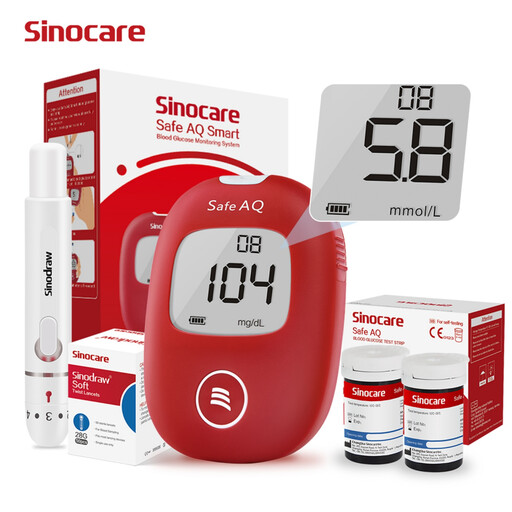
Why This Fits Their Persona: A complete starter pack for someone setting up regular home blood sugar testing, with the meter, carrying bag, 50 strips and 50 lancets included.
The listing clearly identifies the Safe AQ Smart strip system, helping avoid the mistake of ordering an incompatible refill.
No-coding operation, large display, approximately 0.6 μL sample requirement and results listed in five seconds.
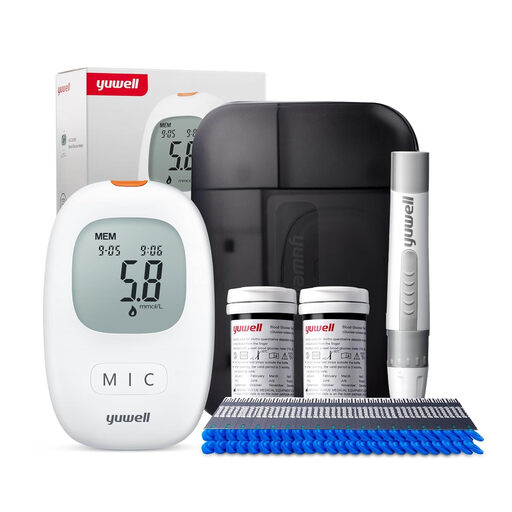
Why This Fits Their Persona: Suitable for users who value organised records, a compact meter and a lancing device with several adjustment levels.
The product information states that the meter uses its own model-specific strips, making compatibility checking explicit rather than assumed.
Stores up to 250 readings, provides multiple average periods and includes 50 strips, 50 lancets, battery and case.
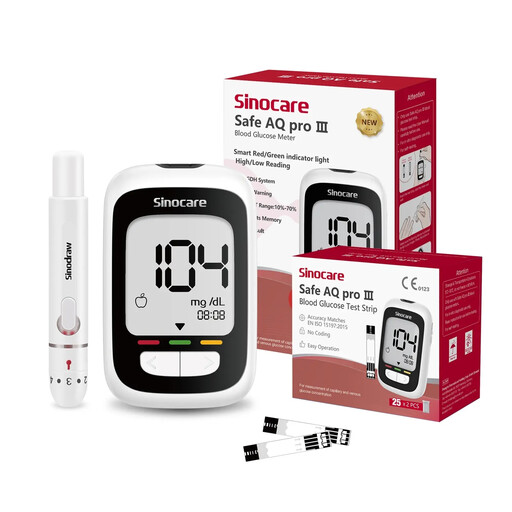
Why This Fits Their Persona: An mmol/L kit with 50 strips and 50 lancets for users who need a ready-to-use set and regular access to recorded readings.
Its stated five-second testing time is paired with automatic coding, so users do not have to trade simple setup for frequent testing.
The listing specifies a five-electrode system, FAD-GDH technology, approximately 1 μL sample volume and 500-memory packaging.
Wash and dry your hands before testing, follow the supplied instructions and close the strip vial immediately after removing a strip. Do not share meters or lancing devices. Used lancets should be placed in a suitable sharps container according to local guidance.
To estimate the cost of running a diabetic testing kit, divide the price of each strip pack by its number of strips, then add the likely cost of replacement lancets and batteries. Check whether a refill contains strips only or both strips and lancets. Store supplies away from moisture, heat and direct sunlight, and never use expired strips.
We have compiled a complete, real-time list of products that fully satisfy these strict selection criteria and UK safety regulations.
A complete kit commonly includes a meter, lancing device, lancets, test strips, instructions and a storage case. Confirm the contents before purchase, as some listings contain replacement strips and lancets without a meter.
Shelf life varies by product. Some packs specify a period such as three or six months after opening, even when the unopened expiry date is longer. Keep the vial sealed and follow the label instructions.
Not automatically. A smartwatch may provide trend-based wellness estimates, but the product information should state whether it is a medical device. If it is not, use a suitable finger-prick glucometer and follow advice from your healthcare professional.