
24/7 Customer Support

Free returns

Same-day & Next-day Delivery

Quality Guaranteed

Unlock Your Welcome Offers: FREE Delivery | Up to 80% OFF | Free 30-day JoyPlus trial
Download the APP
Buying a blood glucose monitor kit should make home testing simpler, not create another source of confusion. However, product listings often focus on speed, memory capacity or “low-pain” features while leaving out details that affect everyday use.
For adults with diabetes, carers, older users, pregnant women requiring glucose checks and anyone carrying a portable glucose meter, the practical questions are usually straightforward: Will the strips fit? Is the display easy to read? How much blood is needed? What will replacement supplies cost?
This guide explains the important specifications, common shopping traps and suitable product options available through Joybuy.
A blood glucose meter is only useful when you can obtain the correct blood glucose test strips. Test strips are usually model-specific rather than interchangeable. For example, Safe-Accu 2 strips are designed for the Safe-Accu 2 meter, while Yuwell strips are intended for designated Yuwell models.
Before ordering, check:
Buying an inexpensive meter with difficult-to-source consumables can cost more over time than choosing a complete kit from the outset.
A reading in five or ten seconds is useful, but it is only one part of the testing routine. You also need to consider blood sample size, whether coding is required, how the strip accepts the sample and how clearly the result appears.
A no-code glucose monitor reduces one possible setup step, while an automatic sample uptake design may help users who find it difficult to place a small blood drop accurately. A large screen and simple buttons can be more relevant than a headline speed claim, particularly for older users or carers.
Test strips can be affected by moisture, heat and leaving the container open. A kit may appear good value if it contains 50 or more strips, but that quantity is less useful if the strips must be used within a stated period after opening.
Keep strips in their original container, close the lid promptly and follow the product manual. Never use strips after their expiry date or from damaged packaging.
Blood sample requirements are commonly shown in microlitres, such as 0.6 μL, 0.8 μL or 1 μL. A smaller stated sample may make fingertip testing more manageable, although users should still follow the instructions and collect enough blood for the strip.
The listed products provide results in approximately 5 or 10 seconds. Faster results may suit frequent testing, workdays or travel, but correct hand washing, drying and sample application remain essential.
UK users generally need an mmol/L glucose meter, rather than a meter displaying mg/dL. Check the unit before purchase and confirm whether it can be changed. Some models, including the AILE kit, list both mg/dL and mmol/L options.
If you are replacing an existing meter, match the unit used in your records and healthcare guidance. Do not convert or interpret readings for treatment decisions without advice from your healthcare professional.
Memory storage can be helpful for identifying patterns to discuss with a healthcare professional. Available options in the supplied range include:
Also check the display size, button layout, result visibility and whether the meter automatically starts when a strip is inserted. These features affect home blood sugar testing more directly than decorative design details.
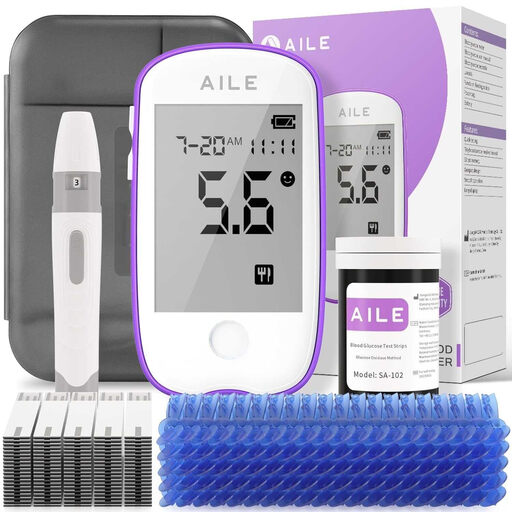
Why This Fits Their Persona: A complete starter set for users who want a straightforward home blood sugar monitor with the main supplies included.
It includes the meter, 50 strips, 50 lancets, a lancing device and storage case, so the initial purchase is not limited to the monitor alone.
5-second results, no-code operation, large LCD screen and selectable mg/dL or mmol/L display.
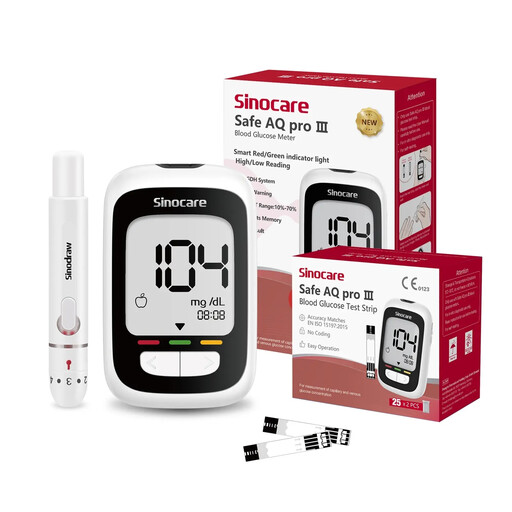
Why This Fits Their Persona: Suits users who prioritise a defined testing system, quick readings and a supplied carry bag for organised daily monitoring.
The listing clearly specifies compatibility with the Safe AQ Pro system and provides 50 matching strips and lancets.
5-second testing, automatic coding, a 1 μL sample requirement and 500-result memory.
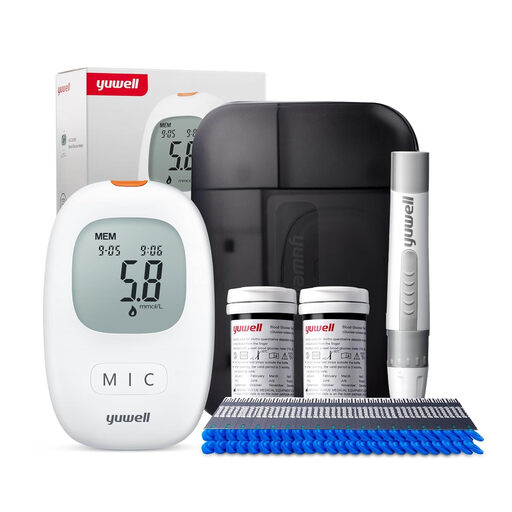
Why This Fits Their Persona: A practical choice for frequent testing, carers or users who want dated records and longer-term averages.
The product information states that the meter accepts only designated Yuwell strips, making the compatibility requirement clear before purchase.
Stores up to 250 readings, supports 7/14/30/60/90-day averages and includes 50 strips, lancets, battery and case.
We have compiled a complete, real-time list of products that fully satisfy these strict selection criteria and UK safety regulations.
Wash and dry your hands before testing, then follow the meter’s manual for strip insertion and sample collection. Use a fresh lancet for each test and do not share a lancing device, meter or lancets with another person. Used lancets should be disposed of in a suitable sharps container according to local guidance.
These devices are for in vitro diagnostic use and are not a substitute for professional diagnosis or treatment advice. If a result is unexpected, unusually high or unusually low, follow your personal care plan and contact a healthcare professional when appropriate.
Check both the printed expiry date and the instructions for use. Some products specify a period after opening, such as three or six months. Store strips sealed in their original vial and avoid damp bathrooms, direct sunlight and extreme temperatures.
Yes, mmol/L is the measurement unit commonly used in the UK. Check the product listing and screen settings before buying, particularly when replacing a meter. A dual-unit device may offer flexibility, but the displayed unit should always be confirmed before recording a result.
The continuing cost normally comes from replacement strips and lancets rather than the meter itself. Compare the price and availability of compatible strips, the number included in the starter kit and the stated usable period after opening. A complete kit with 50 strips and 50 lancets may be convenient for initial setup, but future compatibility remains the key consideration.