
24/7 全天候客户支持

免费退货

当日/次日达

品质保障

开启新人专享福利: 全场免邮 | 低至 2 折 | 免费试用 30 天 JoyPlus 会员
下载 Joybuy
Choosing a blood glucose monitor involves more than comparing the display and purchase price. For regular testing, the cost and availability of compatible strips, the size of the blood sample and the clarity of the results can affect whether a kit remains practical after the first few weeks.
This guide from the Joybuy Product Recommendation Officer focuses on the details that are easy to overlook, helping UK shoppers compare a blood sugar monitor, glucose meter or complete diabetes testing kit with greater confidence.
A low-cost glucose meter may require proprietary test strips that are expensive or difficult to find later. Before buying, check how many strips are included, whether replacement strips are sold separately and the stated expiry period after opening.
A kit with 50 strips may offer more convenient ongoing use than a smaller package, although the total value depends on the price and future strip availability.
Test strips are not universal. They are normally designed for a specific meter or product family. For example, the Safe AQ Pro I strips are listed as compatible only with the Safe AQ Pro I monitor, while the Safe AQ Pro III uses its designated strips.
Mixing meters and strips can produce an invalid result or prevent the device from operating. Always match the exact model name before ordering replacement supplies.
A 5-second glucose monitor can reduce waiting time, but testing speed is only one consideration. Hand washing, correct strip insertion, an adequate blood sample and proper storage all influence the testing process.
Look for clear instructions, automatic coding or no-coding operation and a lancing device with adjustable depth. These practical features may matter more than a small difference in advertised reading time.
Most UK diabetes care information uses mmol/L. A suitable mmol/L blood glucose meter should clearly display this unit and should not require complicated conversion. Some devices support both mmol/L and mg/dL, so confirm the selected setting before regular use.
If more than one person may use the device, each person should follow the manufacturer’s instructions. Do not share meters or lancing devices, as the supplied safety information warns against sharing these items.
The required blood sample is measured in microlitres. A smaller stated sample requirement may make routine testing more comfortable, particularly for people who test frequently or find fingertip sampling difficult.
For reference, the listed Safe AQ Pro III kit uses a 1 μL sample, while the Safe AQ Smart kit specifies 0.6 μL. These figures describe the product requirement; they do not guarantee a painless test. An adjustable lancing device can help users select a suitable puncture depth.
Check the following before purchase:
Product descriptions may refer to technologies such as FAD-GDH enzymes, electrode systems or haematocrit ranges. Treat these as technical features to compare rather than a substitute for following the user manual or advice from a healthcare professional.
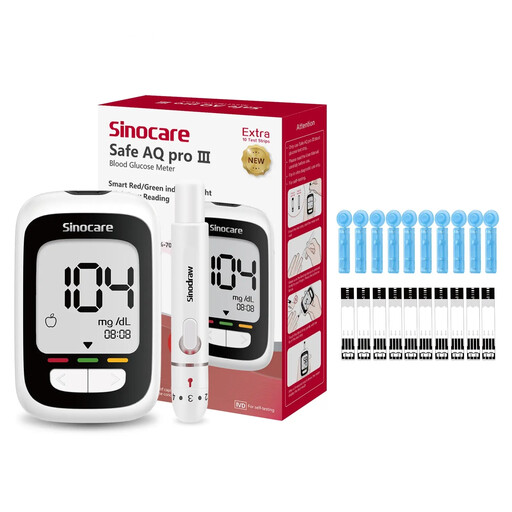
Why This Fits Their Persona: This compact starter set includes the meter, lancing device, 10 test strips, 10 lancets, a manual and a carrying bag, making it suitable for initial home testing or occasional travel.
The package states automatic coding and identifies the compatible Safe AQ Pro III strips, helping reduce setup confusion and compatibility mistakes.
Listed 5-second result time; 1 μL blood sample requirement; carrying bag included.
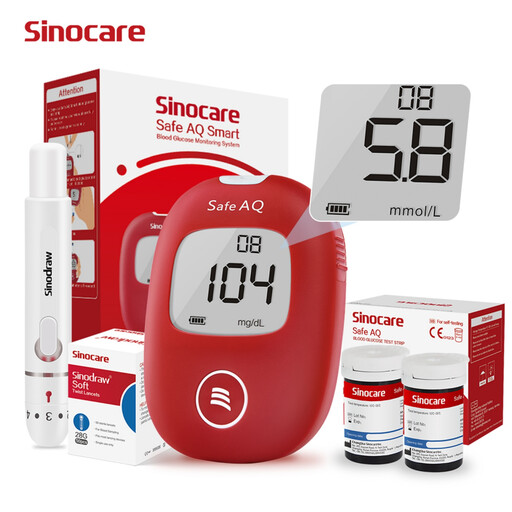
Why This Fits Their Persona: The large display, no-coding design and adjustable lancing device suit users who prioritise straightforward operation and easy-to-read results at home.
The stated no-code operation removes a manual coding step, while the package includes 50 matching strips and 50 lancets for regular use.
0.6 μL sample requirement; 5-second reading time; adjustable lancing depth.
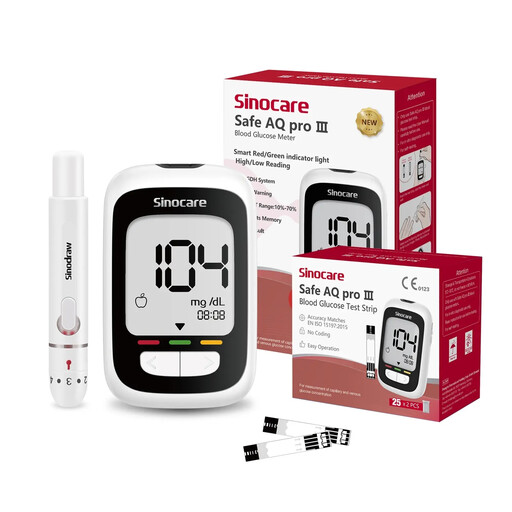
Why This Fits Their Persona: The larger supply is intended for users who test frequently, carers managing regular routines or households wanting a ready-to-use home diabetes monitoring kit.
The listing specifies 50 compatible strips and 50 lancets, reducing the need to purchase accessories immediately after receiving the glucose meter.
500-result memory stated for the kit; automatic coding; 5-second listed test time.
Do not use a home blood glucose testing kit to change medication or diagnose a condition without professional advice. If a reading seems unexpected, repeat the test according to the manual and contact a healthcare professional when appropriate.
We have compiled a complete, real-time list of products that fully satisfy these strict selection criteria and UK safety regulations.
The continuing cost usually comes from test strips and lancets rather than the meter itself. Compare the price per strip, pack size, expiry information and whether the required strips are readily available. A larger initial kit may be practical for frequent testing, but only if the strips can be used before expiry.
Check the printed expiry date and the manufacturer’s instructions. Some vials must be closed immediately after removing a strip, while other products specify a period for use after opening. Store strips in their original container and protect them from moisture and unsuitable temperatures.
A meter may be used within a care routine only when the manufacturer and healthcare guidance permit it. Lancing devices and lancets should not be shared. For more than one person, follow infection-control advice and use fresh, appropriate supplies for each user.