
24/7 Customer Support

Free returns

Same-day & Next-day Delivery

Quality Guaranteed

Unlock Your Welcome Offers: FREE Delivery | Up to 80% OFF | Free 30-day JoyPlus trial
Download the APP
Buying blood glucose test strips should be straightforward, but compatibility, storage and pack contents can make a significant difference to everyday use. A low-priced pack is not useful if it does not fit your meter, while a complete home diabetes testing kit may be unnecessary if you already own a suitable device.
This guide explains the practical checks to make before buying blood sugar test strips, glucose meter test strips or a replacement supply of 50 blood glucose test strips.
Blood glucose meters usually accept only designated strips. Even products from the same manufacturer may use different strip designs, coding systems or electrical contacts. For example, Yuwell strips for Model 710 are described as compatible only with the matching Yuwell meter, while Sinocare Safe-Accu 2 strips are intended specifically for the Safe-Accu 2 monitor.
Always check the exact meter model, not just the brand name. “Compatible glucose test strips” should mean compatible with your particular device, as stated on the packaging or product listing.
A five-second reading can be convenient, particularly for frequent testing, but testing speed is only one consideration. Check the required blood sample size, how the strip draws blood and whether the meter alerts you when the sample is insufficient.
Siphon or capillary designs can draw blood from the strip edge or collection port. This may make application simpler, but the correct technique still matters. Follow the instructions supplied with your meter and strips.
A large pack may appear economical, but opened test strips can have a limited usable period. Some products specify that strips should be used within a stated period after opening, such as three or six months. Moisture, heat and an unsealed vial can affect strip performance.
Store strips in their original container, close the cap immediately and check the expiry information before purchase. Do not use strips that are damaged, expired or stored contrary to the instructions.
The first non-negotiable check is the meter model. Look for wording such as “for AILE A608/A601/A606/A616/W33 meters”, “for Safe AQ Smart” or “for Gold AQ Plus”. A no-code system may reduce manual setup, but it does not make the strips universal.
Some meters code automatically when a strip is inserted. Others use factory calibration or a coded batch system. These features can simplify operation, but they must still be used with the designated strips.
Blood sample requirements are commonly measured in microlitres (μL). The listed products require small samples, including 0.6 μL, 0.8 μL or 1 μL, depending on the system. A smaller stated sample may be useful for people who test regularly, although it does not remove the need to use the lancing device correctly.
Check whether the strip has an automatic sample uptake, edge-fill or siphon design. Also confirm that your lancing device and lancets are suitable for personal use. Never share meters or lancing devices.
Compare the actual contents rather than the headline price:
For ongoing blood glucose monitoring supplies, calculate the price per strip and confirm whether you also need to buy replacement lancets separately.
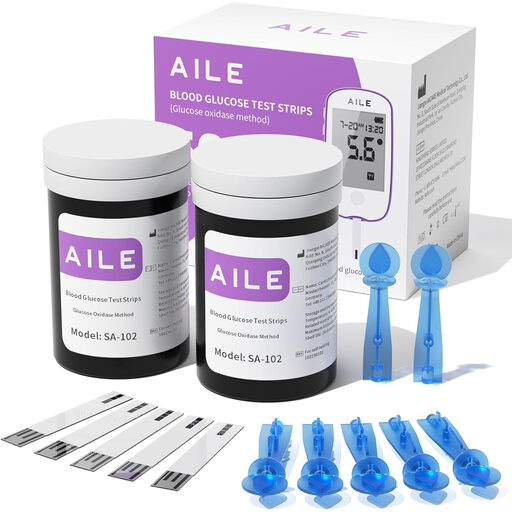
Why This Fits Their Persona: A practical refill option for households that already use a compatible AILE meter and want a 50-strip pack for regular home testing.
The compatible AILE models are clearly specified, helping buyers avoid treating generic strips as universal. No manual coding is required according to the product description.
50 strips, siphon-style sample uptake and a listed five-second reading time.
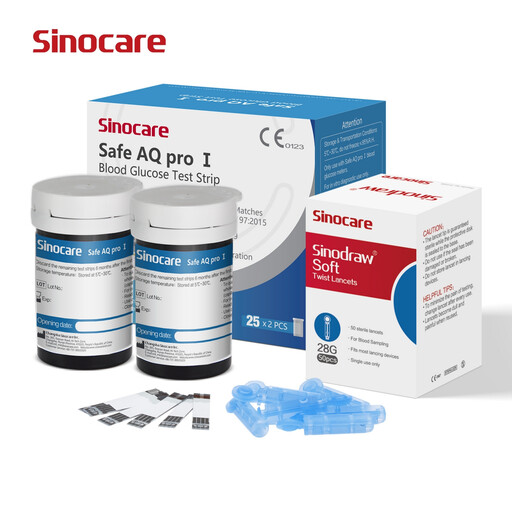
Why This Fits Their Persona: Suited to regular users who want a two-bottle pack format and automatic coding with the matching Safe AQ Pro I meter.
The product is tied to the Safe AQ Pro I monitor, so the compatibility requirement is explicit rather than implied by the brand name alone.
50 strips supplied as two bottles of 25, with a listed five-second result and automatic coding.
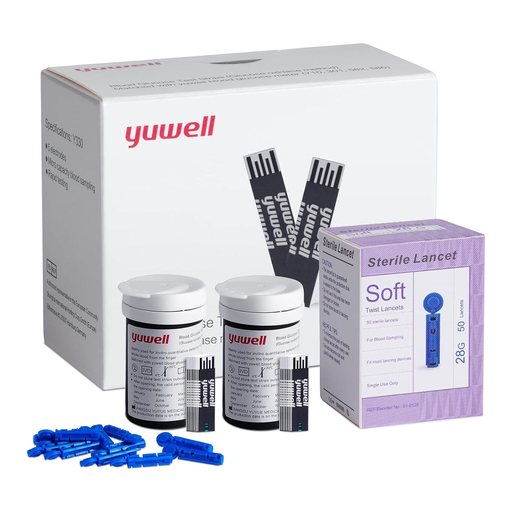
Why This Fits Their Persona: A useful combined refill for frequent users of the specified Yuwell monitor who need both strips and lancets in one order.
The listing states that the strips are not interchangeable with other brands or Yuwell models, helping prevent an unsuitable purchase.
Includes 50 test strips and 50 lancets, providing a matched refill supply.
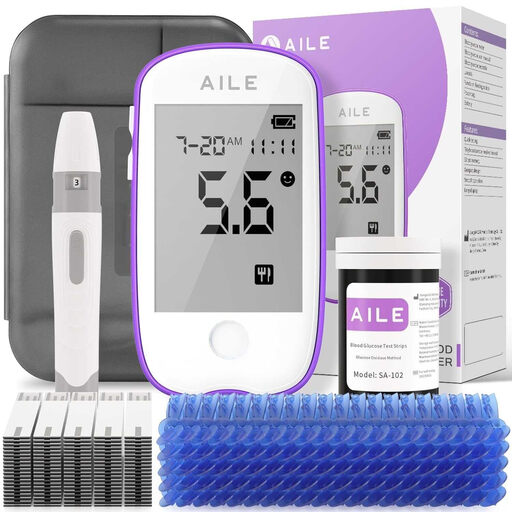
Why This Fits Their Persona: Suitable for someone starting home monitoring who does not yet have a meter, lancing device or storage case.
The complete contents are stated: meter, 50 strips, 50 lancets, lancing device and storage box. This makes it easier to compare the total purchase rather than strip price alone.
No-code operation, a large LCD display and selectable mg/dL or mmol/L units are listed features.
We have compiled a complete, real-time list of products that fully satisfy these strict selection criteria and UK safety regulations.
Before using any blood sugar test strips:
No. Most strips are designed for a specific meter or model range. Confirm the exact model before ordering, even when the strip and meter share a manufacturer.
The period varies by product. Check the label and user manual, as some strips must be used within three or six months after opening. Keep the container tightly closed and away from moisture.
It depends on what you already own. A kit can be practical when you need a meter, lancing device and initial strips. If you already have a compatible meter, replacement strips may offer a more economical route. Compare the number of strips, included lancets and cost per test before ordering.