Editors with scarce charging space
If your newsletter desk has few free plug sockets, an AA-powered Bluetooth mouse can avoid routine cable charging. Check that your computer supports Bluetooth if you also want to leave its USB ports free.


If avoiding another charging lead is your priority, choose an AA-powered Bluetooth mouse, provided your computer supports its Bluetooth connection. A rechargeable mouse remains an option if you can charge it occasionally and value compactness or document-navigation controls; for long editing sessions, check hand fit and scrolling behaviour as well as power.
If your newsletter desk has few free plug sockets, an AA-powered Bluetooth mouse can avoid routine cable charging. Check that your computer supports Bluetooth if you also want to leave its USB ports free.
If you spend extended periods correcting copy and reviewing layouts, hand fit, click noise and controlled scrolling may matter more to you than a sensor specification alone.
If your work moves between a laptop, tablet or other computer, look at device-switching and portability. A compact rechargeable mouse may suit that routine if occasional USB-C charging is practical.
Start with how the mouse is powered and connected, then weigh scrolling, hand fit and device switching against the way you edit newsletters.
| Concern | What to check | Who this matters to |
|---|---|---|
| Charging and USB ports | Check for replaceable AA power, direct Bluetooth and compatibility with your computer. | If the available sockets are already spoken for, I want to keep editing without routinely charging my mouse. Around 42% of consumers put avoiding charging first. |
| Document navigation | Look for a documented precision and fast-scroll mode; check whether any button customisation works with your operating system. | When I move between small copy corrections and long preview pages, I want scrolling that suits both tasks. Roughly 25% of consumers prioritise that editing flow. |
| Hand fit | Check size guidance, handedness and whether a conventional or vertical shape suits your grip. | For extended editing sessions, I would rather choose a shape that fits my hand than select by sensor figures alone. About 17% of consumers make comfort their primary concern. |
| Moving between devices | Confirm compatible operating systems, Bluetooth pairing and how device switching works. | If I edit across more than one compatible device, I want to move between them without repeatedly setting up the mouse. Around 16% of consumers put portability or device switching first. |
Wireless describes the connection, not how the mouse gets power. Some models use a USB receiver, while rechargeable models still need access to a charging source.
Check the battery type and connection options separately. If both sockets and USB ports are scarce, look for replaceable AA power and Bluetooth that your computer supports.
Keep a suitable replacement AA battery available, or make room in your routine to charge a rechargeable model.
A vertical mouse is not automatically comfortable for every hand. Logitech positions Lift for small-to-medium hands and offers separate left- and right-handed versions.
Check the maker’s hand-size and handedness guidance before choosing a vertical or size-specific model.
UK government guidance identifies the crossed-out wheeled-bin symbol for batteries and electrical products. It also says most waste batteries can be taken to collection points at supermarkets or other qualifying shops.
Use an appropriate battery collection point for spent removable batteries, and check your local electrical-waste collection arrangements when replacing the mouse.
These brands illustrate different power and shape choices; the specifications below apply to the named models, not every mouse each brand makes.
Its referenced range includes AA-powered conventional and vertical mice alongside a compact rechargeable model.
The HP 240 is a straightforward AA-powered Bluetooth option for a desk where charging access is limited.
The referenced Lenovo models offer a choice between long-life Bluetooth operation and a USB-C rechargeable mouse.
These options cover AA-powered mice for avoiding routine charging, alongside rechargeable mice for editors who can charge occasionally and want to consider navigation or device-switching controls. Check Bluetooth compatibility with your own computer before relying on a receiver-free setup.
 No image available
Consider this mouse if navigating long newsletter pages matters more to you than avoiding charging altogether. Check its MagSpeed scrolling and Bluetooth compatibility for your setup; as a rechargeable option, it still needs periodic charging.
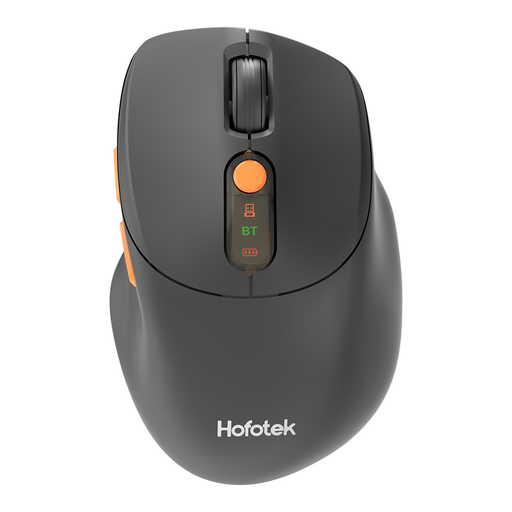 No image available
For a desk with limited charging access, its listed 1xAA battery gives you a replaceable-battery option. Choose Bluetooth rather than the 2.4G connection if preserving a USB port matters, and check your computer’s compatibility and expected battery-replacement frequency.
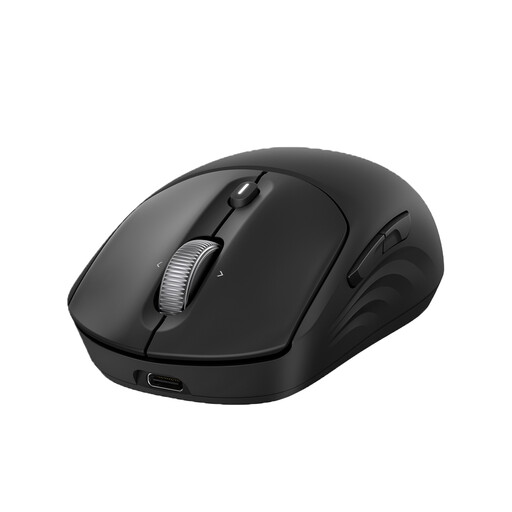 No image available
If your newsletter work involves both vertical and horizontal navigation, check whether its described 4D wheel suits your documents. Allow for periodic charging and confirm the full-charge time before choosing it; the stated charging claims conflict.
 No image available
If you want an upright mouse shape without routine cable charging, consider its vertical design and listed Bluetooth and AA-power arrangement. The product name specifies a 2.4GHz mode, six buttons and a 1600 DPI adjustable sensor; check hand fit, computer compatibility and expected battery-replacement frequency.
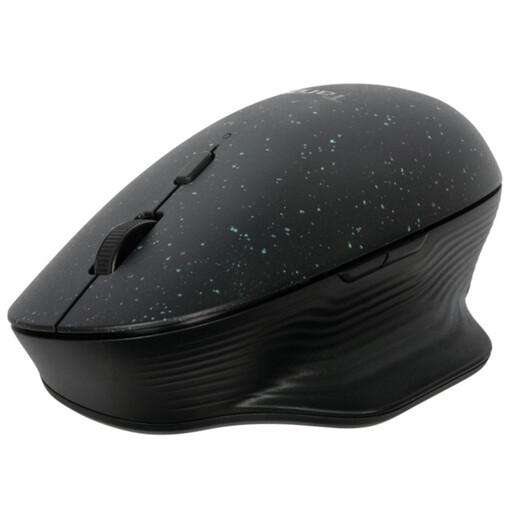 No image available
Consider this model if left- or right-handed use matters alongside avoiding routine charging. Check its convertible fit, Bluetooth compatibility and AA battery requirement before ordering, including whether you need to obtain the battery separately.
An AA-powered Bluetooth mouse is the more direct choice if avoiding routine charging is your main concern and your computer supports its Bluetooth connection. HP specifies one AA battery for the HP 240; a rechargeable mouse can still suit you if occasional charging from an available USB connection is practical.
Yes, when your computer and mouse can connect directly over compatible Bluetooth. Logitech specifies both Bluetooth Low Energy and a Logi Bolt receiver option for the Signature M650, so select its Bluetooth connection if you want to avoid using a USB port.
A documented choice between precise and faster scrolling is worth checking if you alternate between line-level edits and long pages. Logitech describes that behaviour for the Signature M650 SmartWheel and lists ratchet and hyper-fast modes for the MX Anywhere 3S; neither feature removes the need to check the mouse’s power method and hand fit.
Use an appropriate battery collection point rather than household rubbish for spent removable batteries. UK government guidance says most waste batteries can be taken to supermarkets or other qualifying shops; check local electrical-waste arrangements separately for the old mouse.