Reviewers short of ports or sockets
If a laptop has few free USB ports, compatible Bluetooth can connect without a receiver, as HP explains. Where charging is inconvenient, the mouse’s power source matters separately from its connection.


A Bluetooth mouse can leave a laptop’s USB port free, but that does not settle how you will power it: a rechargeable model still needs a convenient charging route, while an AA-powered model needs replacement batteries. For a long draft, weigh scrolling controls and hand fit against those power needs; consider a trackball or vertical shape chiefly when desk space, reach or fit is the pressing issue.
If a laptop has few free USB ports, compatible Bluetooth can connect without a receiver, as HP explains. Where charging is inconvenient, the mouse’s power source matters separately from its connection.
Repeated scrolling, selection and annotation make wheel behaviour and accessible controls worth checking. Multi-device switching matters only if the review moves between compatible devices.
When there is little room to move a mouse, a stationary trackball is one option. Hand size, handedness and the distance from keyboard to mouse also affect whether a different shape fits the setup.
Separate the connection decision from the power decision, then consider how the mouse feels and navigates a long document.
Choose when: The computer has compatible Bluetooth and avoiding another charging task matters most.
Trade-off: You will need replacement batteries, and receiver-free use depends on Bluetooth compatibility.
Choose when: You have a convenient charging route and want document controls or switching between compatible devices.
Trade-off: Rechargeable does not mean charge-free; check the charging connection and what comes in the box.
Choose when: Limited movement space or finding a suitable hand position is the main concern.
Trade-off: The control style may take getting used to, and size and handedness need checking.
| Concern | What to check | Who this matters to |
|---|---|---|
| Ports and power | Confirm compatible Bluetooth for receiver-free use. Decide whether replacement batteries or an available charging route fit your desk. | I have little room for another plug or USB receiver, so the way the mouse connects and stays powered comes first. Around 33% of consumers put ports and power first. |
| Document navigation | Check wheel behaviour for close reading and movement through long pages; confirm any button software works with your device. | When I move between detailed edits and distant sections of a draft, I want scrolling that suits both tasks. Around 25% of consumers prioritise document navigation. |
| Fit and desk space | Check hand-size and handedness guidance, and whether the device can sit close to the keyboard. | A cramped desk or an awkward reach makes the mouse’s shape and position more important to me than extra controls. For around 25% of consumers, fit and space lead the decision. |
| Flexible, quieter use | Check the model’s click-noise claim and whether it switches between the devices you actually use. | If I review beside other people or move between devices, I value fewer interruptions, provided the mouse still fits my hand. Flexible, quieter use comes first for around 17% of consumers. |
Bluetooth can avoid a USB receiver when the computer supports it, but a rechargeable mouse still needs a way to charge. An AA-powered mouse avoids routine charging instead.
Work out whether your constraint is USB ports, charging access or both before choosing a connection and power source.
A mouse using a 2.4 GHz USB receiver occupies a port; some models also offer Bluetooth, but that varies by model.
Check the exact model’s connection options and your computer’s Bluetooth capability if keeping the port free is important.
A trackball stays in place on the desk, while a vertical mouse changes the grip. Neither shape establishes that it will suit your hand or control preferences.
Check size, handedness and button placement, and consider how close you can keep the device to your keyboard.
The Health and Safety Executive considers equipment, furniture, working conditions and tasks as part of a display screen equipment workstation assessment.
For prolonged work, look at mouse placement and the wider desk setup together. If work-related use causes discomfort, raise it with your employer and request a workstation assessment.
The models considered here span conventional Bluetooth mice, rechargeable document-work options, vertical mice and trackballs.
Its referenced productivity mice offer different combinations of document controls, Bluetooth connection and power sources.
The Professional Bluetooth Rechargeable Mouse is an option to examine for document controls and use with two devices.
These mice cover rechargeable Bluetooth choices and AA-powered options, including a vertical shape. Match the connection, power source and grip to your report-review setup rather than treating the list as a single answer.
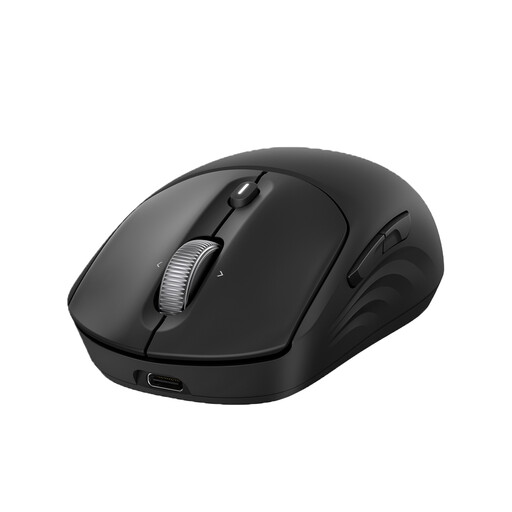 Image unavailable
Consider this rechargeable option if you can charge a mouse conveniently while reviewing long documents.
For receiver-free use, confirm that your computer supports the Bluetooth connection described in the listing. Check that you have a practical USB-C charging route.
 Image unavailable
Consider this model if scrolling through long drafts and switching between devices are part of your review work.
The listing describes Bluetooth use and USB-C charging; confirm compatible Bluetooth and a convenient charging route. If you plan to use Logi Bolt receiver mode, check whether the receiver is included.
 Image unavailable
Consider the vertical grip if hand position is a leading concern, but check whether its shape and controls suit you.
The title specifies Bluetooth and 2.4 GHz connection modes, six buttons and adjustable 1600 DPI. Confirm compatible Bluetooth if you want to leave a USB port free; its AA battery will need replacing.
 Image unavailable
Consider this AA-powered option if avoiding a routine charging task matters more than rechargeable power.
The title specifies Bluetooth and 2.4 GHz connection modes, adjustable DPI and one AA battery. Confirm Bluetooth compatibility for receiver-free use, and check the wheel controls if long-document scrolling is a priority.
Yes, when the laptop has compatible Bluetooth and the mouse uses that connection. HP explains that Bluetooth connects without the proprietary USB receiver used by a 2.4 GHz RF mouse; check your laptop before relying on receiver-free use.
It can be, if you already have a convenient way to charge it. Otherwise, an AA-powered Bluetooth mouse may better suit the desk, provided you are willing to replace the battery.
Start with a comfortable fit and scrolling that suits both close reading and movement through long sections. Programmable buttons and multi-device switching are worth considering when you will use those functions and the relevant software works with your device.
The Health and Safety Executive’s display screen equipment guidance centres on assessing the whole workstation, not choosing one prescribed mouse shape. Its stated duties apply to workers who use display screen equipment daily for continuous periods of an hour or more; the suitable equipment depends on the risks identified.
Tell your employer and ask for the workstation to be assessed rather than relying on a mouse replacement alone. The Health and Safety Executive says employers must assess a workstation when a display screen equipment user complains of pain or discomfort, considering the equipment, furniture, working conditions and task.