
24/7 Customer Support

Free returns

Same-day & Next-day Delivery

Quality Guaranteed

Unlock Your Welcome Offers: FREE Delivery | Up to 80% OFF | Free 30-day JoyPlus trial
Download the APP
Navigating the market for a new Bluetooth speaker can feel like walking through a minefield of marketing jargon and exaggerated claims. With so many options available, it is easy to end up with a device that disappoints within months. As a Joybuy Product Recommendation Officer, my role is to help you sidestep these issues by focusing on what truly matters for long-lasting performance and satisfaction.
Before you make a decision, let's look at a few common pitfalls that catch out many UK shoppers.
To avoid disappointment, focus on a few core parameters that define a speaker's quality and suitability for your needs.
For those who truly care about sound, look for certifications that guarantee a higher standard of audio reproduction.
A speaker's usefulness is defined by how easily it connects to your devices.
A well-built speaker will withstand the rigours of its intended environment.
Instead of a generic list, we have matched a few standout options to specific user profiles to help you find the right fit.
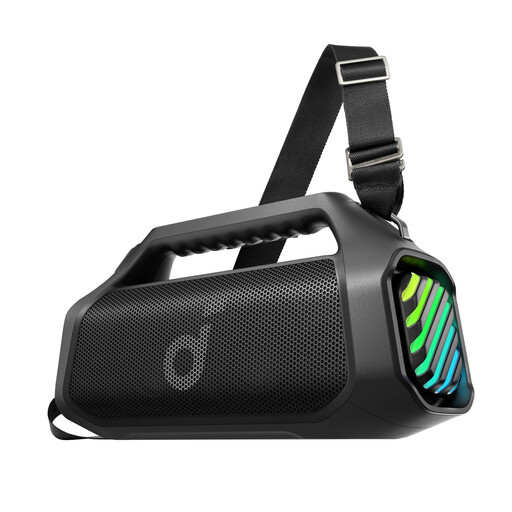
Why This Fits Their Persona: Built for the unpredictable UK outdoors, this speaker is ideal for camping trips, beach days or festivals. Its robust construction, ability to float and built-in power bank to charge your phone make it a practical companion for any adventure.
It sidesteps the "waterproof" illusion with a certified IP68 rating, meaning it is fully protected against dust and prolonged water immersion, not just light splashes.
Features a 2.2 channel system with dual woofers and tweeters for clear, powerful sound. The built-in power bank is a highly practical feature for off-grid use.
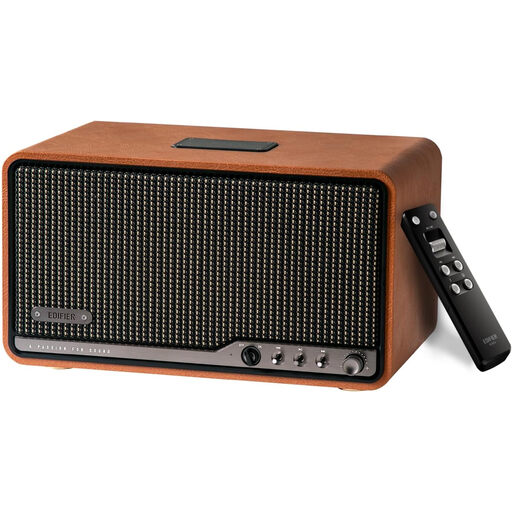
Why This Fits Their Persona: For the listener who prioritises sound quality above all else. Its retro design with an MDF wood cabinet fits elegantly into a living room or study, while its technical specifications are geared towards high-fidelity audio reproduction.
This speaker avoids the "powerful bass" trap by using a quality mid-bass driver and dual dome tweeters to deliver a balanced, detailed sound profile across a wide frequency range (48Hz-40kHz).
Supports Hi-Res Audio up to 24-bit/96kHz, the LDAC codec and AirPlay 2 for lossless wireless multi-room speaker streaming. This provides exceptional audio quality and versatility.

Why This Fits Their Persona: Perfect for those seeking high-quality audio in a compact form factor for their desk. These are excellent **desktop computer speakers** for work, music and as **gaming speakers**, where clear audio and low latency are important.
It comes with angled aluminium stands that direct sound towards your ears, avoiding the muffled audio that occurs when speakers fire directly into the desk surface.
Features both wired (USB-C, AUX) and wireless (Bluetooth 5.3 with LDAC) Hi-Res Audio certification. The two-way active crossover ensures a clean separation of frequencies for detailed sound.
We have compiled a complete, real-time list of products that fully satisfy these strict selection criteria and UK safety regulations.
1. How long should a good Bluetooth speaker last? The lifespan of a Bluetooth speaker depends on its build quality and how it is used. A well-made speaker from a reputable brand should last for many years. The battery is often the first component to degrade. To prolong its life, avoid leaving it fully discharged for long periods and try not to expose it to extreme temperatures.
2. Is a higher IP rating always necessary for a speaker? Not necessarily. It depends entirely on your intended use. If you plan to use the speaker exclusively indoors, a high IP rating for water and dust protection is not a priority. However, if you want a portable Bluetooth speaker for holidays, garden parties or use in the bathroom, a rating of IP67 or higher provides valuable peace of mind and protection for your investment.
3. What is the main difference between a portable and a desktop speaker? The primary differences are power, size and design focus. A portable Bluetooth speaker is battery-powered, compact and built for durability on the go. Desktop computer speakers are typically mains-powered, allowing for more powerful amplifiers and larger drivers. They are designed to provide optimal sound in a fixed position, often with features like angled stands or specific acoustic designs for near-field listening.