
24/7 Customer Support

Free returns

Same-day & Next-day Delivery

Quality Guaranteed

Unlock Your Welcome Offers: FREE Delivery | Up to 80% OFF | Free 30-day JoyPlus trial
Download the APP
Navigating the market for a new Bluetooth speaker can feel like walking through a minefield of marketing jargon and exaggerated claims. Many of us have been there: you buy a speaker praised for its "all-day battery," only for it to die halfway through a garden party. Or you purchase a "powerful bass" model that produces muddy, distorted sound at higher volumes. It's frustrating and a waste of money.
As the Joybuy Product Recommendation Officer, my role is to help you sidestep these common issues. We'll focus on the practical specifications that truly matter, cutting through the clutter to find a wireless speaker that fits your life in the UK, whether you're after a rugged outdoor speaker for hiking in the Peak District or a sophisticated set of desktop speakers for your home office.
Before we look at what makes a great speaker, let's identify the most common pitfalls that lead to buyer's remorse.
To make an informed choice, focus on these three key areas. They provide a much clearer picture of a speaker's performance than marketing headlines.
Instead of just looking at the power output, consider the technology that shapes the sound.
A modern Bluetooth speaker should be more than just a wireless device.
For a portable speaker, its ability to withstand the elements is crucial.
Based on these practical criteria, here are a few options tailored to different needs and lifestyles.

Why This Fits Their Persona: This user needs high-fidelity audio for music production, immersive gaming and general media consumption at their desk. The M60 is designed specifically for this, offering both wired and wireless high-resolution sound in a compact form factor that fits neatly into a desktop setup.
It sidesteps the "wattage obsession" by focusing on audio quality. Its 66W RMS is delivered through separate 1" tweeters and 3" mid-bass drivers with a DSP, prioritising clarity over raw, unrefined power.
Supports Hi-Res Audio and the LDAC codec for superior wireless streaming. Includes angled aluminium stands to direct sound towards the ear, reducing desk reflections.
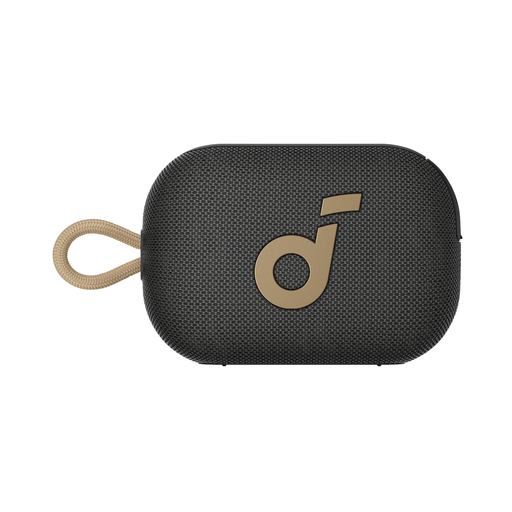
Why This Fits Their Persona: Perfect for someone who needs a reliable, tough and lightweight speaker for hiking, beach trips or camping. Its design prioritises portability and resilience against the unpredictable British weather.
It tackles the "vague waterproof" claim head-on with a clear IP67 rating, meaning it's fully protected from dust and can be submerged in water. The 20-hour playtime is also a realistic benchmark for extended outdoor use.
Extremely lightweight and includes a strap for easy carrying. It can also float, making it a great choice for use near water. True Wireless Stereo (TWS) allows pairing with a second speaker for a wider soundstage.
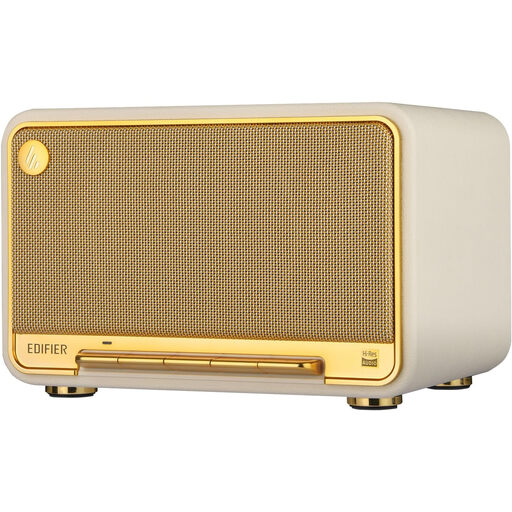
Why This Fits Their Persona: This user values aesthetics as much as audio quality. They want a speaker that complements their home decor, offers the flexibility of multi-room audio and can be moved from the living room to the kitchen without hassle.
This speaker proves that high performance doesn't require an industrial design. Its handcrafted wood case and 2.1 acoustic architecture deliver rich sound, while the 11-hour battery provides genuine portability around the home, avoiding the "tethered speaker" problem.
Supports Apple AirPlay 2 for seamless multi-room music streaming. The retro design with an accordion keyboard is both stylish and functional. It also supports Hi-Res Audio and LDAC for audiophile-grade listening.
We have compiled a complete, real-time list of products that fully satisfy these strict selection criteria and UK safety regulations.
1. How long should a good Bluetooth speaker last? A well-made Bluetooth speaker should provide reliable service for several years. The lifespan is primarily determined by the battery's health and the build quality. To prolong its life, avoid leaving it fully discharged for long periods and choose models with solid construction and reputable components. Most lithium-ion batteries will begin to show reduced capacity after 3-5 years of regular use.
2. Can I use any Bluetooth speaker with my TV? While you can connect most Bluetooth speakers to a modern TV, you may experience audio lag or latency, where the sound is slightly out of sync with the picture. For watching films or gaming, it's better to use a speaker with a low-latency codec (like aptX LL) or connect via a wired connection (AUX or USB) to eliminate any delay.
3. Is it worth paying more for Hi-Res Audio on a portable speaker? It depends on your usage. If you primarily listen to compressed streaming services in noisy outdoor environments, the subtle benefits of Hi-Res Audio may be lost. However, if you are an audiophile who listens to lossless audio files (like FLAC or ALAC) in a quiet setting, a Hi-Res Audio speaker can provide a noticeably richer and more detailed listening experience. It is most impactful in desktop or home listening scenarios.