
24/7 Customer Support

Free returns

Same-day & Next-day Delivery

Quality Guaranteed

Unlock Your Welcome Offers: FREE Delivery | Up to 80% OFF | Free 30-day JoyPlus trial
Download the APP
Choosing Bluetooth speakers in the UK is not simply a question of selecting the highest wattage or the most attractive design. A compact wireless speaker may suit a kitchen shelf but struggle outdoors, while a powerful tabletop speaker can be inconvenient if you expect to carry it between rooms.
This guide from the Joybuy Product Recommendation Officer focuses on practical differences, misleading specifications and the features that matter in everyday use.
A higher RMS figure can indicate greater potential output, but it does not describe tonal balance, cabinet construction, driver design or distortion control. A small speaker with a prominently advertised bass mode may sound impressive for a few minutes, yet produce muddy vocals at higher volume.
For music, films and gaming, look at the driver arrangement, amplifier design and available sound modes alongside RMS output.
“Portable” can mean anything from a lightweight handheld unit to a battery-powered tabletop speaker with a concealed handle. Check the product’s dimensions, weight, grip and battery capacity before buying.
A desktop speaker designed to remain beside a monitor is not necessarily suitable for a park, campsite or garden. Conversely, a compact outdoor speaker may not provide the stereo separation or inputs expected from a home audio system.
An IP rating describes resistance under specified test conditions. For example, IPX7 generally refers to temporary immersion in water under controlled conditions; it does not mean a speaker is protected from every situation involving rain, seawater, dust, drops or charging while wet.
Always follow the supplied safety instructions. Keep charging ports closed where applicable, dry the speaker before charging and avoid exposing it to extreme heat, cold or humidity.
For a personal listening space, moderate output may be sufficient. A living room, open-plan area or outdoor gathering usually benefits from more headroom, but louder is not automatically clearer.
Check whether the speaker uses:
A Hi-Fi speaker with a rigid cabinet can provide a more stable tabletop presentation, while a portable Bluetooth speaker prioritises battery operation and easy handling.
Bluetooth version numbers can improve connection management and efficiency, but compatibility depends on both the speaker and your phone, tablet or computer. If you use an Android device and want high-resolution wireless streaming, check whether the speaker supports a compatible codec such as LDAC.
For flexible home or office use, consider:
Desktop speakers with USB-C and AUX can be more convenient for a laptop setup than a battery-only wireless speaker.
Manufacturers generally quote battery life under particular conditions, often at a moderate volume. Higher volume, lighting effects, EQ enhancement and wireless features can reduce actual playback time.
As a practical guide, choose:
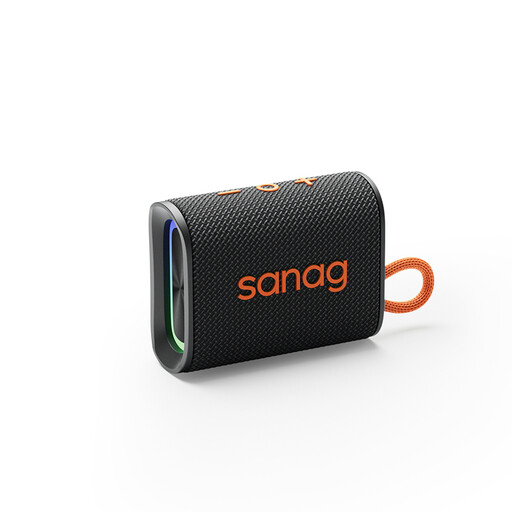
Why This Fits Their Persona: A suitable starting point for listeners wanting a compact outdoor speaker for home, day trips or casual garden use, with a choice of colour options.
Its listed IPX7 rating gives a clearer water-resistance specification than vague splash-proof wording. It should still be dried before charging and protected from harsh conditions.
Portable form, woven fabric finish, RGB lighting and a stated waterproof rating for more flexible everyday placement.
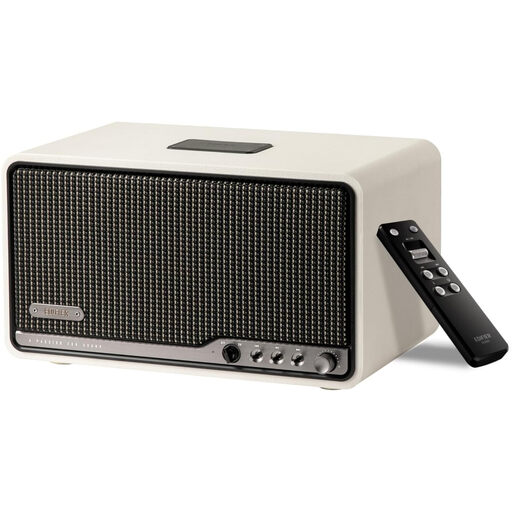
Why This Fits Their Persona: Designed for listeners prioritising a home audio setup, room-filling sound and a retro-style cabinet for a lounge, study or bookshelf.
It provides specific 80W RMS output, 24-bit/96kHz support, LDAC, USB-C, AUX and AirPlay 2 rather than relying on a single headline feature.
MDF cabinet, multi-room support and simultaneous connections for two devices, subject to compatible equipment and network setup.

Why This Fits Their Persona: A compact option for a laptop, monitor or gaming desk where clear near-field audio and wired connectivity are important.
Its compact dimensions are stated per speaker, helping buyers plan desk space. USB-C and AUX also reduce dependence on Bluetooth alone.
66W RMS total output, Hi-Res Audio support, LDAC compatibility and supplied angled aluminium stands.
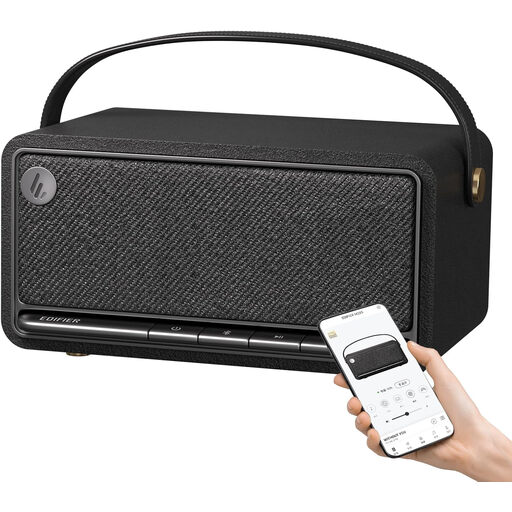
Why This Fits Their Persona: Its handle, multiple input modes and stated 19-hour playback at 50% volume suit users moving between indoor rooms and outdoor activities.
The published battery figure includes its listening condition, making it easier to set realistic expectations rather than treating battery life as unlimited.
40W RMS output, 360-degree audio design, Bluetooth multipoint, AUX, USB-C and TF card support.
We have compiled a complete, real-time list of products that fully satisfy these strict selection criteria and UK safety regulations.
Yes, but size and connection options matter. A compact tabletop speaker or dedicated pair of desktop speakers can provide better positioning beside a monitor. Models with USB-C or AUX are useful when watching films, gaming or taking calls where a stable wired connection may be preferable.
Lifespan depends on battery care, charging habits, heat exposure, moisture and physical damage. Avoid storing a portable Bluetooth speaker in extreme temperatures, do not charge it when wet and follow the manufacturer’s cleaning instructions. Battery capacity will gradually reduce with use, even when the speaker remains functional.
Battery-powered models generally consume electricity during charging rather than continuously. A mains-connected wireless speaker uses power while switched on, with consumption varying by design and volume. Turning the speaker off when not needed and avoiding unnecessary high-volume playback can help reduce usage.