
24/7 Customer Support

Free returns

Same-day & Next-day Delivery

Quality Guaranteed

Unlock Your Welcome Offers: FREE Delivery | Up to 80% OFF | Free 30-day JoyPlus trial
Download the APP
Choosing Bluetooth speakers is less straightforward than comparing prices and wattage. A portable Bluetooth speaker may suit a picnic but sound limited in a living room, while a compact desktop speaker can deliver more detail yet require mains power. Soundbars also use wireless connectivity, but they are designed primarily for TV rather than flexible outdoor listening.
The practical approach is to match the speaker to where and how you will use it, then check the specifications that affect everyday ownership.
Power figures can help indicate potential volume, but they do not describe tonal balance, bass control or clarity. A high wattage number may also refer to peak output rather than continuous RMS power. Where available, RMS output is the more useful figure for comparing sustained performance.
Room size matters too. A small wireless speaker may be suitable for a desk or bedroom, whereas a larger outdoor speaker or tabletop model may be more appropriate for a kitchen, garden gathering or open-plan room.
Water-resistance ratings have specific limits. An IPX6 product is designed to resist powerful water jets, while IPX7 generally refers to temporary immersion under controlled conditions. Neither rating means a speaker should be left in heavy rain, used under high-pressure water or charged while wet.
Check whether the charging port has a secure cover and remember that resistance can reduce over time through wear, drops and damaged seals.
Advertised playtime depends on volume, lighting, wireless codec, sound mode and battery condition. RGB lighting and high-volume playback usually consume more energy. For regular trips, look for a clearly stated battery capacity or realistic usage estimate, as well as USB-C charging and protection against overheating or overcharging.
For travel, commuting or outdoor use, consider more than weight. A speaker with built-in battery should have a practical handle, stable base or compact shape. A very small speaker may fit in a bag but have limited bass and volume.
For reference, the Red Magic Rock Magnetic Bluetooth Speaker weighs 62g, offers Bluetooth 5.3 and a stated connection range of up to 10 metres. It is designed for phones, gaming and compact personal listening rather than filling a large room.
Battery claims should be read alongside charging instructions. Do not charge a speaker in a wet environment and avoid exposing lithium-ion batteries to excessive heat, crushing or punctures.
Bluetooth version alone does not guarantee superior sound. Check supported codecs, multipoint pairing and wired inputs. An AUX input can be useful for older equipment, while USB-C may support charging or audio depending on the model.
A Hi-Res Audio speaker may support higher-resolution playback, but your phone, streaming service and codec must also support the required format. The Edifier M60, for example, lists Bluetooth 5.3, LDAC, USB-C and AUX inputs, with support for up to 24-bit/96kHz wireless audio from compatible Android devices.
For TV use, check whether the soundbar supports optical, HDMI ARC or eARC. Bluetooth TV connections can be convenient, but compatibility and audio delay may vary between televisions.
An outdoor speaker should have a clearly stated protection rating and a casing suitable for transport. Avoid relying on vague terms such as “splashproof” without an IP code.
For desktop speakers, dimensions and listening position are important. The Edifier M60 measures 100 × 168 × 147mm per speaker and includes angled stands intended to direct sound towards ear level. Keep desktop speakers away from liquids and allow ventilation around powered units.
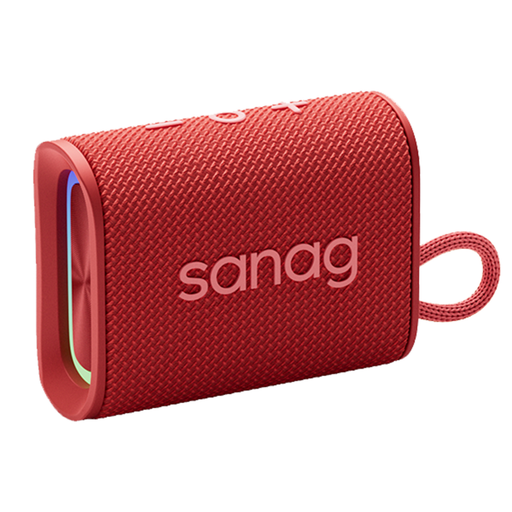
Why This Fits Their Persona: A practical option for listeners wanting portable audio, RGB lighting and outdoor flexibility without moving to a larger party system.
The listing specifies an IPX7 water-resistance rating. Still, follow the supplied guidance: keep it away from extreme temperatures, avoid drops and clean it with a dry cloth.
Portable wireless design, fabric finish, RGB lighting and an IPX7 rating stated in the product name.

Why This Fits Their Persona: Suits music listeners, home-office users and creators who want detailed desktop audio with both wireless and wired connection choices.
Its specification lists 66W RMS rather than an unclear peak figure, plus USB-C and AUX inputs for devices that do not support the preferred Bluetooth codec.
Bluetooth 5.3 with LDAC, Hi-Res Audio support, 66W RMS output and bundled angled aluminium stands.
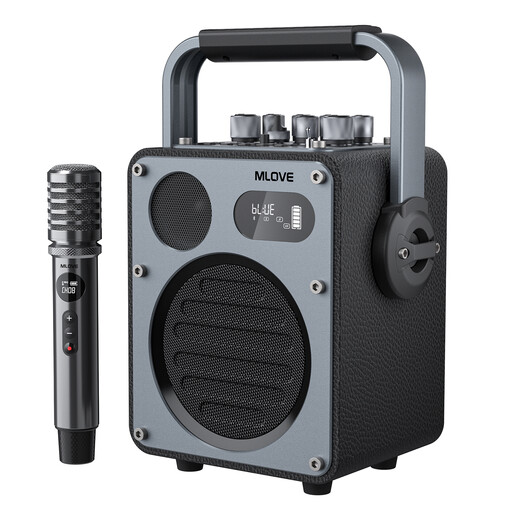
Why This Fits Their Persona: Designed for karaoke sessions, streaming, home performances and small gatherings where microphone inputs matter as much as music playback.
The listing identifies separate karaoke, music and instrument modes, rather than relying only on a generic bass claim. The included microphone is clearly specified.
Bluetooth 5.4, USB-C OTG live streaming, wireless microphone support and stated playback of up to 10 hours in music mode.
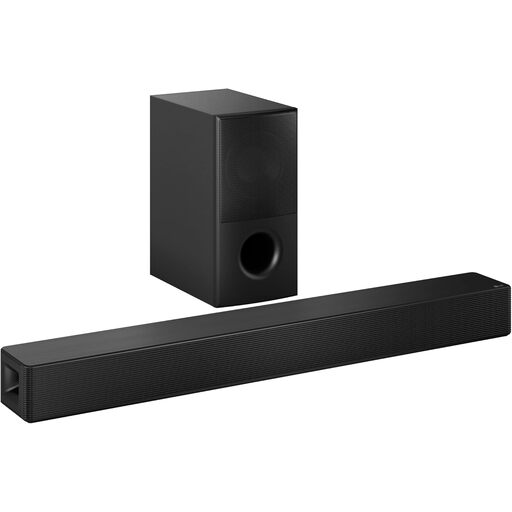
Why This Fits Their Persona: A home-focused choice for viewers wanting a dedicated TV sound upgrade, dialogue modes and deeper bass from a separate wireless subwoofer.
The system lists its channels, soundbar and subwoofer power separately: 2.1 channels and 320W total output. This makes the configuration clearer than a single headline number.
Wireless subwoofer, HDMI ARC, optical input, Bluetooth 4.0, Adaptive Sound Control and wall-mountable design.
We have compiled a complete, real-time list of products that fully satisfy these strict selection criteria and UK safety regulations.
They can be, provided the TV supports compatible Bluetooth audio. A dedicated TV soundbar with HDMI ARC or optical input is often easier to control and may reduce connection limitations. Check the television and speaker manuals for pairing and audio-delay information.
The useful lifespan varies with charging habits, temperature, volume and battery quality. Advertised playback time is a guide rather than a guarantee. Keeping the speaker away from heat, avoiding deep discharge where possible and using the supplied charging method can help support normal battery performance.
Battery-powered models use electricity mainly while charging, with running cost depending on battery capacity and the household electricity tariff. Mains-powered desktop speakers and soundbars consume power while active and usually have a lower standby draw. Switching them off at the wall when not needed can reduce idle consumption.