
24/7 Customer Support

Free returns

Same-day & Next-day Delivery

Quality Guaranteed

Unlock Your Welcome Offers: FREE Delivery | Up to 80% OFF | Free 30-day JoyPlus trial
Download the APP
Buying Bluetooth speakers and soundbars can improve music, television, gaming and parties, but product pages often make comparisons difficult. High wattage, “deep bass” and immersive audio descriptions do not always tell you how a product will perform in a real UK living room, garden or bedroom.
Before choosing, watch for three common pitfalls:
A portable Bluetooth speaker is suitable for kitchens, bedrooms, picnics and smaller gatherings. Look for battery capacity, charging time, carrying handles and the speaker’s weight. A compact model may be easier to move, while a larger outdoor wireless speaker can provide greater volume but may be inconvenient on public transport or stairs.
For poolside use, camping or unpredictable British weather, check the precise IP rating. For example, IPX7 generally refers to temporary immersion protection under specified test conditions, while IP68 products may offer broader dust and water protection. Always follow the manufacturer’s instructions, close covers and avoid charging a wet speaker.
A mains-powered party speaker with RGB lighting may be more appropriate for regular gatherings. These models can include microphone and guitar inputs, karaoke functions and stronger bass, but they are often heavy and not genuinely portable in the everyday sense.
A high-power Bluetooth speaker with larger woofers can move more air and create stronger low frequencies. However, volume is only one part of sound quality. Driver configuration, cabinet design, passive radiators and EQ controls also influence clarity.
If you want speakers with deep bass, check whether the specification identifies a dedicated woofer, bass radiator or subwoofer. A high wattage figure alone does not guarantee controlled bass at higher volume. For music in a flat or terraced house, also consider whether the speaker has night, EQ or volume-limiting controls to reduce disturbance to neighbours.
For a traditional stereo system, bookshelf Hi-Fi speakers can offer a more separated left-and-right presentation. Passive models need a compatible amplifier, suitable speaker cable and enough room around the rear bass reflex port. This makes them less convenient than wireless speakers, but potentially more flexible for a carefully arranged listening space.
A basic TV soundbar can make dialogue easier to hear without adding a separate subwoofer. A 2.0 model with voice enhancement and night mode may suit a bedroom or smaller sitting room.
A soundbar with wireless subwoofer adds a separate low-frequency unit, which can provide greater impact for films and games. Confirm that the subwoofer still requires a power socket; “wireless” usually refers to the audio connection, not completely cable-free operation.
For a Dolby Atmos soundbar or larger home cinema soundbar, check whether your television has HDMI ARC or eARC. Optical connections may support surround formats, but they generally have less bandwidth than eARC. Also measure the space beneath the television and check whether upward-firing speakers could be blocked by a shelf or wall-mounted screen.
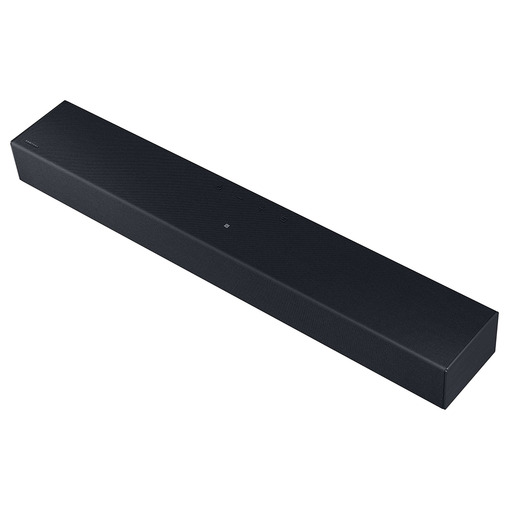
Why This Fits Their Persona: A compact option for UK TV owners who want clearer dialogue and simple Bluetooth music playback without installing a separate subwoofer.
Its specification clearly identifies a 2.0-channel system, 40W RMS output and no subwoofer, so expectations are easier to set.
Voice Enhancement Mode, Night Mode, Bluetooth, NFC, USB playback and optical input.
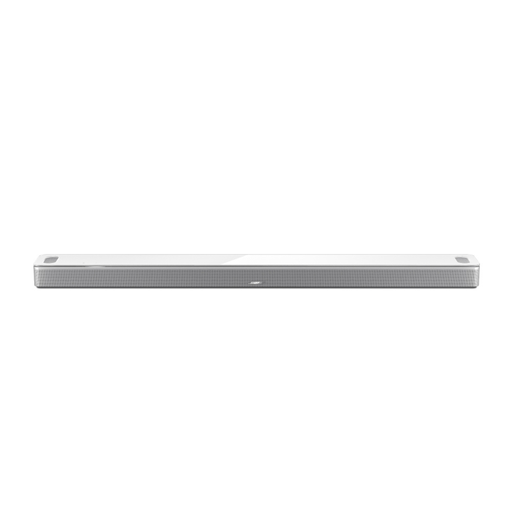
Why This Fits Their Persona: Suitable for film, television and gaming enthusiasts seeking room-filling processing, smart streaming and a refined single-bar setup.
It lists HDMI eARC, Dolby Atmos and room calibration, allowing buyers to check whether their TV and room layout can use these features.
Nine internal transducers, Dolby Atmos, Wi-Fi, Bluetooth, AirPlay 2, Spotify Connect and Chromecast built-in.
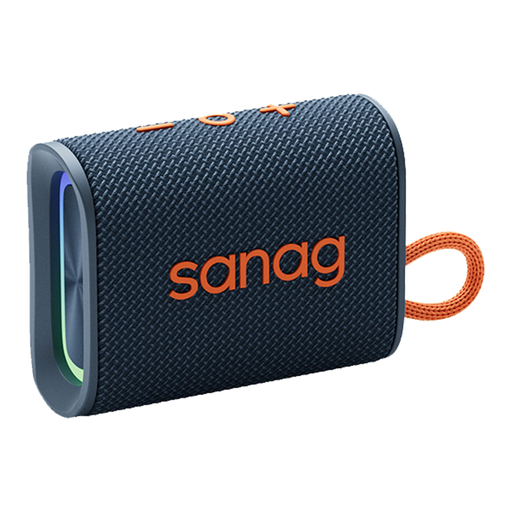
Why This Fits Their Persona: A practical match for garden listening, day trips and casual outdoor use where portability, lighting and water resistance matter.
The IPX7 rating is stated clearly, making it easier to distinguish from products that only use vague “splashproof” wording.
Portable wireless design, RGB lighting, fabric finish and stated IPX7 water protection.
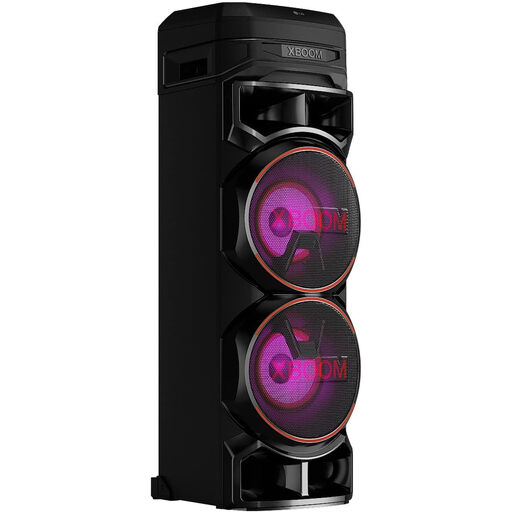
Why This Fits Their Persona: Designed for larger indoor or garden gatherings, karaoke sessions and listeners who need substantial volume and party controls.
Its 22.5 kg weight and mains-oriented party format are explicit, reducing the risk of confusing a large event speaker with a lightweight portable model.
Dual 8-inch woofers, RGB lighting, karaoke functions, microphone and guitar inputs, plus wireless party linking.
We have compiled a complete, real-time list of products that fully satisfy these strict selection criteria and UK safety regulations.
A soundbar is usually easier to position beneath a TV and may offer HDMI ARC or eARC, TV remote control and dialogue modes. Bluetooth speakers are more flexible for music and moving around the home, but Bluetooth TV connections can introduce compatibility or lip-sync issues. Choose based on your main use rather than wattage alone.
Battery lifespan depends on charging habits, volume, heat and storage. Keep the speaker dry while charging, avoid extreme temperatures and follow the supplied charging instructions. A model with a replaceable battery may be easier to maintain, while sealed batteries can make eventual replacement less straightforward.
Portable speakers use rechargeable batteries, so their running cost is generally linked to charging frequency. Mains-powered soundbars and party speakers consume electricity in use and usually draw a smaller standby load. Look for stated standby consumption, switch off equipment when it will not be used for extended periods and avoid leaving damaged batteries connected to power.