
24/7 Customer Support

Free returns

Same-day & Next-day Delivery

Quality Guaranteed

Unlock Your Welcome Offers: FREE Delivery | Up to 80% OFF | Free 30-day JoyPlus trial
Download the APP
Choosing between Bluetooth speakers and soundbars can quickly become confusing. Product listings often highlight large wattage figures, advanced Bluetooth versions and phrases such as “cinematic sound”, but these details do not always tell you whether a system will suit your room, television or listening habits.
This guide from the Joybuy Product Recommendation Officer focuses on practical checks before you buy, including connectivity, speaker layout, room placement and running costs. It also matches selected products with common UK use cases, from TV viewing and gaming to desktop music and portable listening.
A higher power figure can indicate greater output potential, but it does not describe tonal balance, driver design, cabinet construction or dialogue clarity. A compact speaker with a well-designed enclosure may be more suitable for a desk than a larger system designed to fill a living room.
Check whether the specification refers to RMS power, peak power or combined system output. RMS is generally more useful for comparing continuous output, although it still should not be viewed as a standalone sound-quality rating.
A Dolby Atmos soundbar may require compatible content and suitable connection standards to make use of its supported audio formats. Similarly, LDAC streaming depends on the source device and operating system. A television with only optical output may not provide the same control or format support as one with HDMI eARC.
Before ordering, check:
Marketing photographs can make a product appear smaller than it is. Measure the space below your TV, the depth of your desk and the clearance around rear bass ports. A soundbar may fit beneath a screen but block an infrared sensor, while bookshelf speakers can sound less balanced if pushed tightly against a wall.
Passive speakers also require an amplifier or AV receiver and suitable speaker cable. They are not plug-and-play wireless speakers, despite sometimes being listed beside active or Bluetooth models.
For TV use, HDMI ARC or eARC is usually more convenient than optical because it can support TV-remote volume control and, depending on the equipment, higher-bandwidth audio formats. Bluetooth is useful for music from a phone, but it may introduce latency for gaming or video.
For desktop speakers, USB-C and AUX inputs provide useful wired alternatives if Bluetooth pairing is inconvenient. Wi-Fi, AirPlay 2 and Chromecast can be helpful for multi-room systems, but check whether all devices are on the same home network.
A 2.1 system generally combines left and right audio with a dedicated subwoofer. A 3.1 soundbar adds a centre channel for dialogue, while a 3.1.3 configuration includes three upward-firing channels designed to project compatible sound towards the ceiling.
Driver size and layout also matter. A speaker with a dedicated tweeter and mid-bass driver may offer more separated high and low frequencies than a single full-range driver. However, room acoustics, listening distance and placement remain important.
For portable Bluetooth speakers, check the stated playback time, charging connection and whether performance changes at higher volume. Battery figures are normally manufacturer estimates and can vary with volume, wireless features and content.
Mains-powered desktop speakers, tabletop speakers and Hi-Fi speakers avoid regular charging but consume electricity while switched on or in standby. Look for auto-standby features where available and switch systems off at the socket if they will not be used for extended periods.
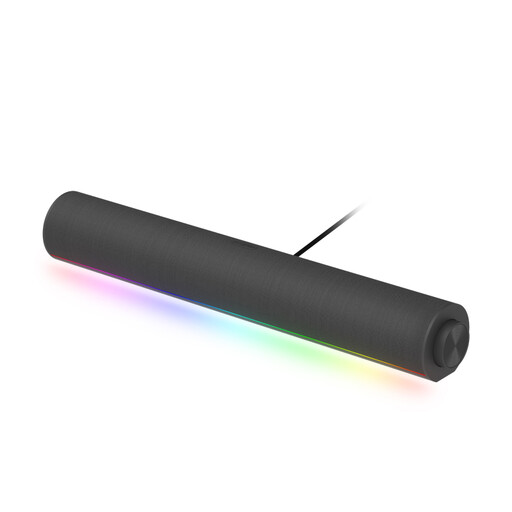
Why This Fits Their Persona: A practical option for a desk, laptop or projector setup where compact dimensions and straightforward Bluetooth pairing matter.
The listing identifies a 2.1-channel layout, Bluetooth 5.0 and indoor, non-water-resistant use, helping buyers avoid assuming it is suitable for outdoor conditions.
Bluetooth transmission is specified up to 10 metres; the unit supports mains and built-in battery power.
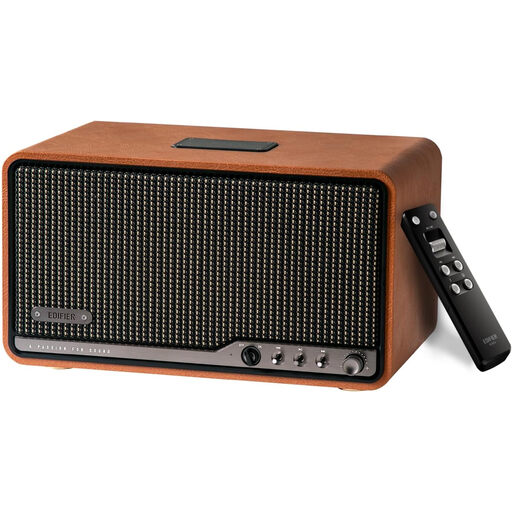
Why This Fits Their Persona: Suitable for listeners wanting a substantial tabletop or bookshelf-style system with wireless streaming and home-network features.
Its specification lists wired USB-C and AUX alongside Bluetooth 5.4 and AirPlay 2, so the system is not dependent on a single wireless connection.
The stated specification includes 80W RMS output, 24-bit/96kHz support and stereo pairing through the EDIFIER Home App.
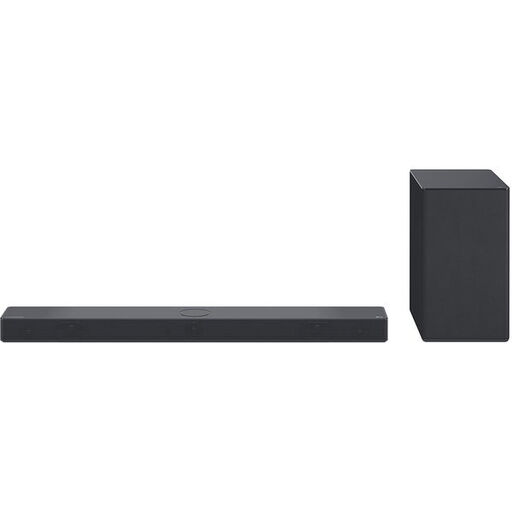
Why This Fits Their Persona: Designed for a living-room TV system, particularly compatible LG OLED C Series models, with support for film, music and console gaming connections.
The listing states its channel arrangement, inputs and compatibility details, allowing buyers to check their TV before paying for advanced formats.
It specifies Dolby Atmos, DTS:X, HDMI eARC, 4K pass-through up to 120Hz and a 220W wireless subwoofer.

Why This Fits Their Persona: A compact choice for remote workers, PC users and gamers who need Bluetooth plus wired desktop connections without large cabinets.
It provides USB-C and AUX inputs as alternatives to Bluetooth and includes angled aluminium stands to help direct sound towards the listener.
The listed specification includes 66W RMS, Bluetooth 5.3 with LDAC support and compact 100mm-wide individual speakers.
We have compiled a complete, real-time list of products that fully satisfy these strict selection criteria and UK safety regulations.
They can be, particularly when connected through HDMI ARC or eARC. For consoles capable of 4K at 120Hz, check that the soundbar or TV supports the required pass-through, VRR and ALLM specifications. Bluetooth is generally more suitable for music than latency-sensitive gaming.
Lifespan depends on battery condition, charging habits, heat, moisture and volume levels. Mains-powered wireless speakers avoid battery degradation but still need ventilation and careful handling. Follow the supplied charging and safety instructions, and do not use indoor-only products in wet environments.
Battery-powered models use electricity while charging. Mains-powered systems consume power during playback and may draw a smaller amount in standby. Exact consumption varies by model, volume and standby design, so check the product specification if energy use is a priority.