
24/7 Customer Support

Free returns

Same-day & Next-day Delivery

Quality Guaranteed

Unlock Your Welcome Offers: FREE Delivery | Up to 80% OFF | Free 30-day JoyPlus trial
Download the APP
Choosing between Bluetooth speakers and soundbars can be surprisingly difficult. A compact wireless speaker may suit a kitchen or garden, while a TV soundbar can improve dialogue and reduce cable clutter. However, product pages often focus on headline wattage, “immersive” sound and long battery claims without explaining how those features affect everyday use.
Before buying, watch for three common traps:
The right choice depends on where you listen, what you connect and whether you need battery power, TV compatibility or room-filling output.
A portable Bluetooth speaker is designed for wireless streaming from a phone, tablet or laptop. Bluetooth range is usually measured in an unobstructed area, so walls and other wireless devices can reduce the practical distance.
For desktop listening, check whether the speaker can operate from mains power as well as its internal battery. The Xiaomi Desktop Speaker, for example, supports a power adaptor and built-in rechargeable battery, with Bluetooth transmission of up to 10 metres according to its product information.
A TV soundbar may connect through Bluetooth, optical input, USB or HDMI. HDMI ARC or eARC can offer more integrated TV control, but not every soundbar includes it. The Samsung HW-C400/XU provides Bluetooth and optical input but does not include an Audio Return Channel, so check your television’s outputs before ordering.
Battery life figures are normally measured under specific volume and playback conditions. Louder listening, lighting, bass enhancement and power bank use can reduce actual runtime.
If you need a rechargeable Bluetooth speaker for day trips, look for:
The Bose SoundLink Flex (2nd Gen) lists up to 12 hours of battery life and typically takes around four hours to charge. The JBL Boombox 4 lists a rechargeable lithium-ion battery, USB-C device charging and a stated maximum playtime of 28 hours in its specifications. Treat these figures as guidance rather than a guaranteed runtime at maximum volume.
For an outdoor speaker, check the IP code. The first digit indicates protection from solid particles such as dust, while the second relates to water protection. The Bose SoundLink Flex has an IP67 rating, and the JBL Boombox 4 has an IP68 rating. Ports should be closed before exposure to water, and neither product should be charged when wet.
For home audio, speaker configuration matters. A 2.1-channel system uses left and right channels with a low-frequency driver, while a soundbar with a separate subwoofer can provide more noticeable bass than a compact all-in-one unit. Dolby Atmos soundbars also require compatible content and suitable room positioning to create their intended height effects; the label alone does not guarantee overhead-sounding audio in every room.
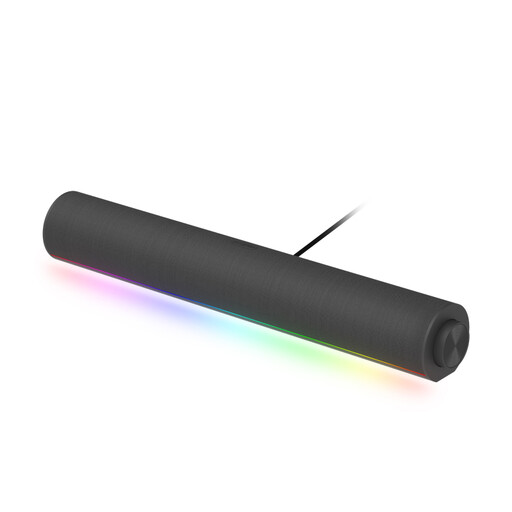
Why This Fits Their Persona: A practical option for a desk, laptop, projector or small indoor TV setup where compact dimensions and flexible power are more useful than high-volume party output.
Its stated 2.1-channel layout and 4-ohm impedance provide more useful detail than judging the product by wattage alone. It is clearly marked for dry, indoor environments, avoiding confusion about outdoor use.
Built-in 2-inch woofer, touch controls, Bluetooth 5.0 and both adaptor and battery operation.
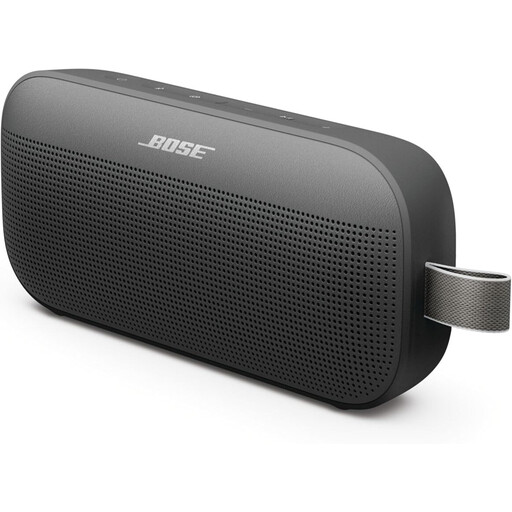
Why This Fits Their Persona: Suitable for listeners who want a compact speaker for commuting, rooms around the home, walks or weekends away without giving up app-based control.
The IP67 rating gives a clearer durability reference than vague splash-proof wording. It also has a utility loop and orientation sensing, so its intended portability is reflected in the design.
Bluetooth 5.3, adjustable EQ through the Bose app, up to 12 hours of stated battery life and stereo or party pairing.
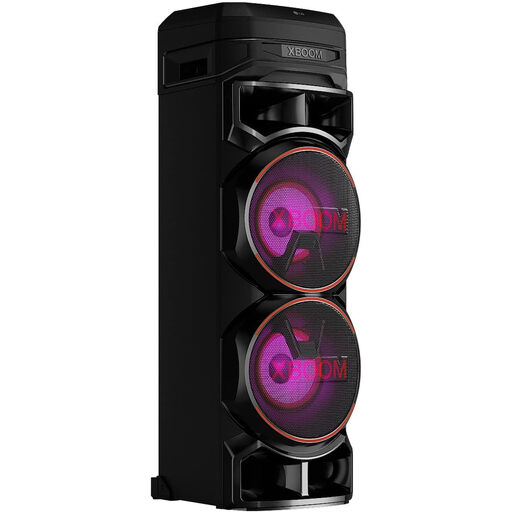
Why This Fits Their Persona: Designed for home parties, garden gatherings and karaoke sessions where size, inputs and sound output matter more than easy hand-carrying.
The product’s 22.5 kg weight and 105.6 cm height make its fixed-event role clear. Buyers can assess transport needs honestly rather than assuming every “portable” party speaker is lightweight.
Two 8-inch woofers, microphone and guitar inputs, karaoke controls, RGB lighting and wireless party linking.
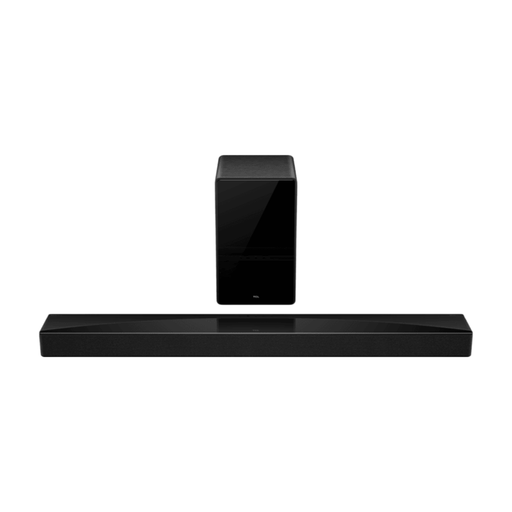
Why This Fits Their Persona: A suitable direction for film, gaming and TV users who have space for a wireless subwoofer and want a multi-speaker home cinema arrangement.
Its 5.1.2 channel layout, Dolby Atmos and DTS:X support are specified separately, helping buyers distinguish channel configuration from general “surround” wording.
11 speakers, wireless subwoofer, HDMI eARC 2.1, Bluetooth, AirPlay 2 and six sound modes.
Place a TV soundbar centrally below the screen without blocking the television’s remote sensor. For a wireless speaker, keep the phone or laptop within a sensible range and avoid placing it in enclosed corners if the bass sounds excessive.
A Samsung soundbar with Night Mode may be useful in flats or terraced homes where reducing low-frequency output can limit disturbance. For outdoor use, close protective ports and allow moisture to dry before charging. Rechargeable batteries also last longer when stored away from extreme heat and are not repeatedly left completely flat.
They can work for casual viewing, but Bluetooth may introduce delay and does not always support television remote control. A dedicated TV soundbar with optical or HDMI connectivity is generally easier to integrate.
Runtime varies with volume, battery size, temperature and features in use. Check the manufacturer’s stated figure, but expect less playback at high volume or when using lighting and power bank functions.
Not necessarily. Driver design, cabinet size, speaker configuration and digital processing also affect perceived output. Compare these specifications alongside wattage rather than relying on one headline figure.
We have compiled a complete, real-time list of products that fully satisfy these strict selection criteria and UK safety regulations.