
24/7 Customer Support

Free returns

Same-day & Next-day Delivery

Quality Guaranteed

Unlock Your Welcome Offers: FREE Delivery | Up to 80% OFF | Free 30-day JoyPlus trial
Download the APP
Buying Bluetooth speakers and soundbars can seem straightforward until you compare wattage, codecs, channels, battery claims and smart features. A compact speaker may suit a desk but struggle to fill a living room, while a large home cinema soundbar can be unnecessary for a small flat. The right choice depends on where you listen, what you connect and which compromises you are willing to accept.
A higher RMS figure indicates potential output, but it does not describe tonal balance, distortion, room interaction or dialogue clarity. Amplifier design, driver size and cabinet construction also influence the result. For example, a 40W all-in-one TV soundbar is designed for a different purpose from a 400W system with a wireless subwoofer.
Check whether the stated figure is RMS power, rather than a short-term peak figure. Also consider the number and type of drivers. A two-way desktop system with separate tweeters and mid-bass drivers may offer more controlled detail than a single-driver portable unit, even if the latter has an eye-catching power claim.
“Wireless” usually describes the connection, not the power source. Some wireless speakers still need mains electricity, while battery-powered speakers may have batteries sold separately. The JBL PartyBox 720, for instance, lists up to 15 hours of playtime but requires two separately sold JBL Battery 600 packs for battery operation.
Before ordering, check:
An IPX4 rating means protection against water splashes from different directions; it does not mean the speaker can be submerged or left in heavy rain.
Dolby Atmos soundbars need suitable content and compatible connections to make use of Atmos audio. For a television, HDMI eARC is generally more flexible than optical audio because it can carry higher-bandwidth formats and supports control features such as HDMI-CEC. However, the TV must also have a compatible HDMI port.
Similarly, LDAC only provides its stated high-resolution wireless capability when the source device and software support it. Check your phone, tablet or computer before paying extra for a codec you may not be able to activate.
For music at a desk, compact desktop speakers with separate tweeters can provide clearer left-right imaging at close range. The Edifier M60, for example, uses 3-inch mid-bass drivers and 1-inch tweeters, with supplied stands angled towards the listener.
For a lounge TV, a soundbar with a dedicated centre channel can make spoken dialogue easier to follow. Systems with upward-firing drivers, such as Dolby Atmos soundbars, rely partly on ceiling reflections, so ceiling height, room layout and placement affect the result. A 2.0-channel TV soundbar with a built-in woofer may be more practical where space and budget are limited.
Look for the inputs that match your equipment:
Bluetooth is convenient, but a wired connection can be preferable for television viewing or gaming where consistent timing matters. Bluetooth versions such as 5.3 and 5.4 describe the connection generation, but they do not alone guarantee better sound.
For portable Bluetooth speakers, compare the quoted battery duration at realistic listening levels. Manufacturers commonly state “up to” figures, and louder playback, bass-heavy content and lighting can reduce endurance.
For mains-powered wireless speakers, cabinet material and dimensions affect placement. The Edifier D32 has a wooden cabinet, a hidden handle and a built-in 5,200mAh battery with stated playtime of up to 11 hours. It is portable around the home, but its tabletop design is less suitable for carrying on a long walk than a smaller battery-powered speaker.
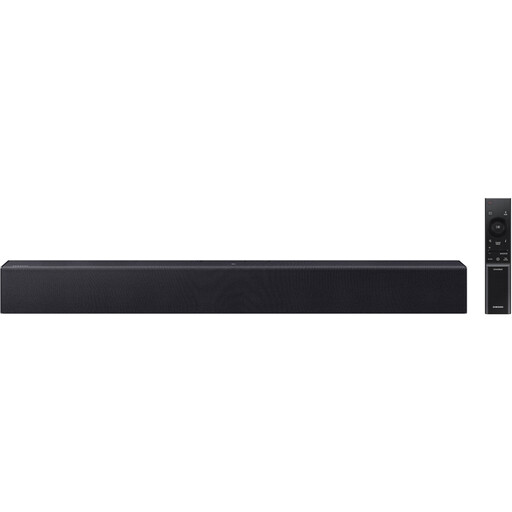
Why This Fits Their Persona: A compact option for UK flats, bedrooms and smaller televisions where an external subwoofer would add clutter.
Its 40W output, built-in woofer and compact 2.0 layout make the specification clear without requiring a separate bass unit.
HDMI ARC, optical input, Bluetooth 4.2, USB playback, Voice Enhancement and Night Mode.
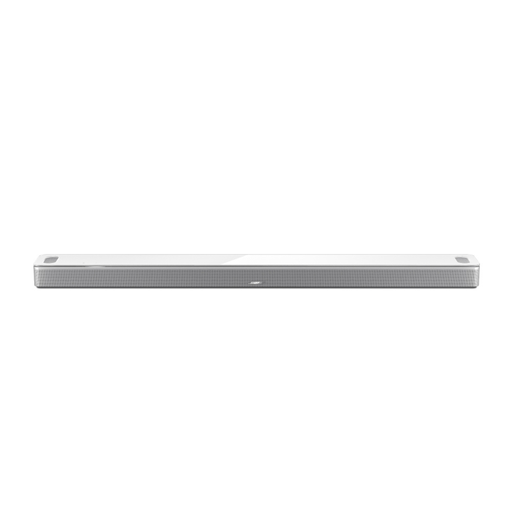
Why This Fits Their Persona: Suits viewers wanting smart streaming, room calibration and dialogue-focused features in one TV audio unit.
It specifies HDMI eARC and optical connections, plus an ADAPTiQ headset for acoustic calibration rather than relying only on room-filling claims.
Nine internal transducers, Dolby Atmos processing, Wi-Fi, Bluetooth, AirPlay 2, Spotify Connect and Chromecast built-in.
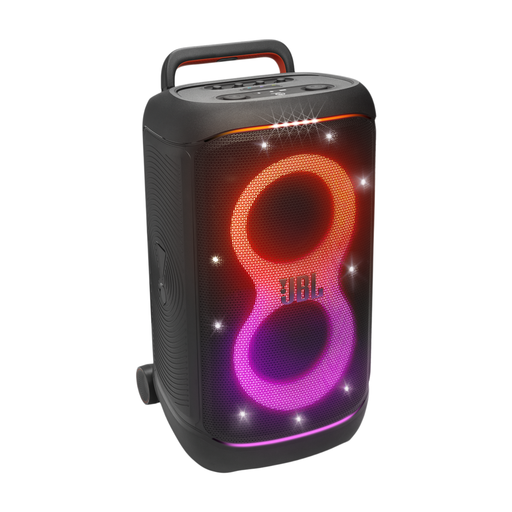
Why This Fits Their Persona: Designed for parties, garden gatherings and larger social spaces where wheels, lighting and extended battery use are useful.
The listing identifies a 15-hour maximum playtime, replaceable battery option and splashproof, rather than waterproof, construction.
Bluetooth 5.4, multi-point connection, Auracast compatibility, USB-C charge-out, wheels and a stated 400W output.
We have compiled a complete, real-time list of products that fully satisfy these strict selection criteria and UK safety regulations.
They can be, but wireless audio may introduce a small delay depending on the TV and speaker. For regular viewing, a TV soundbar connected through HDMI ARC or eARC is usually easier to synchronise and control with one remote.
There is no single standard lifespan. Usage volume, charging habits, heat and battery design all matter. Compare the quoted playtime with your normal listening level, and look for replaceable batteries if you expect frequent outdoor use. Avoid charging damaged equipment and follow the supplied safety instructions.
A soundbar adds electricity consumption, but many compact models use modest power and consume less in standby. Check the product specification for typical and standby consumption. Features such as Night Mode can also reduce bass output when listening in shared homes or flats, helping you avoid turning the system up unnecessarily.