
24/7 Customer Support

Free returns

Same-day & Next-day Delivery

Quality Guaranteed

Unlock Your Welcome Offers: FREE Delivery | Up to 80% OFF | Free 30-day JoyPlus trial
Download the APP
Sending important documents, precious photographs or original artwork through the post can be a source of anxiety. The thought of a certificate arriving creased or a print being folded can be frustrating for both the sender and the recipient. For small businesses, e-commerce sellers and office administrators, ensuring items arrive in pristine condition is not just a courtesy—it is a reflection of professionalism.
This is where board back envelopes provide a simple and effective solution. These specialised mailers are designed to prevent bending and protect flat items during transit. This guide will walk you through the key features to consider when choosing the right envelopes for your needs and offer some practical recommendations to help you ship with confidence.
Selecting the right envelope involves more than just picking the first one you see. To ensure your items are protected, cost-effective to post and easy to use, consider these three factors.
The most common mistake is choosing an envelope that is too large or too small. Board back envelopes typically follow the standard 'C' sizing system, which is designed to perfectly accommodate 'A' paper sizes.
Always choose a size that allows the item to fit comfortably without being forced, but with minimal excess space to prevent it from sliding around.
The protective quality of a hard back envelope comes from its construction. They typically feature a flexible paper front and a stiff, thick cardboard backing.
Modern envelopes come with features that can save you significant time and effort.
Based on the key features of protection, convenience and material quality, here are some solid options available for UK users.
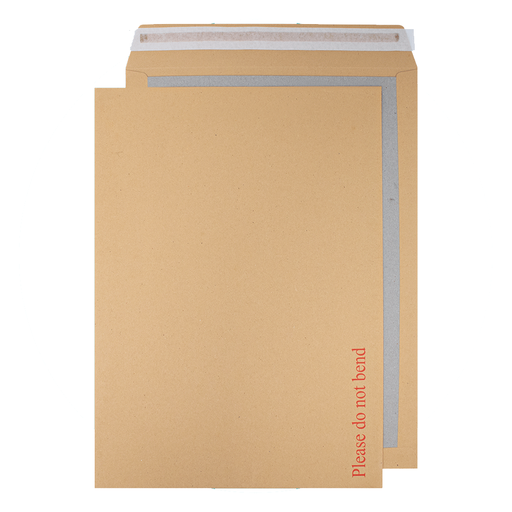
Why It Stands Out: These C3 envelopes offer excellent protection for large-format items. The combination of a heavyweight 120gsm kraft paper front and a sturdy 1000-micron board back ensures that posters, prints and important A3 documents remain flat and undamaged during shipping.
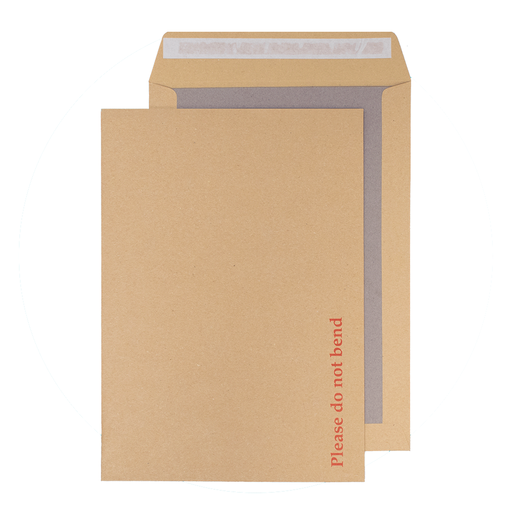
Why It Stands Out: As the go-to choice for most business and personal correspondence, these C4 envelopes provide reliable protection for A4 documents. The prominent "Please Do Not Bend" warning, combined with the rigid backing, gives peace of mind when sending contracts, certificates or prospectuses.
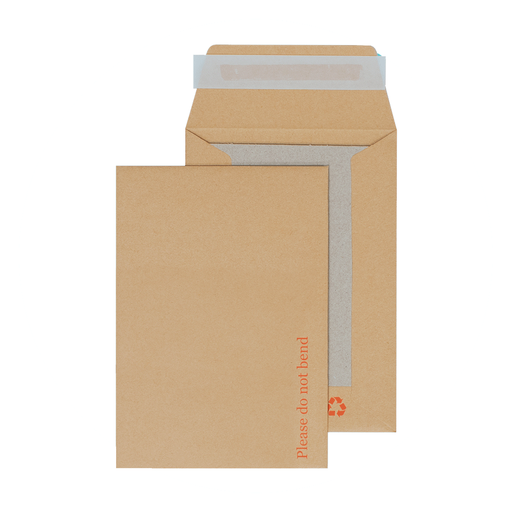
Why It Stands Out: Perfect for smaller items, these C6 envelopes are ideal for protecting photographs, postcards, gift cards or small art prints. The bulk pack of 100 offers great value for frequent senders, while the peel and seal closure makes packing quick and efficient.
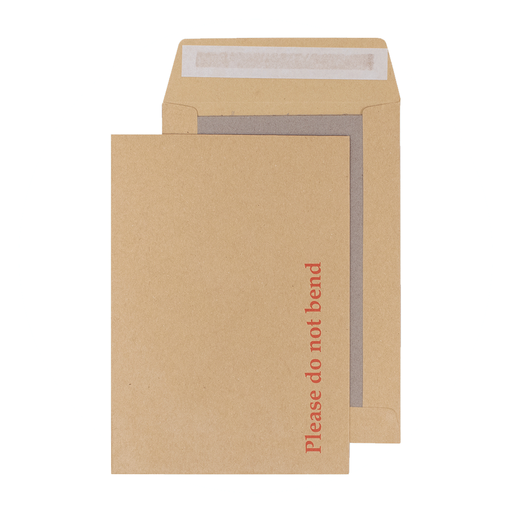
Why It Stands Out: These versatile C5 envelopes are a popular choice for sending A5 documents, promotional leaflets, or A4 papers folded once. They strike a good balance between size and protection, making them a useful addition to any stationery cupboard. The construction remains robust with a 1000-micron back.
If the recommendations above don't quite fit your requirements, or if you're looking for different quantities or styles such as padded mailers, there are many other choices available.
Explore our full collection of paper envelopes to find the perfect packaging for your needs.
A standard manilla envelope is made entirely of paper and offers very little protection against bending. A board back envelope is a hybrid, featuring a paper front for addressing and a thick, rigid cardboard back to keep the contents flat and prevent damage during transit.
Yes, in most cases. The envelopes recommended here are made from 100% recycled content and are designed to be kerbside recyclable. However, it is always a good idea to check with your local council's recycling guidelines, as rules for mixed materials (paper and card) can vary by area.
It is generally not recommended. The thickness and rigidity of the board back can easily jam or damage a standard office or home printer. The most reliable method is to print your address onto an adhesive label and affix it to the front of the envelope.