
24/7 Customer Support

Free returns

Same-day & Next-day Delivery

Quality Guaranteed

Unlock Your Welcome Offers: FREE Delivery | Up to 80% OFF | Free 30-day JoyPlus trial
Download the APP
Finding the right board markers can feel surprisingly complicated. Whether you're a teacher preparing for the new term, an office manager stocking up on supplies, or a café owner designing a new window display, the wrong pen can lead to frustration. Faint lines, stubborn ghosting stains on your whiteboard, or ink that smudges at the slightest touch are common issues. The key is understanding that not all markers are created equal, and the right choice depends entirely on where and how you plan to use it.
This guide is designed to help you navigate the options. We will look at the crucial differences between marker types, from standard dry wipe markers to vibrant liquid chalk pens, and help you match the pen to the surface. Our goal is to provide clear, practical advice so you can choose your next set of board markers with confidence.
Before looking at specific products, a few key considerations will help narrow down your search. Thinking about these points first will ensure you get a marker that performs exactly as you need it to.
The most common mistake is using the wrong type of marker for the surface. Surfaces are generally either porous (like paper or untreated wood) or non-porous (like glass, metal and whiteboards).
The type of ink determines how it's removed, which is a critical factor for convenience and permanence.
The marker's tip affects the style and visibility of your writing.
Here are a few standout options that cater to different needs, from classroom teaching to vibrant retail displays.
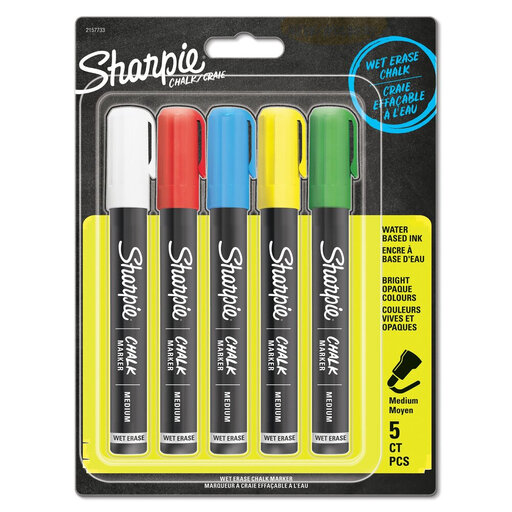
Why It Stands Out: These liquid chalk pens offer exceptional versatility and vibrancy. Unlike traditional chalk, they produce dust-free, opaque lines that stand out brilliantly on dark and light surfaces alike. Their wet-erase formula means your designs stay put without smudging until you decide to wipe them away with a damp cloth.
Pros:
Who is it for? This pack of assorted colour marker pens is ideal for hospitality and retail staff creating eye-catching menu boards and window promotions. They are also a great choice for teachers wanting to make semi-permanent displays on classroom windows or laminated charts and for creative home organising.
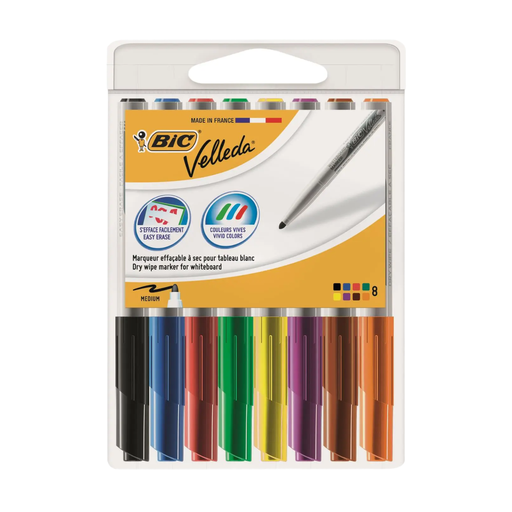
Why It Stands Out: The Bic Velleda 1741 is a dependable workhorse for any standard whiteboard. Its design focuses on reliability and performance in high-use environments. The key feature is its blocked acrylic tip, which is designed to resist being pushed into the barrel, even under pressure. The low-odour, dry-wipe ink erases cleanly, helping to prevent the frustrating "ghosting" effect on board surfaces.
Pros:
Who is it for? These are classic classroom markers and office staples. They are perfect for business professionals leading presentations, teachers conducting daily lessons and for use on family whiteboards at home. If you need a reliable, no-fuss dry wipe marker, this is a solid choice.
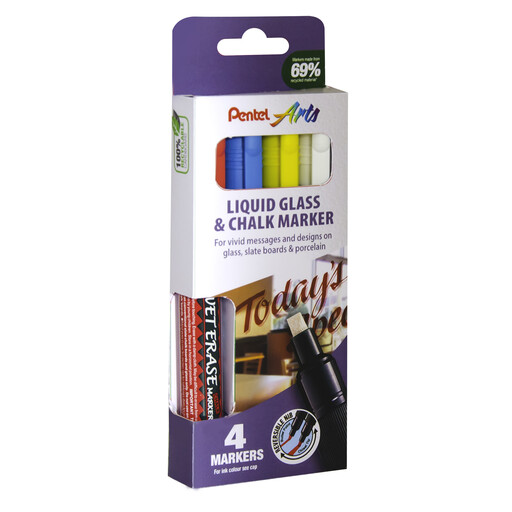
Why It Stands Out: When you need your message to be big, bold and durable, the Pentel Jumbo marker delivers. Its main advantage is the semi-permanent ink, which, once dry, can withstand a light shower, making it suitable for outdoor A-boards or signs. The jumbo chisel tip (10-15mm) covers large areas quickly, creating impactful lettering and designs that can be seen from a distance.
Pros:
Who is it for? This marker is built for businesses, event organisers and artists who need to create large-scale, durable signage. It's the go-to tool for writing on pub A-boards, creating large window art, or any situation where a standard marker just isn't big or tough enough.
If the recommendations above don't quite fit your specific project, or if you're looking for different pack sizes, tip styles, or colour palettes, there are many other choices available.
Explore our full range of erasing pens to find the perfect tool for your needs.
1. What is the difference between dry-wipe and wet-wipe markers? The primary difference is the ink and removal method. Dry-wipe markers are designed for quick removal from whiteboards with a dry cloth. Wet-wipe markers use a paste-like ink that becomes smudge-resistant when dry and must be removed with a damp cloth. Wet-wipe is better for displays that need to last longer, like menus or weekly planners.
2. Can you use whiteboard pens on glass? Yes, you can use standard whiteboard pens on glass, as it is a non-porous surface. However, the ink may appear less vibrant and can be prone to smudging. For a more opaque and durable result on windows or glass boards, glass markers or liquid chalk pens are generally a better option.
3. How do you remove permanent marker from a whiteboard? Accidentally using a permanent marker on a whiteboard is a common problem. A widely known trick is to draw directly over the permanent marker line with a dry wipe marker. The solvent in the dry-wipe ink can help dissolve the permanent ink, allowing you to wipe both away together. Always try this in a small, inconspicuous area first.