
24/7 Customer Support

Free returns

Same-day & Next-day Delivery

Quality Guaranteed

Unlock Your Welcome Offers: FREE Delivery | Up to 80% OFF | Free 30-day JoyPlus trial
Download the APP
Whether you are delivering a lesson, brainstorming in a meeting or creating an eye-catching menu, the right board marker can make all the difference. A faint, streaky pen can undermine a great presentation, while stubborn ink stains can leave your whiteboard looking tired and unprofessional. Choosing the correct tool is essential for clear communication and a clean finish.
This guide is designed to help you navigate the options available. We will explore the key differences between marker types and highlight some dependable choices for various settings, from the classroom to the cafe. Our goal is to provide practical information to help you select the board markers that best suit your specific task.
Making the right choice comes down to understanding your primary use case. Consider these factors before you buy.
The most significant distinction between markers is how they are erased.
Dry Wipe Markers: Often called whiteboard pens or dry erase markers, these are the standard for offices and classrooms. Their ink is designed to be wiped away easily with a dry cloth or eraser, making them ideal for dynamic sessions where information is constantly being updated. They are perfect for brainstorming, teaching and temporary notes.
Wet Erase Markers: This category includes liquid chalk pens and semi-permanent markers. Their ink is smudge-resistant once dry but can be removed cleanly with a damp cloth. This makes them an excellent choice for displays that need to last, such as restaurant menu board pens, retail signage or decorative art on glass window markers.
The tip of the marker affects the lines you create. A bullet tip produces a consistent, rounded line, which is great for general writing and clear text. A chisel tip can create both broad and fine lines, offering more versatility for diagrams, calligraphy or emphasising points. Look for markers with durable, blocked tips that resist being pushed into the barrel, ensuring a longer lifespan, especially in a busy classroom environment.
Always check that the marker is suitable for your surface. While most whiteboard pens work on glass, specialised liquid chalk pens often provide better opacity and more vibrant colours on dark surfaces like blackboards or tinted glass. For presentations or lessons, a pack of assorted colour pens can help to organise information and keep your audience engaged.
Here are a few recommended options, selected for their performance and suitability for common tasks across the UK.
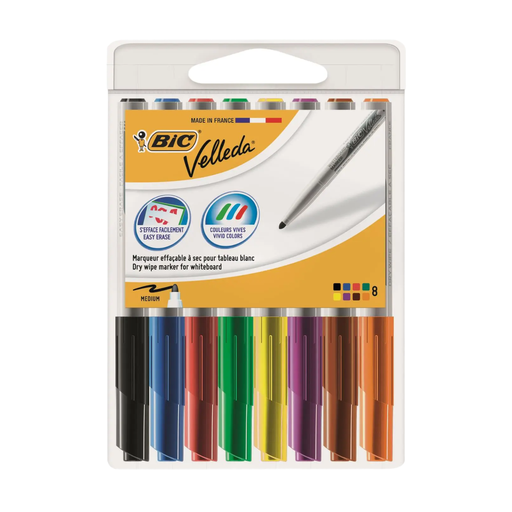
Why It Stands Out: The BIC Velleda 1741 is a reliable workhorse for high-frequency use. Its low-odour, alcohol-based ink provides bold, clear lines and erases cleanly without leaving frustrating "ghosting" marks. The blocked acrylic tip is designed to withstand pressure, making it a durable choice for both adults and younger users.
Pros:
Who is it for? Educators, trainers and office managers who need dependable classroom markers and office supplies for daily presentations and collaborative work.
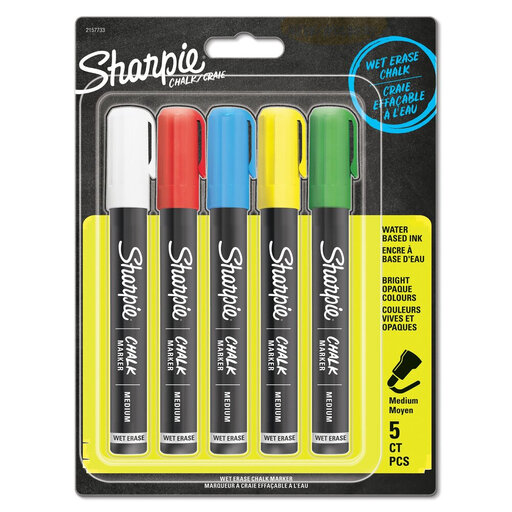
Why It Stands Out: When you need your message to pop, these wet erase markers from Sharpie deliver. The opaque, paint-like ink creates exceptionally bright and vivid lines on both light and dark non-porous surfaces, including glass, mirrors and blackboards. Once dry, the ink is resistant to smudging but wipes away easily with a damp cloth.
Pros:
Who is it for? Cafe, pub and retail owners looking for effective menu board pens or tools to create striking window displays. Also great for home organisation and crafts.

Why It Stands Out: This Pentel marker set offers exceptional versatility. Each marker features a reversible nib that can be switched between a bullet and chisel tip, giving you complete control over your line work. The pigment-based wet erase ink is vivid and opaque, ideal for detailed art or professional-looking signage on glass, ceramics and metal. As a bonus, the marker barrels are made from 69% recycled materials.
Pros:
Who is it for? Creative professionals, artists and businesses that require precision and flexibility for creating detailed signage, art or high-impact displays.
If these recommendations do not quite match what you are looking for, or if you would like to see a wider range of colours, tip styles and pack sizes, there are many other choices available.
Explore our full collection of erasable markers to find the perfect fit for your project.
1. What is the difference between dry erase and wet erase markers?Dry erase markers (or whiteboard pens) contain an ink that can be wiped off a non-porous surface with a dry eraser or cloth. They are best for temporary use. Wet erase markers have a semi-permanent ink that resists smudging once dry and must be removed with a damp cloth. They are ideal for signage and displays that should not be accidentally wiped away.
2. How can I prevent "ghosting" or stains on my whiteboard? Ghosting is often caused by low-quality ink or leaving writing on the board for too long. To prevent it, use high-quality dry wipe markers, erase the board promptly after use and clean it regularly with a dedicated whiteboard cleaning solution to remove any built-up residue.
3. Can I use standard whiteboard pens on glass? Yes, most dry wipe markers will write on glass and can be erased easily. However, for the most vibrant and opaque results, especially on windows or coloured glass, a liquid chalk pen or a dedicated glass window marker is often a better choice.